

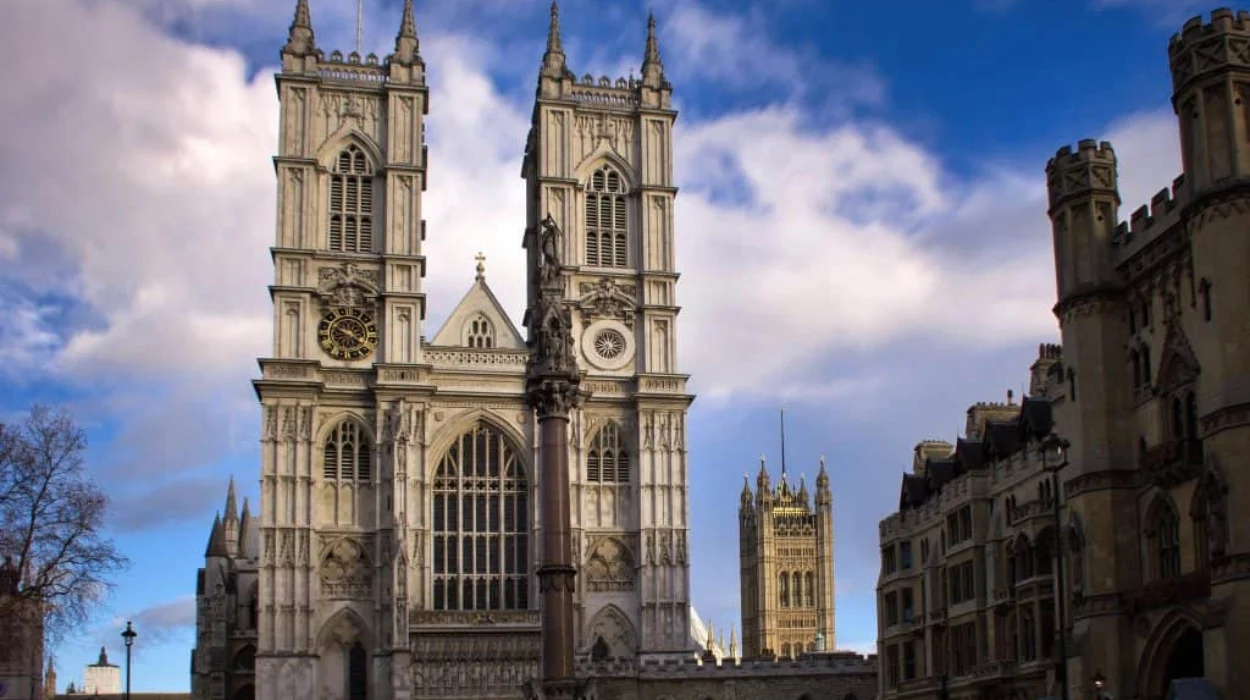
The Church of England occupies a distinctive place in the history of Christianity. For several centuries, people have been arguing over how to define it: is the Church of England Protestant or something else? This is not only a theological question; it is also a historical, cultural, and political one.
The Church of England was born out of the English Reformation in the 16th century, and it retained many customs of the medieval Catholic Church. To fully understand what the Church of England actually is, we need to look at its roots, beliefs, practices, and its role in shaping English society.
The Protestant Characteristics of the Church of England
The chief Protestant characteristics of the Church of England include the following:
Emphasis on Scripture
One of the hallmarks of Protestantism is emphasis on the authority of Scripture in preference to church tradition. The Church of England adopted this principle as it made Scripture central to its worship and doctrine. The Bible was translated into English so that ordinary believers could have access to it. Protestant thinking held that all believers, Christians, should read Scripture.
The Thirty-Nine Articles of Religion
The Thirty-Nine Articles of Religion were published in 1563 under the reign of Queen Elizabeth I. The articles became foundational for Anglican theology and reflected significant Protestant ideas like justification by faith, rejection of purgatory, and rejection.
Rejection of Papal Authority
Another clear Protestant element is the rejection of the authority of the Pope. The monarch, not the Pope, was the head of the Church of England. In this sense, it remains one of the essential Protestant characteristics of the Church.
Catholic Elements in the Church of England: Retainment of Tradition
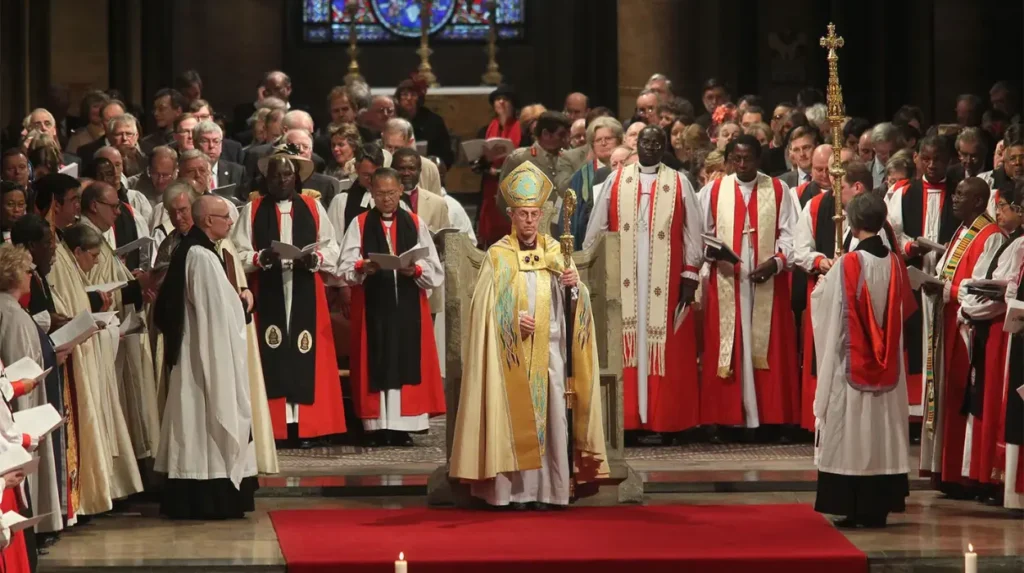
Some Protestant movements that stripped away all Catholic practice in worship and administration, like the Church of England, retained a great many forms of older traditions, including its bishops, archbishops, and priestly structure, still following a hierarchical model.
Liturgy and Sacraments
The Anglican liturgy also holds a formal structure, especially as codified by the Book of Common Prayer, that mirrors and builds on the Catholic mass or liturgy. Baptism and Eucharist are not merely confined to the rites of worship but are sacraments and remain at the center of worship, albeit they may be somewhat different from the Catholic understanding.
The Via Media—A Middle Way
The Church of England refers to itself as a “via media,” or middle way, between Protestantism and Catholicism. It has a Protestant theology but in many respects has retained a good degree of Catholic traditions that make it a hybrid mix that can be disparate from either side.
The Elizabethan Settlement: Shaping Identity
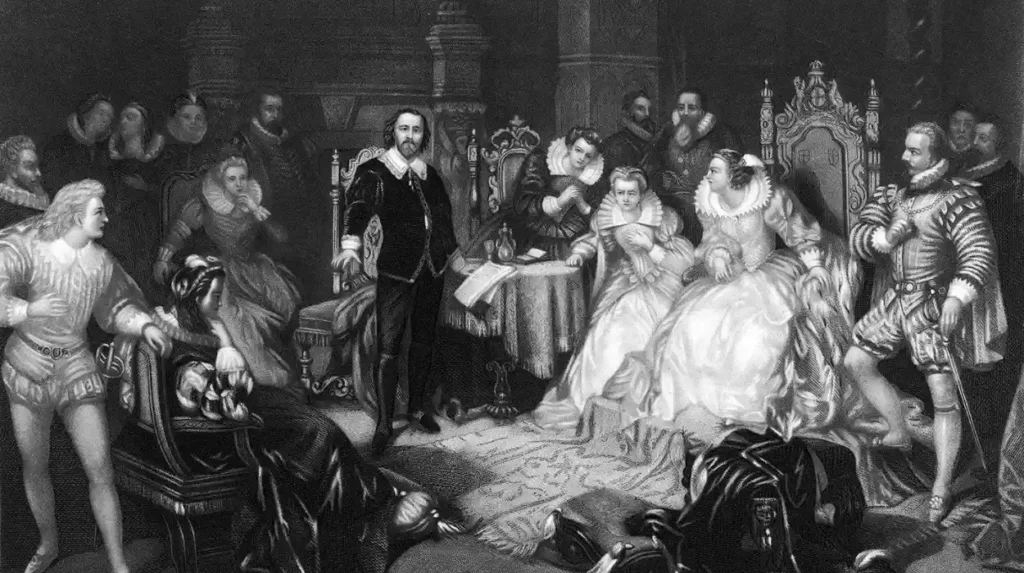
The reign of Elizabeth I was critical in establishing the identity of the Church of England. The Elizabethan Settlement (1559) aimed to resolve religious controversy by implementing a moderate version of Protestantism that still had elements to which Catholics were familiar.
- The restoration of the Book of Common Prayer was granted with a few allowances.
- No prohibition of marriage for clergy demonstrated Protestant reform.
- The use of ceremonial worship practices, vestments, and cathedrals was retained to appeal to Catholics.
This created a church broad enough to accommodate various perspectives, not without firmly placing it under the authority of the monarch.
Is the Church of England Protestant?
The Case for Protestant Identity
- Doctrinal Basis: The Thirty-Nine Articles are essentially Protestant in theology.
- Scripture First: Similar to other Protestant churches, the Bible is given absolute authority.
- Model of a National Church: The separation of the Church from Rome demonstrates Protestant values of self-governance.
The Case for a Different Identity
- Catholic Structure: The bishops archbishops in a college of bishops structure and formal liturgy remain part of the Church.
- The Middle Way: The church is not simply a Protestant church; they are a church that identifies itself as both Protestant and Catholic.
- Broad Inclusivity: There are Anglican churches where worship seems to be exceedingly evangelical (read as Protestant) while there are Anglican churches where the worship is recognizably Anglo-Catholic and at times may seem a little Roman Catholic- albeit in the recession of the ecclesial hats of the sermons.
The Church of England’s Global Impact
The Church of England is the mother church of the worldwide Anglican Communion, a family of churches across 165 countries. Each branch is independent but shares roots in English Anglicanism. The worldwide presence of the Anglican tradition illustrates the flexibility of this tradition, at times more Protestant and at other times more Catholic, but always depending on context.
In addition to its theological implications, the Church of England defined English identity, law, and culture. As the established church, it became fused with the monarchy, the educational system, and national celebrations. The Church of England’s state church role makes it one of a kind in that it primarily operates with this association, contrasting with many Protestant traditions.
Modern Perspectives on Identity
Diversity within Anglicanism
In the active life of the Church of England, there is currently a wide spectrum:
- Evangelical Anglicans focus on preaching, personal faith, and Protestant doctrines;
- Anglo-Catholics highlight tradition, liturgy, and sacramental life in ways analogous to the Roman Catholic tradition.
- Broad Church Anglicans sit within two worlds; one is a Protestant world and the other a “High Church” world.
Diversity highlights the question, “Is the Church of England Protestant or something else?” is not easily answered.
Theological Debates Today
Modern-day debates on topics such as women’s ordination, same-sex marriage, and interfaith relations demonstrate that the Church is still unsure of its own identity. Some think of it as a contemporary Protestant church, while others increasingly consider it a flavor of Catholic tradition, albeit one that has reformed.
The Dual Identity of the Church of England
Emerging from the Reformation, it accepted all the Protestant doctrines, including justification by faith and the authority of Scripture. It was also an important part of the traditions of the Catholic Church, and this showed up in its liturgy, church structure, and practices.
This combination created a “middle way,” which has also been the defining principle of Anglicanism today.
The Church of England is both Protestant and distinct. It is Protestant in its theology but distinct in its Christian identity because of how it brings together a Christian heritage with Reformation principles. We can understand why it has survived for over 500 years and shaped not only English society but also the global Anglican Communion.
The identity of the Church of England is not simply about being Protestant or Catholic but understanding how it uniquely combines the two. It is a reminder that traditions combined, transformed, and evolved can adapt and create something new while at the same time holding on to the old.
