

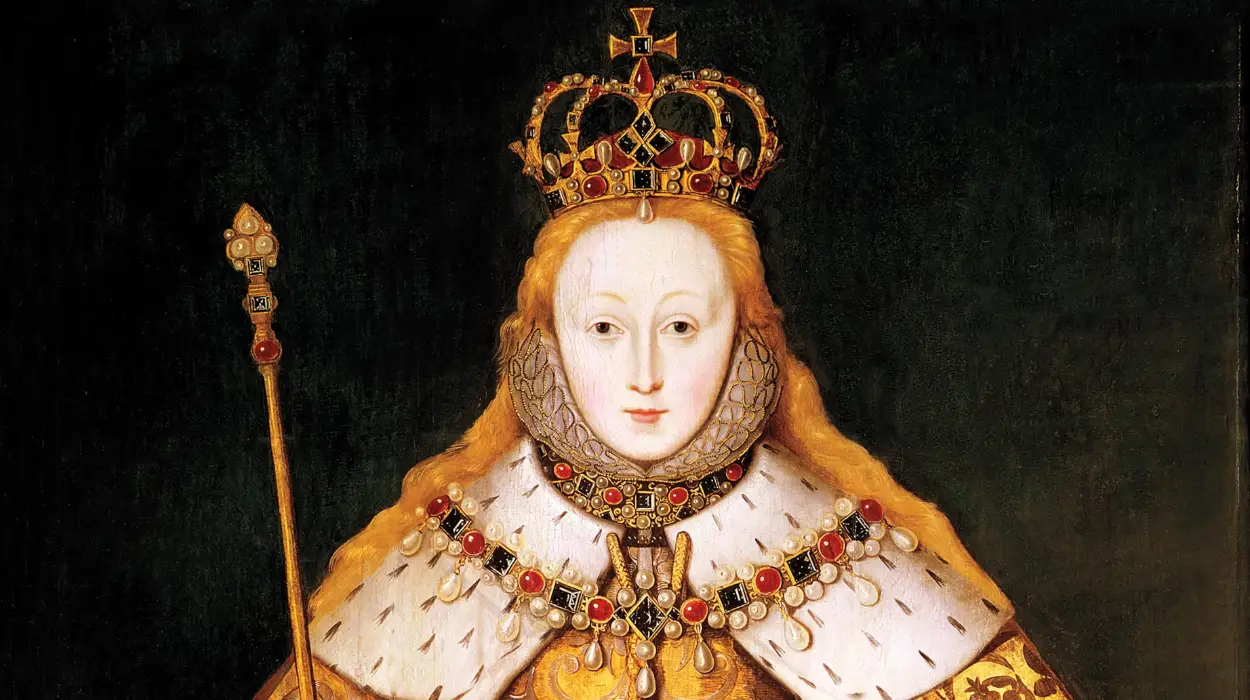
The Tudor and Stuart dynasties are a significant period of British history. A particularly interesting question is, how were Elizabeth I and James VI of Scotland related? Their relationship was both familial and political, establishing the context in which the crowns would join in 1603.
This article will explore the genealogical connection, historical context, the importance of their relationship to the future of England and Scotland, and the significance of the crowns merging in 1603.
The Tudor and Stuart Background
In order to understand how Elizabeth I and James VI of Scotland were related, it is helpful to consider their family history.
The Tudor Line
Elizabeth I (1533–1603) was part of the Tudor dynasty and the daughter of Henry VIII and Anne Boleyn. Elizabeth I was the final monarch of the Tudor dynasty, which was established in England in 1485, when Henry VII was crowned king as a result of the Wars of the Roses.
The Stuart Line
James VI of Scotland (1567–1625), later James I of England, was born into the Stuart dynasty. James’s mother was the infamous Mary, Queen of Scots, and his father was Henry Stuart, Lord Darnley. The Stuarts had ruled for centuries prior to James’s reign and had ties to many royal families across Europe as a result of dynastic marriages.
Elizabeth I and James VI: Their Shared Ancestry
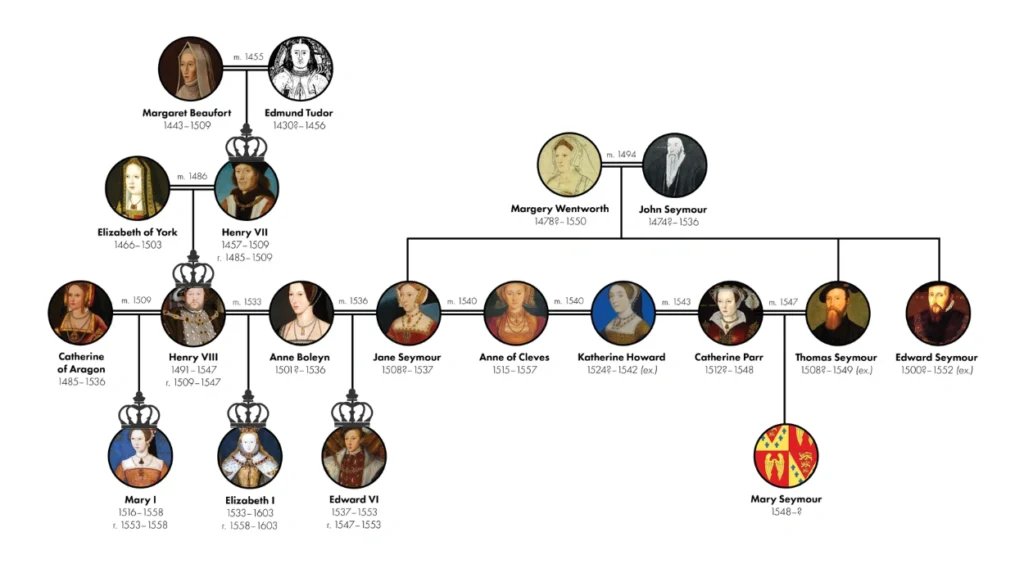
The relationship is based on a common ancestor, Henry VII of England.
Henry VII: The Common Ancestor
Henry VII, founder of the Tudor dynasty, had two key children in this story. Henry VIII, the father of Elizabeth I and Margaret Tudor, who married James IV of Scotland
- From the family connection: Elizabeth I was Henry VIII’s daughter, and James VI was Margaret Tudor’s great-grandson.
- Following the family tree: Elizabeth I → Daughter of Henry VIII → Granddaughter of Henry VII and James VI → Son of Mary, Queen of Scots → Grandson of James V of Scotland → Great-grandson of Margaret Tudor → Great-great-grandson of Henry VII
In other words, Elizabeth I was James VI’s first cousin twice removed.
Political Implications of the Relationship
The family tie was more than simply a genealogy issue. It had enormous political implications.
- Elizabeth I was Childless: Elizabeth I, famously the “Virgin Queen,” never married and had no children. This left the line of succession to the English throne in question.
- James VI was the Strongest Candidate: James VI had a claim to the English throne as a legitimate heir to the Tudor dynasty as the great grandson of Henry VII. His bloodline linked him more closely to the Tudors than any other royal family in Europe, so it was natural that he succeeded them.
Elizabeth I and Mary, Queen of Scots
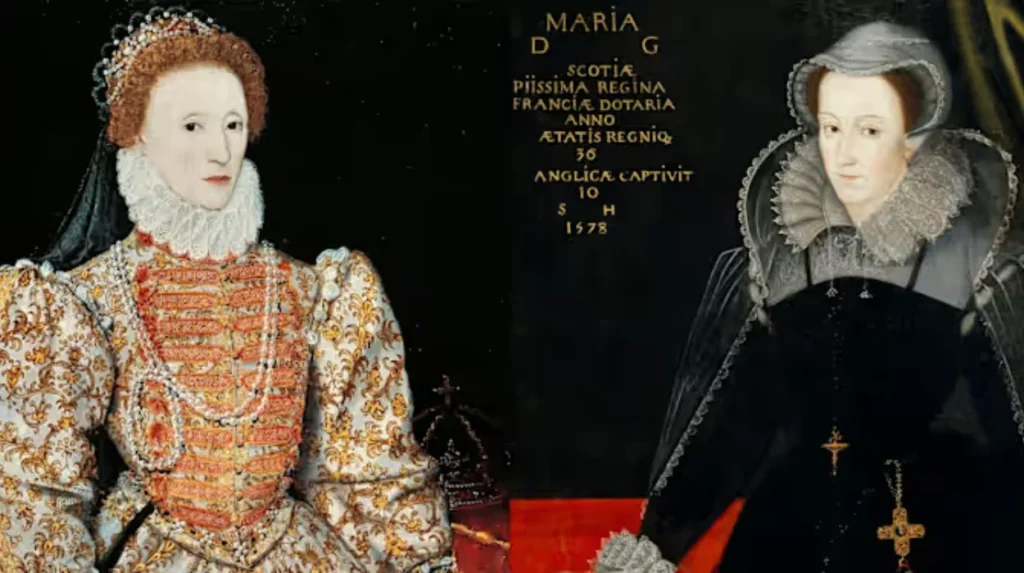
Elizabeth’s ties to James cannot be separated from Elizabeth’s intense relationship with James’ mother, Mary, Queen of Scots.
Cousins and Rivals
Mary, Queen of Scots, was Elizabeth’s first cousin. She had a legitimate claim to the English throne and was both a companion in the field and also a rival and a potential threat.
Mary’s Execution and James’s Position
After many years of political machinations, Elizabeth finally ordered the execution of Mary in 1587. But rather than disinheriting James, Elizabeth left the path open for him to inherit the English throne. This unusual journey into a political dilemma signifies James’ contentious but also sometimes practical relationship with Elizabeth.
The Union of the Crowns in 1603
The question of “How was Elizabeth I related to James VI of Scotland?” takes on even more significance when we recall the year 1603.
Elizabeth’s Death
Elizabeth I died on 24 March, 1603, neither expecting nor leaving an heir.
James VI becomes James I of England
Because of his Tudor blood, James VI of Scotland was invited to the English throne. The phrase “Union of the Crowns” usually sums up this relationship. He was James I of England, and he included a rare moment in history when one monarch ruled over three kingdoms.
The Birth of a Dynasty
The achievement of a legally distinct governance through the Act of Union of 1707 is still the result of a union of a monarchy, which started with the family ties between Elizabeth I and James VI.
Their Relationship in Historical Perspective
Personal vs. Political
Elizabeth and James never met, but they had interactions that suggest a hesitant but respectful relationship. Elizabeth sometimes used the title “son” to refer to James, recalling his future role without making any formal announcement.
Religious Context
Religion influenced how they related to each other. Elizabeth was Protestant, and James was raised as a Protestant by virtue of his Protestant father. His mother was raised Roman Catholic. There was less concern in England that James would be seen as a Catholic monarch who may become king after Elizabeth.
The Importance of Dynastic Marriages
The marriage of Margaret Tudor (daughter of Henry VII) to James IV of Scotland was designed to enhance peace and friendship between England and Scotland, which saw no direct results but produced James VI as the King of Scotland. This shows how dynastic marriages have significant consequences for the course of British history.
Why Their Family Connection Still Matters
The story of Elizabeth I and James VI shows how family ties had consequences for political stability, national identity, and the configuration of modern Britain.
Without James’s Tudor link, there could’ve been political and social turmoil after Elizabeth Tudor’s death. His ascension provided political continuity and avoided any further civil unrest over the succession issue.
The Tudor dynasty ended with Elizabeth I’s disgraceful death, and James VI/I began the Stuart dynasty in England, which lasted until the middle of the seventeenth century.
The union of crowns reminds us how many political arrangements were (and are) affected by the dynastic connections of family. And what may have been minor family connections altered the political map of Britain.
Elizabeth I and James VI: A Bloodline That Shaped History
They were related through a common ancestor, Henry VII. Elizabeth was the granddaughter of Henry, while James was the great-great-grandson. In fact, Elizabeth and James were first cousins twice removed.
This was not just a family connection. Their family connection helped shape the history of both national entities. Elizabeth’s choice to leave the throne to James ensured a peaceful transfer of power, bringing closure to the Tudor dynasty and opening a new era with the Stuart reign in England.
The story of Elizabeth I and James VI of Scotland represents to us that in monarchy, bloodlines are what decide the fate of entire kingdoms.
