

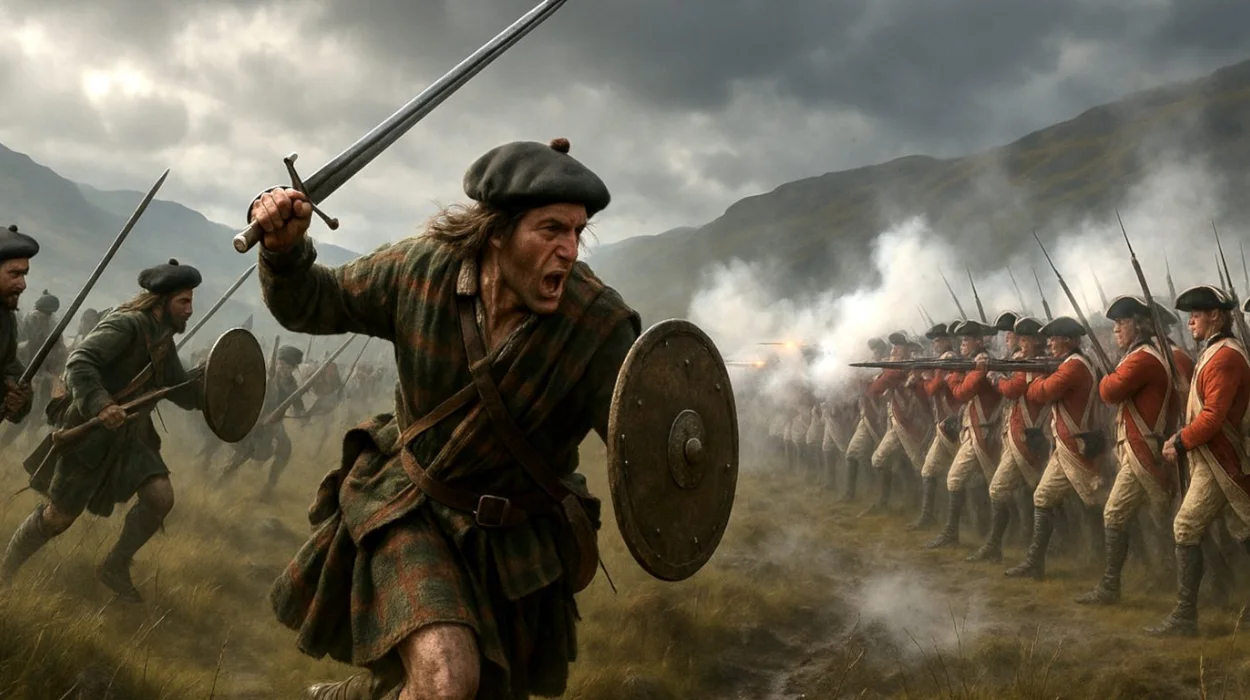
Jacobite, in British history, a supporter of the exiled Stuart king James II (Latin: Jacobus) and his descendants after the Glorious Revolution. The political importance of the Jacobite movement extended from 1688 until at least the 1750s.
The Jacobites, especially under William III and Queen Anne, could offer a feasible alternative title to the crown, and the exiled court in France (and later in Italy) was often frequented by disgruntled soldiers and politicians. After 1714 the Whigs’ monopoly of power led many Tories into intrigues with the Jacobites.
What was the jacobite uprising
The Jacobite rising of 1745 was an attempt by Charles Edward Stuart to regain the British throne for his father, James Francis Edward Stuart. It took place during the War of the Austrian Succession, when the bulk of the British Army was fighting in mainland Europe, and proved to be the last in a series of revolts that began in March 1689, with major outbreaks in 1715 and 1719.
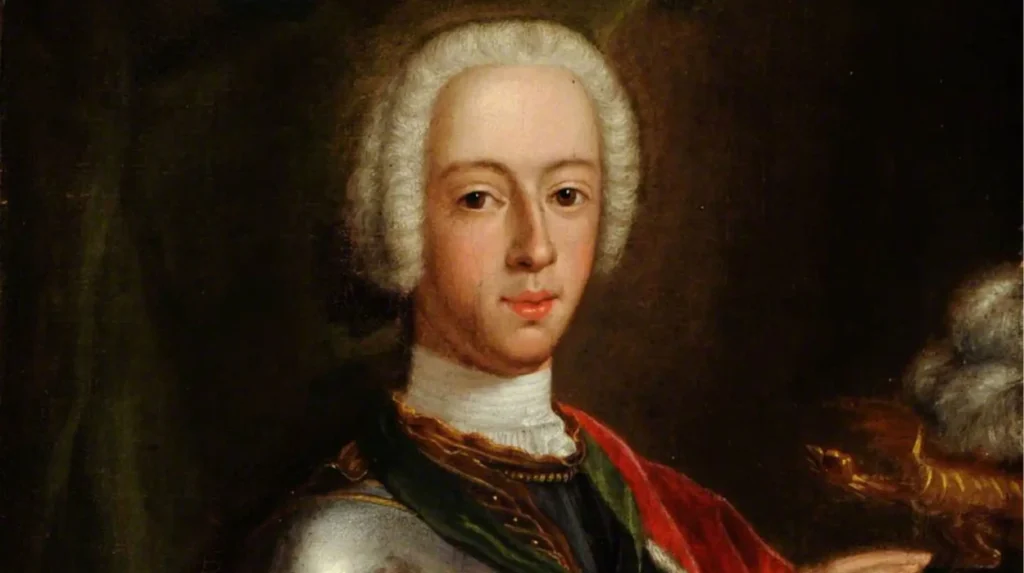
The Major Jacobite Rebellions
The Jacobite cause was not a single, continuous rebellion but rather a series of uprisings, invasions, and military campaigns between 1689 and 1746. Each attempted to restore the House of Stuart to the throne, with varying degrees of success. Below is a closer look at the key Jacobite rebellions that shaped Scotland’s history.
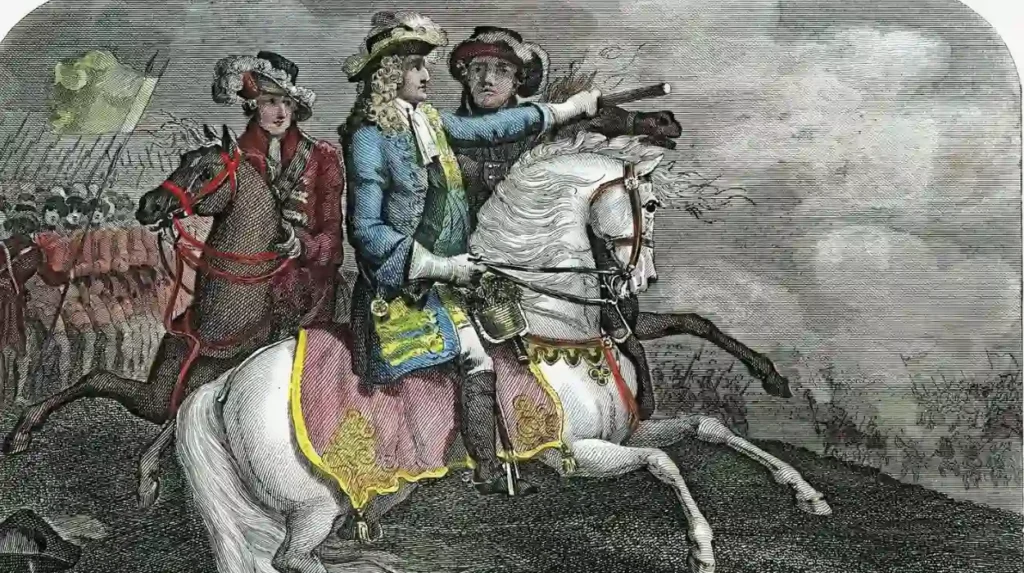
1. The First Jacobite Rising (1689–1692)
The First Jacobite Rising took place in 1689, after James VII of Scotland (James II of England and Ireland) was removed in the Glorious Revolution. William III and Mary II, the new Protestant monarchs, were immediately challenged in Scotland, where many of the people were still loyal to James. The Jacobites were commanded by John Graham of Claverhouse, Viscount Dundee, who was learned, a strong Jacobite, and a good commander.
Dundee gathered his Jacobites from supporters (mostly from the Scottish Highlands) of the Stewart king. On July 27, 1689, the Jacobites defeated an army commanded by General Hugh Mackay that was on a reconnaissance mission near Killiecrankie, winning a dramatic victory for the Jacobite cause. As the leader fell, the insurrection immediately began to feel the consequences of the loss.
Following the Jacobite defeat at the Battle of Dunkeld (1689), where government forces held off an attack from the Highlanders, the rising effectively collapsed. Many clans submitted to the new government, and Jacobite resistance weakened. In an attempt to secure loyalty from the Highland clans, the government demanded an oath of allegiance to William and Mary by January 1, 1692.
One of the darkest episodes of this period followed the Massacre of Glencoe (1692). The MacDonald clan of Glencoe, accused of delaying their oath of allegiance, was brutally attacked by government soldiers under Captain Robert Campbell. Dozens of men, women, and children were killed in the freezing winter conditions. The massacre became a lasting symbol of treachery and betrayal, fueling Jacobite resentment for years to come.
Though the First Jacobite Rising had failed, the movement remained alive. The Highland clans, embittered by government actions like the Massacre of Glencoe, would rise again in the coming decades, keeping the Jacobite dream alive.
2. The 1708 Invasion Attempt
After the unsuccessful First Jacobite Rising, the exiled Stuart court was still committed to regaining the throne. By 1708, the Jacobite cause was led by James Francis Edward Stuart, the son of the dethroned James VII & II. James, referred to as the Old Pretender, spent the majority of his life in France, protected by King Louis XIV, who wanted the Stuarts back on the throne as a way to diminish Britain’s power.
With substantial French support, a 5,000 strong army was assembled to invade Scotland, where there was still support from Jacobites, mainly Highland clan members and Episcopalians in the northeast.
The plan consisted of landing at the Firth of Forth (near Edinburgh) and rallying the Scottish forces to overthrow the government of Queen Anne. James was on the fleet, which he hoped was enough to inspire a new rebellion.
The invasion never took place. The Royal Navy, under the command of Admiral Sir George Byng, was already aware of the plans and moved to intercept the fleet.
As the fleet approached Scotland’s coast, they were met by greater British naval forces and were forced to turn about without James even so much as setting foot in Scotland. Poor weather, miscommunication, and the presence of the British navy made a landing impossible.
The failed 1708 invasion was a severe blow to the Jacobite movement. It demonstrated the logistical challenges of a successful rebellion without strong internal support and the growing military capabilities of Britain. This attempt failed, the Stuart cause continued to be alive and within a couple of years the Jacobites would again attempt to take an uprising in Scottish territory in 1715.
3. The 1715 Jacobite Rising (“The Fifteen”)
The 1715 Jacobite Rising, referred to as “The Fifteen,” was the most significant attempt to restore the Stuart monarchy since the First Jacobite Rising of 1689.
Despite the failed invasion of 1708, the Jacobite cause was still strong in Scotland, particularly after the Act of Union (1707) united Scotland and England into Great Britain. The Act of Union was seriously resented by many Scots claiming that it was an assault against Scottish sovereignty, and they responded by mobilizing support for the Jacobite cause.
What is apparent from the failure of The Fifteen was how disorganized and uncoordinated the Jacobite movement could be. It was a serious threat to the British government. The Fifteen was ultimately undermined by poor leadership and indecision. Not the end of the Jacobite movement, as they would again attempt to rise in 1719 and most dramatically in 1745 with Bonnie Prince Charlie.
4. The 1719 Jacobite Rising
The Jacobite Rising of 1719 was a less numerous and smaller uprising than previous revolts; they did make another effort to restore the House of Stuart with foreign support. In 1719 the Jacobites had support from Spain. Spain sought, as part of a wider European power struggle, to undermine British power, and the Spaniards sought to use the ‘Jacobite invasion’ as a tool for this.
In fact, the Spaniards fed into the Jacobite cause because Britain had supported Austria in its war against Spain, known as the War of the Quadruple Alliance.
The Spanish plan was to send 300 troops to land in Scotland’s Highlands, where they would connect with the Jacobite forces and create a larger uprising.
After violent fighting around the town of Glen Shiel, government artillery and Highland loyalists provided far greater supporting fire to effectively counter the Jacobite-Spanish troops. At the end of fighting, the Spaniards surrendered, the remaining Jacobites dispersed into the surrounding mountains.
The 1719 Rising was short-lived, poorly coordinated, and one would assume, ultimately a failure. However, it provided other solid learning and lessons – without a minimum external power support, or incompetent or incompetent leadership, from the Jacobite side, success was unlikely, at least until there was no longer are few external powers opposing or standing in the way of a Jacobite reign.Spain abandoned the Jacobite cause after this defeat, the dream of Stuart restoration did not die.
Just over 25 years later, the Jacobites would launch their most famous and daring rebellion, the 1745 Rising, led by Bonnie Prince Charlie.
5. The 1745 Jacobite Rising (“The Forty-Five”)
The 1745 Jacobite Uprising—referred to as “The Forty-Five”—was the most famous and ambitious of all the Jacobite rebellions. The Jacobite Uprising was led by Charles Edward Stuart (Bonnie Prince Charlie), the grandson of James VII & II, and was the last and most concerted attempt to restore the House of Stuart back to the throne of Britain. It was also the rebellion that sealed the fate of the Jacobite cause for all time.
The final act played out at the Battle of Culloden (April 16, 1746) at a windswept moor near Inverness. The Jacobite army was just minutes away from reaching their target, but after long and bad conditions of army shortages and exhaustion, they were to be decisively defeated in less than an hour.
The government forces showed no mercy—wounded Jacobites who were unable to get away to safety were executed, Jacobite prisoners were hunted down, and Charles fled for his life.
The 1745 Rising was the last Jacobite attempt at restoration of the Stuarts and the effective end of an era. It was a failed uprising but resonated culturally, resulting in songs, poems, and stories molding Scotland’s history indelibly.
