

New Delhi, February 3, 2026, According to Parliament News, that India has entered a new phase of aviation expansion as the India US aircraft deal moves to the center of bilateral economic engagement between New Delhi and Washington. The agreement reflects India’s growing air travel demand, long-term infrastructure planning, and its effort to align commercial aviation growth with strategic partnerships.
Government officials and industry leaders see the development as part of a broader transformation of India’s aviation sector, which has rapidly evolved from a primarily domestic market into a global aviation growth engine. With passenger volumes rising year after year, fleet expansion has become a policy priority rather than a commercial option.
Aviation Demand Reshapes National Transport Planning
India’s aviation market has experienced sustained expansion driven by population growth, rising incomes, and improved regional connectivity. Domestic air routes are witnessing record passenger numbers, while international travel demand continues to rebound strongly.
The India US aircraft deal supports India’s objective of increasing seat capacity while maintaining operational efficiency. Modern aircraft allow airlines to serve high-density routes more frequently and connect emerging cities to global hubs.
Aviation planners note that air travel is no longer limited to metropolitan elites but has become an essential mode of transport for business tourism and education.
Fleet Modernization Becomes an Economic Imperative
Older aircraft fleets pose operational and financial challenges, including higher fuel consumption and maintenance costs. Fleet renewal has therefore become central to airline sustainability.
Through the India US aircraft deal, Indian carriers are expected to gain access to newer generation aircraft designed for fuel efficiency longer range and reduced emissions. These aircraft are particularly suited for India’s diverse route structure, which combines short domestic hops with ultra-long-haul international services.
Modernization also improves safety compliance and passenger experience, two areas increasingly scrutinized by regulators and consumers alike.
Manufacturing Strength and Technological Reliability
US-based aircraft manufacturers have long maintained a strong reputation for safety innovation and technical reliability. Their aircraft are widely used across continents due to proven performance across different climates and operational conditions.
The India US aircraft deal reflects confidence in this technological ecosystem, allowing Indian airlines to integrate aircraft that meet evolving global aviation standards. Industry specialists say such integration enhances India’s standing within international aviation networks.
The agreement also signals trust in long-term supply chains at a time when global manufacturing disruptions have affected multiple industries.
Trade Linkages Beyond Commercial Aviation
Aircraft transactions are among the most complex trade arrangements in global commerce. They involve financing leasing maintenance and regulatory cooperation extending over decades.
The India US aircraft deal strengthens trade relations by expanding cooperation beyond goods into services training and regulatory coordination. Economic analysts say aviation cooperation often acts as a catalyst for broader bilateral trade engagement.
Such agreements also influence trade balances while supporting high-value exports and specialized services.
Financing Structures and Risk Management
Aircraft procurement requires carefully structured financing models that balance airline cash flow with long-term investment planning. Leasing firms export credit agencies and financial institutions typically play a role in managing capital exposure.
Under the India US aircraft deal, financing frameworks are expected to align with airline expansion timelines and market demand. Aviation finance experts note that predictable delivery schedules reduce operational risk and support stable growth.
This approach allows airlines to scale operations while preserving financial resilience.
Employment and Skill Development Impact
Aviation growth directly influences employment across multiple sectors including engineering training airport services and logistics. Each aircraft added to a fleet generates demand for pilots technicians and ground support staff.
The India US aircraft deal is expected to indirectly support workforce expansion through increased operational capacity and maintenance requirements. Industry bodies have emphasized the importance of parallel investment in training institutions to meet rising skill demand.
This human capital dimension reinforces aviation’s role as a long-term economic contributor.
Environmental Efficiency and Sustainability Goals
Global aviation faces increasing pressure to reduce emissions and improve fuel efficiency. Fleet modernization is widely recognized as one of the most effective methods for achieving these goals.
Aircraft included under the India US aircraft deal are expected to feature advanced aerodynamics lighter materials and optimized engines. Environmental analysts say such upgrades significantly lower per-passenger emissions compared to legacy fleets.
This transition aligns with India’s broader sustainability objectives without constraining aviation growth.
Regulatory Oversight and Safety Alignment
Aviation safety remains a non-negotiable priority for regulators worldwide. Aircraft induction requires rigorous certification pilot training and maintenance compliance.
The India US aircraft deal includes provisions for regulatory coordination and technical documentation sharing. Aviation authorities are expected to work closely to ensure seamless certification and operational readiness.
Such coordination strengthens safety oversight while reducing administrative delays.
Market Confidence and Investor Sentiment
Large-scale aircraft agreements often influence investor confidence across the aviation value chain. Suppliers service providers and infrastructure developers closely track fleet expansion announcements.
Market analysts view the India US aircraft deal as a signal of long-term confidence in India’s aviation trajectory. The scale and structure of the agreement suggest that stakeholders expect sustained demand rather than short-term recovery.
This confidence supports broader investment across airports logistics and tourism.
One Industry Perspective on the Agreement
One senior aviation consultant said,
“This agreement reflects a long-term commitment to capacity building and signals that India’s aviation growth is being planned with global competitiveness in mind.”
Infrastructure Readiness and Airport Expansion
Fleet growth requires parallel investment in airport infrastructure air traffic management and ground handling facilities. India has been expanding airport capacity across major and secondary cities.
The India US aircraft deal complements these infrastructure initiatives by ensuring airlines have the aircraft needed to utilize expanded airport networks. Transport planners note that synchronized development reduces congestion and improves operational efficiency.
This alignment supports India’s ambition to become a regional aviation hub.
Cargo Capacity and Supply Chain Integration
Beyond passenger travel aircraft acquisitions also enhance air cargo capacity. Cargo operations play a vital role in pharmaceuticals electronics and time-sensitive exports.
The India US aircraft deal is expected to support cargo growth by introducing aircraft capable of higher payloads and longer routes. Logistics experts say improved cargo connectivity strengthens supply chain resilience.
This dimension adds strategic value beyond commercial aviation metrics.
Geopolitical Context of Aviation Cooperation
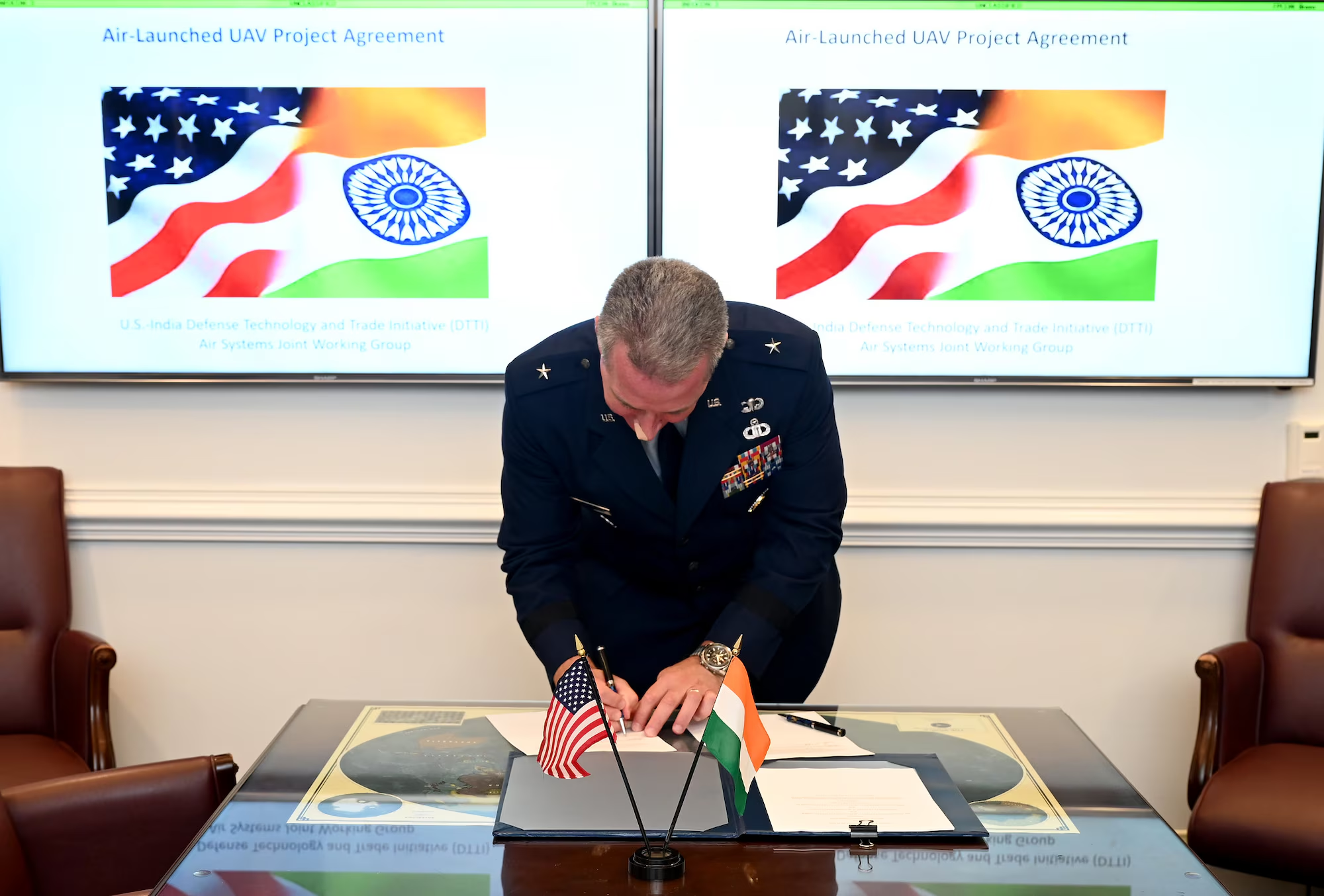
Aviation partnerships often reflect broader geopolitical alignment. Cooperation in high-technology sectors signals trust and long-term engagement between governments.
The India US aircraft deal fits within a wider framework of economic and strategic cooperation. Policy analysts say aviation agreements reinforce diplomatic ties while promoting mutual economic interests.
Such alignment gains significance amid shifting global trade dynamics.
Passenger Experience and Service Quality
Modern aircraft offer enhanced cabin design improved noise reduction and better in-flight systems. These features influence passenger satisfaction and airline brand reputation.
The India US aircraft deal enables carriers to upgrade service standards across domestic and international routes. Consumer surveys consistently show that aircraft quality shapes travel choices.
Improved experience strengthens airline competitiveness in an increasingly crowded market.
Cost Efficiency and Competitive Positioning
Fuel efficiency maintenance intervals and operational reliability directly affect airline profitability. Newer aircraft models are designed to optimize these parameters.
Through the India US aircraft deal, airlines are expected to improve cost structures while expanding capacity. Competitive pricing supported by efficient operations benefits consumers and stimulates demand.
This cycle reinforces aviation’s contribution to economic growth.
Digital Integration and Smart Aviation Systems
Modern aircraft integrate advanced digital systems for navigation diagnostics and performance monitoring. These technologies enhance safety and operational efficiency.
The India US aircraft deal supports adoption of such systems enabling airlines to leverage data-driven decision making. Aviation technologists highlight the role of analytics in reducing delays and optimizing fuel use.
Digital integration marks a shift toward smarter aviation operations.
Aviation as a Driver of Regional Connectivity
Regional connectivity has become a policy focus as governments seek balanced economic development. Air links enable faster movement between emerging cities and economic centers.
The India US aircraft deal supports this objective by providing aircraft suitable for short and medium-haul routes. Enhanced connectivity boosts tourism business activity and regional investment.
This role extends aviation’s impact beyond major metros.
Long-Term Outlook for Bilateral Aviation Engagement
Industry observers expect aviation cooperation to remain a cornerstone of bilateral engagement. Continued growth in travel demand and trade flows supports this outlook.
The India US aircraft deal is widely seen as a foundation for future collaboration in training technology exchange and operational innovation.
Such cooperation may shape the next decade of aviation development.
History of Aviation Ties Between India and the United States
Aviation cooperation between India and the United States dates back several decades beginning with early commercial aircraft sales and technical assistance programs. Over time this relationship expanded to include training maintenance support and regulatory coordination.
The India US aircraft deal represents the latest chapter in this evolving history reflecting both continuity and scale. Earlier agreements laid the groundwork for trust and operational familiarity enabling more complex partnerships today.
This historical progression underscores how aviation ties have matured alongside broader economic relations.
Aviation Growth and National Development Goals
Aviation plays a critical role in national development by facilitating trade tourism and global engagement. Countries with strong aviation networks often enjoy higher connectivity and economic resilience.
The India US aircraft deal aligns aviation expansion with India’s broader development objectives including infrastructure modernization and global integration.
This alignment highlights aviation’s strategic significance beyond transport.
Risk Factors and Implementation Challenges
Despite positive momentum implementation requires careful management. Delivery timelines regulatory coordination and financing conditions must remain aligned.
Analysts caution that sustaining progress under the India US aircraft deal will depend on policy stability and market conditions. External factors such as fuel prices and global economic trends may influence outcomes.
Managing these risks remains a shared responsibility.
Why This Agreement Redefines Aviation Momentum
The scale intent and structure of current aircraft acquisitions mark a shift in how aviation growth is planned and executed. Strategic alignment long-term financing and regulatory cooperation distinguish this phase from earlier expansions.
The India US aircraft deal stands as a defining element of India’s aviation strategy connecting economic ambition with global partnership.
As runways extend and fleets expand the agreement signals how aviation can shape national influence in an interconnected world.