
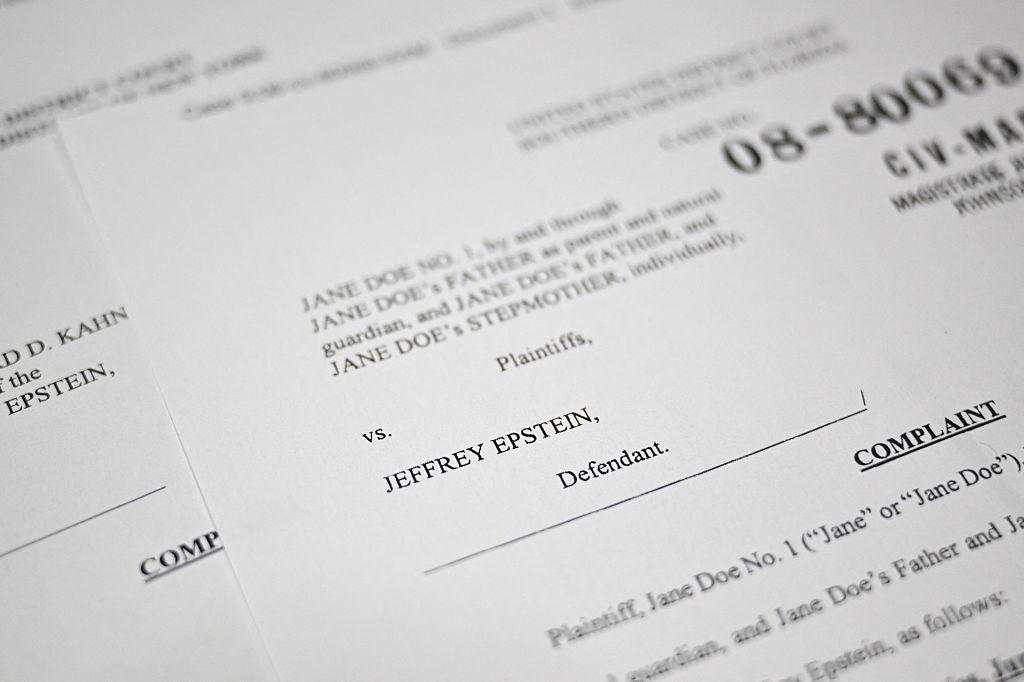
New York, February 3, 2026 — Parliament News : Thousands of Epstein case records were removed from public access this week after judicial authorities concluded that certain materials could expose victims to identification risks. The decision followed a comprehensive privacy review amid rising concern over how sensitive legal information circulates in an increasingly digital justice system.
The action has intensified debate over transparency, accountability, and survivor protection in one of the most scrutinized legal sagas in recent U.S. history.
Judicial Review and the Triggering Factors
Court officials confirmed that the takedown followed a scheduled internal assessment of legacy filings. The review focused on documents released during earlier phases of litigation, many of which were uploaded when digital dissemination risks were less clearly understood.
According to officials, several Epstein case records contained contextual clues, dates, locations, and relational details, that could be combined with external information to identify individuals protected under privacy rules.
How Digital Access Changed Legal Risk
Public court access was once limited by physical barriers. Today, records are searchable, downloadable, and shareable worldwide within seconds. This shift has forced courts to reconsider how exposure risks are measured.
Legal analysts noted that Epstein case records illustrate how digital permanence transforms information that was once obscure into material with long-term consequences.
Survivor Protection as a Guiding Principle
Advocacy groups have long argued that victims in high-profile abuse cases face disproportionate harm from public exposure. Even anonymized data, they say, can be reverse-engineered.
One survivor advocate said,
“Justice must not come at the cost of lifelong digital exposure for those already harmed.”
That principle heavily influenced the decision to remove Epstein case records pending further safeguards.

Transparency Versus Harm Reduction
Open courts are a cornerstone of democratic societies. Public access ensures scrutiny and reinforces trust in legal institutions.
However, scholars argue transparency is not absolute. The reassessment of Epstein case records reflects a growing consensus that access must be balanced against foreseeable harm, particularly in sensitive cases.
Editorial Judgment in High-Profile Coverage
Media organizations covering the development have largely avoided republishing document excerpts, focusing instead on institutional implications. Editors cite ethical responsibility in cases involving sexual exploitation.
The controversy surrounding Epstein case records has become a reference point for evolving standards in legal journalism.
Background of the Epstein Legal Case
The legal actions connected to Jeffrey Epstein span decades and involve civil lawsuits, sealed settlements, and federal investigations across multiple jurisdictions. Much of the material entered public databases through civil litigation rather than criminal verdicts.
As a result, Epstein case records accumulated unevenly, governed by differing disclosure rules that did not anticipate modern digital access.
Technology’s Expanding Role in Court Disclosure
Artificial intelligence, data scraping tools, and search algorithms now amplify the reach of legal documents. Courts face challenges in controlling how information is reused once released.
Experts say the ongoing handling of Epstein case records demonstrates why disclosure policies must be continuously updated rather than treated as static.
Public Reaction and Digital Debate
Public response has been sharply divided. Some argue that document removal weakens accountability, while others view it as an overdue correction.
Online discussions highlight how Epstein case records became focal points for speculation, reinforcing privacy concerns raised by the review.

Broader Impact on U.S. Judicial Practices
Judicial administrators across the country are watching closely. Several states are reportedly reviewing policies governing sensitive filings, particularly in abuse-related cases.
The precedent involving Epstein case records may influence future court access standards nationwide.
What Removal Means for Legal Access
Officials clarified that removal does not equate to erasure. Some files may return after deeper redaction, while others could remain restricted indefinitely.
Any future release of Epstein case records will reportedly involve stricter oversight mechanisms.
Ethical Obligations of Modern Courts
Beyond legal compliance, courts increasingly recognize ethical responsibility to prevent foreseeable misuse of information.
The handling of Epstein case records reflects this shift toward proactive institutional accountability.
Redefining Transparency in a Digital World
Digital records rarely disappear. Once published, documents can be archived, mirrored, and redistributed endlessly.
This reality has forced courts to rethink how Epstein case records and similar materials are managed.
Global Attention and Comparative Law
Legal observers internationally are studying the case as an example of how justice systems adapt to digital-era challenges.
The global focus on Epstein case records underscores the universal nature of the transparency-versus-privacy debate.
Why This Moment Signals Change
This development is not confined to a single courtroom. It reflects a broader reckoning over how justice operates in a connected world.
How authorities manage Epstein case records going forward may redefine access norms for years.
Institutional Learning After Public Scrutiny
In the aftermath of the document removal, judicial institutions have begun internal discussions about long-term reform. Officials acknowledge that public confidence depends not only on transparency but also on responsible stewardship of sensitive information.
Courts are increasingly aware that past disclosure decisions, while lawful at the time, may require reassessment under modern conditions. This moment has become an opportunity for institutional learning rather than reputational damage.
Privacy Law and the Evolution of Legal Standards
Privacy law in the United States has evolved unevenly, often reacting to technology rather than anticipating it. Earlier disclosure frameworks were designed for paper-based systems, not global digital networks.
Legal scholars suggest that courts must now incorporate forward-looking risk assessments into disclosure decisions, particularly in cases involving vulnerable individuals or enduring public interest.
Judicial Discretion in Sensitive Proceedings
Judges retain significant discretion over sealing, redaction, and access determinations. However, the scale and complexity of modern litigation have strained traditional decision-making models.
The recent actions in New York highlight the need for standardized review mechanisms that reduce reliance on case-by-case judgment alone.

Survivor-Centered Justice Models
Advocacy organizations are pushing for survivor-centered justice models that extend beyond trial outcomes. These approaches consider long-term well-being, including digital safety and reputational protection.
By prioritizing survivor impact, courts may begin integrating harm-prevention frameworks into procedural decisions rather than treating them as secondary considerations.
Public Trust and Institutional Credibility
Public trust in the judiciary depends on consistency, clarity, and fairness. Sudden removals of documents can invite skepticism if not accompanied by transparent explanations.
Court officials have emphasized that the recent actions were corrective rather than reactive, designed to align past practices with current ethical expectations.
Information Permanence and Secondary Harm
One of the most challenging aspects of digital disclosure is secondary harm — damage that occurs long after legal proceedings conclude. Information can resurface years later in new contexts, often detached from legal nuance.
This reality complicates traditional assumptions about closure and finality in legal cases.
The Role of Archives and Third-Party Platforms
Even when courts remove documents from official databases, copies may persist on third-party platforms, archives, or private collections. This fragmentation limits institutional control over information once released.
Experts argue that courts must coordinate with external stakeholders to address downstream exposure risks more effectively.
International Approaches to Court Record Privacy
Other countries have adopted stricter default privacy protections in sensitive cases, including delayed publication models and automatic anonymization.
Comparative legal analysis suggests that the United States may need to reconsider its balance between openness and harm prevention in the digital era.
Technology Policy and Judicial Reform
Technology policy has become inseparable from judicial administration. Courts increasingly rely on digital systems, automated workflows, and online access portals.
Without parallel investment in ethical design and privacy safeguards, these systems can amplify unintended consequences.
Education and Training for Court Personnel
Judicial reform also depends on education. Court staff, clerks, and administrators require training to understand how modern technologies transform disclosure risk.
Several legal associations have called for mandatory digital privacy training as part of professional development.

The Limits of Retroactive Correction
While document removal can reduce future harm, it cannot fully undo past exposure. This limitation underscores the importance of proactive safeguards rather than post hoc remedies.
Courts are now confronting the reality that prevention is often more effective than correction.
Legislative Attention and Policy Momentum
Lawmakers have taken note of the controversy, with some calling for updated statutes governing digital court access. While no immediate legislative action has been announced, the issue is gaining momentum.
Future reforms may include clearer thresholds for sealing sensitive materials or uniform national standards.
Civil Liberties and Competing Interests
Civil liberties groups caution against overcorrection, warning that excessive restriction could erode public oversight. They argue that transparency remains essential for democratic accountability.
The challenge lies in crafting policies that protect individuals without shielding institutions from scrutiny.
Long-Term Effects on Legal Journalism
Legal journalists are reassessing how they approach archival material, especially in cases involving exploitation or abuse. Editorial standards increasingly emphasize context, restraint, and survivor impact.
This shift reflects broader changes in how news organizations define public interest.
Digital Memory and the Justice System
The justice system was not designed for a world with infinite digital memory. As courts adapt, they must confront philosophical questions about forgiveness, closure, and the right to move on.
These questions extend beyond law into ethics, sociology, and public policy.
Administrative Transparency Moving Forward
Court officials have indicated that future disclosure decisions will include clearer explanations and public guidance. Transparency about process, rather than raw data access, may become the new standard.
Such an approach could preserve accountability while reducing harm.
Reassessing Legacy Databases
Legacy databases present unique challenges because they contain material released under outdated assumptions. Systematic audits may become necessary to identify high-risk content.
The recent review demonstrates how institutional self-examination can lead to meaningful change.
Societal Expectations in the Digital Age
Public expectations have evolved alongside technology. Audiences increasingly demand ethical responsibility from institutions, not just legal compliance.
This cultural shift is reshaping how justice is perceived and evaluated.
The Final Phase of Document Review
According to court officials, the review process remains ongoing. Some materials may be reintroduced in modified form, while others may remain inaccessible indefinitely.
The final determination will depend on risk assessments, legal obligations, and ethical considerations — including the handling of Epstein case records in future contexts.
A Defining Chapter for Judicial Transparency
The removal of documents in New York reflects a system in transition — one learning to reconcile openness with responsibility.
How that transition unfolds will determine whether justice in the digital age remains both credible and humane.