
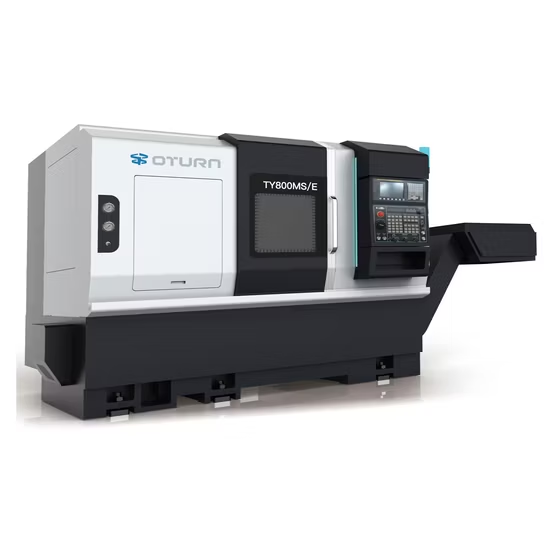
Shenzhen, China, February 4, 2026 — According to Parliament News, that The global manufacturing landscape is undergoing a deep structural transformation, and CNC machinery China has emerged as one of the most influential forces driving this change. As factories worldwide accelerate automation and precision engineering, China’s computer numerical control sector is increasingly viewed as a backbone of modern industrial production rather than a low-cost alternative.
From automotive components and electronics to aerospace parts and industrial tooling, Chinese-made CNC systems are now embedded across global supply chains. Industry leaders say this shift reflects long-term industrial policy, technological maturation, and rising international demand for efficiency and scale.
Industrial Automation Becomes a Strategic Priority
Manufacturers across Asia, Europe, and North America are prioritizing automation to offset labor shortages, control costs, and improve consistency. CNC systems sit at the center of this strategy, enabling complex machining tasks with minimal manual intervention.
Analysts note that CNC machinery China benefits from this global shift because Chinese suppliers combine large-scale production with increasingly advanced control software. Rather than competing purely on price, producers are emphasizing reliability, customization, and integration with smart factory platforms.
Export Demand Strengthens Global Presence
Export markets continue to play a critical role in sustaining growth. Chinese CNC equipment is being shipped to emerging industrial regions where manufacturers are upgrading from manual or semi-automated systems.
This expansion has reinforced the global relevance of CNC machinery China, particularly in regions investing in infrastructure, renewable energy, and localized manufacturing. Buyers increasingly value predictable delivery timelines and long-term service support.
Automotive Manufacturing Drives Volume Growth
The automotive sector remains one of the largest consumers of CNC technology. Engine blocks, transmission components, chassis parts, and battery housings all require high-precision machining.
As vehicle platforms become more complex, CNC machinery China is playing a growing role in meeting tolerance and consistency requirements at scale. Suppliers serving electric vehicle manufacturers have become especially important as production volumes rise.
Electronics and Precision Engineering Expand Usage
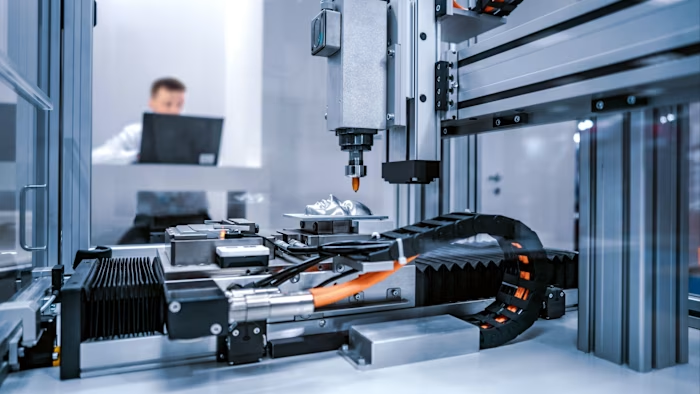
Beyond automotive manufacturing, electronics production continues to drive CNC adoption. Precision enclosures, connectors, and structural components rely on advanced machining to meet strict quality standards.
Industry specialists say CNC machinery China has adapted well to these demands by integrating higher-speed spindles, advanced materials handling, and real-time monitoring systems.
Technology Upgrades Enhance Competitiveness
Chinese manufacturers are investing heavily in research and development, focusing on automation software, digital interfaces, and data-driven optimization. These upgrades allow CNC systems to operate more efficiently while reducing downtime.
The evolution of CNC machinery China reflects a shift toward intelligent production systems that align with global Industry 4.0 standards rather than standalone equipment sales.
Domestic Investment Supports Capacity Expansion
Government-backed initiatives encouraging industrial upgrading have supported domestic demand. Manufacturers modernizing facilities are increasingly selecting locally produced CNC systems due to compatibility and service advantages.
This internal demand has stabilized CNC machinery China, providing a buffer against fluctuations in export markets and reinforcing economies of scale.
One Industry Perspective on Market Direction
A senior manufacturing consultant said, “China’s CNC sector has moved beyond volume production and is now competing on integration, reliability, and long-term value for industrial customers.”
Supply Chain Localization Gains Momentum
Manufacturers worldwide are reassessing supply chain exposure after years of disruption. Local sourcing of machinery has become a strategic consideration rather than a cost-driven decision.
This reassessment has strengthened CNC machinery China, particularly for companies seeking diversified sourcing options without sacrificing production capability.
Competition Intensifies Across Global Markets
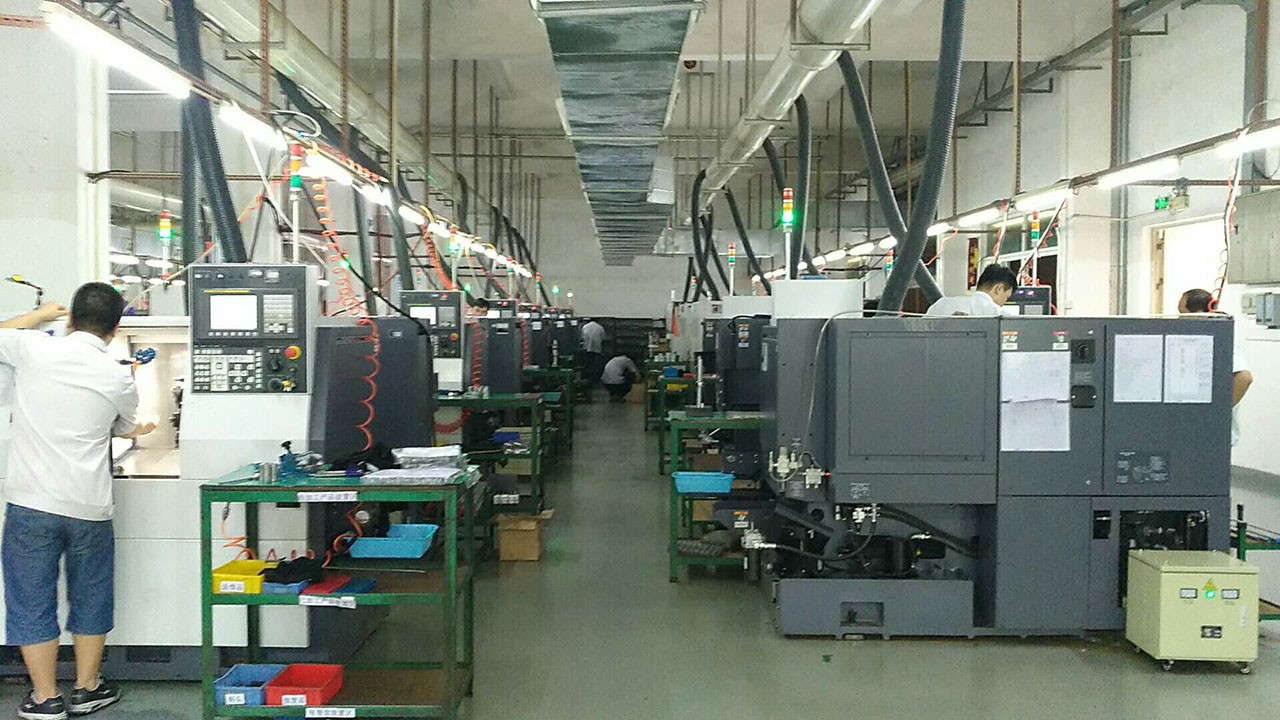
The CNC machinery market remains highly competitive, with suppliers from Europe, Japan, and South Korea maintaining strong positions in premium segments. Chinese firms, however, have narrowed performance gaps while maintaining pricing flexibility.
Despite competitive pressure, CNC machinery China continues to expand its footprint due to scale, rapid customization, and integrated after-sales networks.
Workforce Skills Enable Advanced Adoption
The effectiveness of CNC systems depends heavily on skilled operators and engineers. Training programs and technical education have expanded alongside equipment deployment.
This growing skills base supports CNC machinery China by ensuring that advanced features are fully utilized rather than underexploited in production environments.
History of CNC Development in China
China’s CNC journey began with basic machine tools aimed at improving productivity in labor-intensive industries. Early systems prioritized affordability and throughput over precision.
Over time, technological partnerships, domestic innovation, and market demand pushed the sector toward higher accuracy and reliability. This evolution laid the groundwork for today’s CNC machinery China, transforming it into a key pillar of advanced industrial manufacturing.
Environmental Efficiency Shapes New Designs
Sustainability considerations are increasingly influencing equipment design. New CNC systems emphasize energy efficiency, reduced material waste, and optimized cutting processes.
These priorities are reshaping CNC machinery China, aligning industrial growth with environmental performance expectations in both domestic and export markets.
Digital Integration Becomes Standard Practice
Digital connectivity is now a baseline expectation. CNC systems are being integrated with enterprise software, predictive maintenance tools, and real-time analytics platforms.
The digitalization of CNC machinery China allows manufacturers to monitor performance remotely, anticipate failures, and optimize production schedules.
Infrastructure Projects Support Long-Term Demand
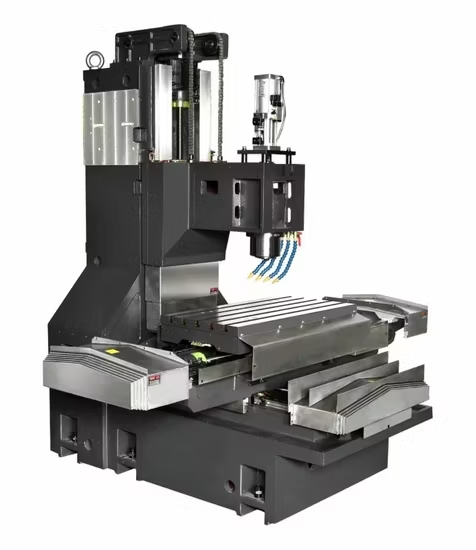
Large-scale infrastructure projects continue to require precision-machined components. Rail systems, energy installations, and industrial facilities all depend on CNC-produced parts.
These projects reinforce demand for CNC machinery China, particularly where long production runs and consistent quality are essential.
Financial Stability Attracts Long-Term Capital
Investors increasingly view industrial machinery as a stable segment within manufacturing. Compared with consumer technology, demand cycles are longer and more predictable.
The steady expansion of CNC machinery China has attracted long-term capital focused on industrial modernization rather than short-term market volatility.
Export Controls and Compliance Shape Strategy
Regulatory requirements in export markets continue to influence product design and documentation. Compliance with international standards has become essential for global competitiveness.
Chinese suppliers have adapted by aligning CNC machinery China with international safety and quality frameworks.
Resilience During Economic Uncertainty
Even during periods of slower global growth, automation investment tends to persist. Manufacturers prioritize efficiency improvements to maintain competitiveness.
This resilience has supported CNC machinery China, cushioning the sector against broader manufacturing slowdowns.
Innovation Ecosystems Drive Continuous Improvement
Collaboration between equipment makers, software developers, and industrial users has accelerated innovation. Feedback loops allow rapid refinement of features and performance.
Such ecosystems strengthen CNC machinery China, ensuring that product development remains aligned with real-world production needs.
Outlook for the Remainder of 2026
Industry observers expect steady demand through the remainder of the year, supported by automotive, electronics, and infrastructure sectors. While global conditions remain mixed, automation remains a strategic priority.
As investment continues, CNC machinery China is expected to retain its central role in industrial modernization worldwide.
A Sector Defined by Structural Demand
The CNC machinery industry reflects enduring trends toward precision, efficiency, and automation. These forces extend beyond economic cycles and short-term policy shifts.
In this environment, CNC machinery China stands as a defining element of the global manufacturing ecosystem, shaping how products are built, scaled, and delivered in the modern economy.