

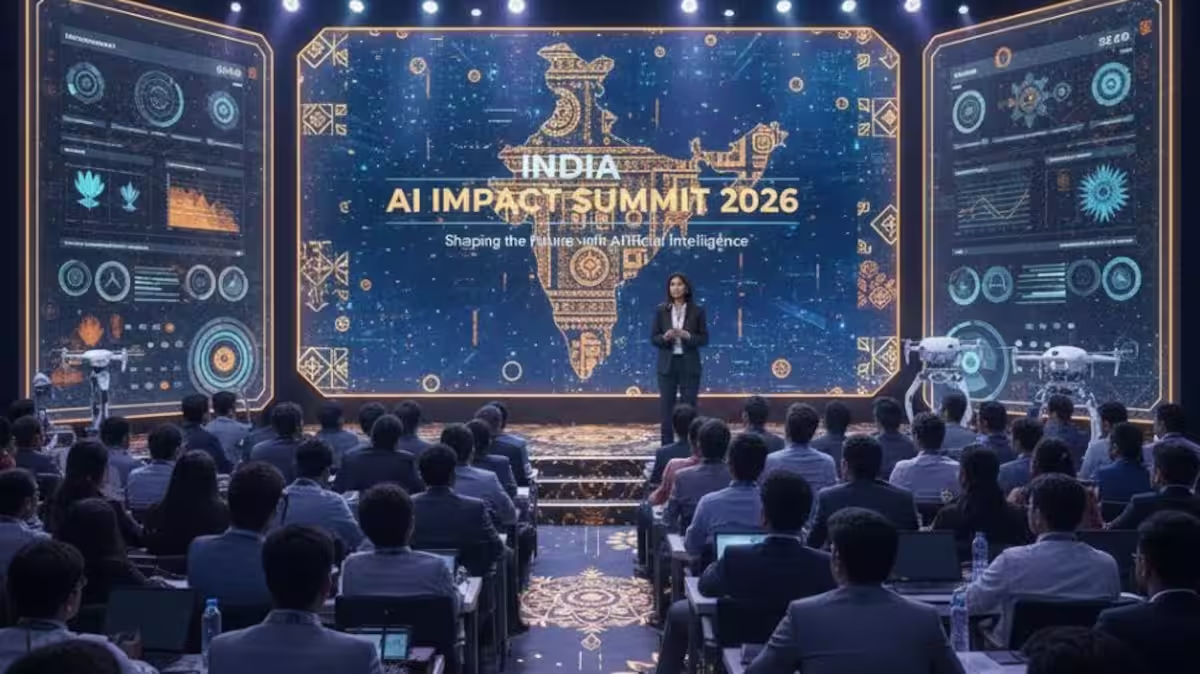
NEW DELHI, February 14, 2026 — Parliament News — The opening of the global AI conference in India’s capital, where government leaders, technology executives, researchers, and investors gathered to discuss artificial intelligence governance, infrastructure expansion, and economic transformation. The 2026 summit marks a significant milestone as nations intensify efforts to shape the next generation of digital development.
Held in New Delhi in 2026, the event reflects growing recognition that artificial intelligence now sits at the center of economic competitiveness and geopolitical influence. Delegations from more than 40 countries attended the multi-day gathering, engaging in high-level panels, bilateral meetings, and technology demonstrations.
Policy Leadership and Strategic Alignment
The global AI conference opened with keynote addresses from senior policymakers outlining national strategies for AI investment and regulatory development. India’s technology ministry emphasized innovation-friendly oversight while calling for international cooperation on shared standards.
Representatives from the European Union, the United States, and several Asian economies presented frameworks designed to balance innovation with accountability. Discussions focused on transparency requirements, algorithmic governance, and responsible deployment across healthcare, finance, and public services.
One senior policy official stated during the opening session,
“Artificial intelligence must be built on trust, transparency, and international cooperation.”

Semiconductor Infrastructure and Hardware Expansion
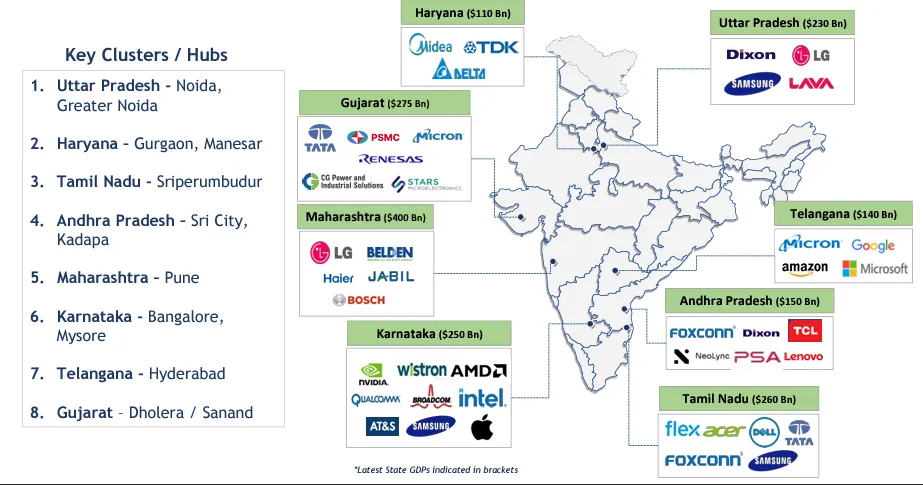
A central theme at the global AI conference involved semiconductor supply chain resilience and computing capacity. AI systems require advanced graphics processing units and high-performance data infrastructure, placing pressure on global chip production networks.
Executives discussed manufacturing diversification strategies, investment incentives, and collaborative research initiatives aimed at reducing supply bottlenecks. Participants acknowledged that sustainable AI growth depends on stable semiconductor production and energy-efficient hardware design.
India highlighted its semiconductor manufacturing ambitions, positioning itself as an emerging partner in the global hardware ecosystem.
Economic Implications and Market Momentum
Economists and investment analysts participating in the global AI conference examined AI’s projected contribution to global GDP growth. Presentations detailed how automation, predictive analytics, and generative models are transforming industries ranging from logistics to pharmaceuticals.
Venture capital firms reported increased funding flows into AI startups across Asia and Europe. Public market analysts noted that AI-related equities continue to attract investor attention, driven by demand for computing infrastructure and cloud-based AI services.
The economic dimension of the summit reinforced the view that artificial intelligence has evolved into a foundational technology for modern economies.
Academic Collaboration and Research Networks
Universities and research institutions played a prominent role throughout the global AI conference, emphasizing cross-border academic collaboration. Scholars presented findings on machine learning optimization, bias mitigation, and scalable data processing.
Research partnerships announced during the summit aim to strengthen data-sharing protocols and open-source development frameworks. Academic leaders underscored the importance of maintaining scientific integrity and ethical research practices in rapidly evolving AI domains.
A leading computer science professor remarked,
“Collaboration across institutions is essential if AI is to serve humanity responsibly.”
Ethical Governance and Regulatory Frameworks
As AI applications expand, policymakers continue refining regulatory approaches. Panels at the global AI conference explored data privacy protections, cybersecurity safeguards, and accountability mechanisms for automated systems.
European delegates highlighted progress under digital governance initiatives, while U.S. representatives discussed federal guidelines aimed at promoting transparency and fairness. Asian regulators shared balanced policy models encouraging innovation while mitigating systemic risks.
The discussions reflected growing consensus that global coordination is necessary to address cross-border implications of AI deployment.
Security Considerations and International Stability
Security experts addressed potential misuse of artificial intelligence in cyber operations and military systems. During the global AI conference, defense analysts emphasized safeguards to prevent destabilizing applications.
International cooperation emerged as a recurring theme, with participants advocating for shared norms governing AI-enabled defense technologies. Diplomatic dialogue underscored the importance of preventing escalation in AI-driven capabilities.
The integration of security considerations into mainstream AI discourse illustrates the technology’s strategic significance.
Workforce Transformation and Education
Artificial intelligence continues reshaping labor markets worldwide. Education ministers and workforce specialists attending the global AI conference discussed upskilling initiatives and curriculum reform.
Governments outlined training programs focused on data science, cybersecurity, and AI engineering. Industry leaders emphasized collaboration with academic institutions to align education with emerging technological demands.
Participants agreed that workforce preparedness will determine whether AI adoption fosters inclusive economic growth.
Environmental Sustainability and Energy Demand
Energy consumption associated with AI training models drew significant attention. Delegates at the global AI conference explored renewable energy integration and advanced cooling technologies to mitigate environmental impact.
Sustainability experts advocated for carbon-neutral data centers and energy-efficient chip architectures. The intersection of AI growth and climate responsibility remains a key policy challenge.
Leaders stressed that innovation must align with global environmental commitments.
Diplomatic Engagement and Strategic Alliances
Beyond technology discussions, the global AI conference served as a diplomatic forum. Bilateral meetings facilitated cooperation agreements covering research funding, infrastructure investment, and data governance collaboration.
Observers described the summit as a convergence point for technology policy and international relations. Strategic partnerships announced during closed sessions are expected to influence global AI policy coordination in the coming years.
Diplomatic engagement reflects AI’s role in shaping geopolitical relationships.
The Evolution of International AI Cooperation
The emergence of the global AI conference reflects a broader historical trajectory of international collaboration in technology governance. Early digital forums focused primarily on internet regulation and telecommunications standards. Over time, AI-specific gatherings gained prominence as machine learning applications expanded.
The 2026 summit represents the culmination of years of policy development and industrial investment. Historical analysis shows that technological revolutions often require coordinated governance to ensure sustainable growth and equitable access.
This evolution underscores the significance of multilateral dialogue in shaping AI’s future.
Industry Innovation Showcases
Technology companies unveiled new AI-driven tools in areas such as medical diagnostics, smart manufacturing, and climate modeling. Demonstrations highlighted real-time data analytics platforms and advanced neural network architectures.
Participants at the global AI conference emphasized that commercial deployment must align with ethical standards and regulatory compliance. Startups showcased scalable solutions targeting public sector and enterprise clients.
Innovation announcements reinforced confidence in AI’s transformative potential.
Public Trust and Transparency Initiatives
Civil society organizations called for enhanced public communication regarding AI deployment. During the global AI conference, speakers stressed the importance of explaining algorithmic decisions and addressing misinformation risks.
Transparency initiatives discussed at the summit include standardized disclosure requirements and independent auditing frameworks. Participants agreed that public trust remains essential for sustainable AI adoption.
Open dialogue between policymakers, industry leaders, and civil society continues to shape governance frameworks.
Investment Outlook and Financial Strategy
Financial institutions attending the global AI conference discussed long-term capital allocation strategies for AI infrastructure. Institutional investors expressed optimism regarding sustained demand for advanced computing platforms.
Market analysts projected continued growth in AI hardware and cloud-based service sectors through 2026 and beyond. Funding mechanisms for cross-border AI initiatives were also explored.
The convergence of capital markets and technological innovation underscores AI’s expanding economic footprint.
Looking Ahead to 2027 and Beyond
As the 2026 summit concludes, participants return home with renewed commitments to collaboration and responsible development. Agreements reached during the global AI conference are expected to influence regulatory policy, research funding, and infrastructure investment over the next decade.
Observers note that sustained cooperation will determine whether AI fulfills its promise as a force for economic progress and societal benefit.
A Defining Chapter in Technological Governance
The conversations in New Delhi reflect a world navigating both opportunity and complexity. Artificial intelligence now shapes national strategies, corporate priorities, and global diplomacy.
The global AI conference stands as a defining moment in 2026, demonstrating how coordinated dialogue can guide transformative technology toward inclusive and sustainable outcomes.