Victory banner controversy escalates in Seoul as officials request removal of a disputed embassy display.
The issue emerges days before the Ukraine war anniversary in 2026, increasing diplomatic sensitivity.
Talks continue between government representatives and embassy officials to prevent further tension.
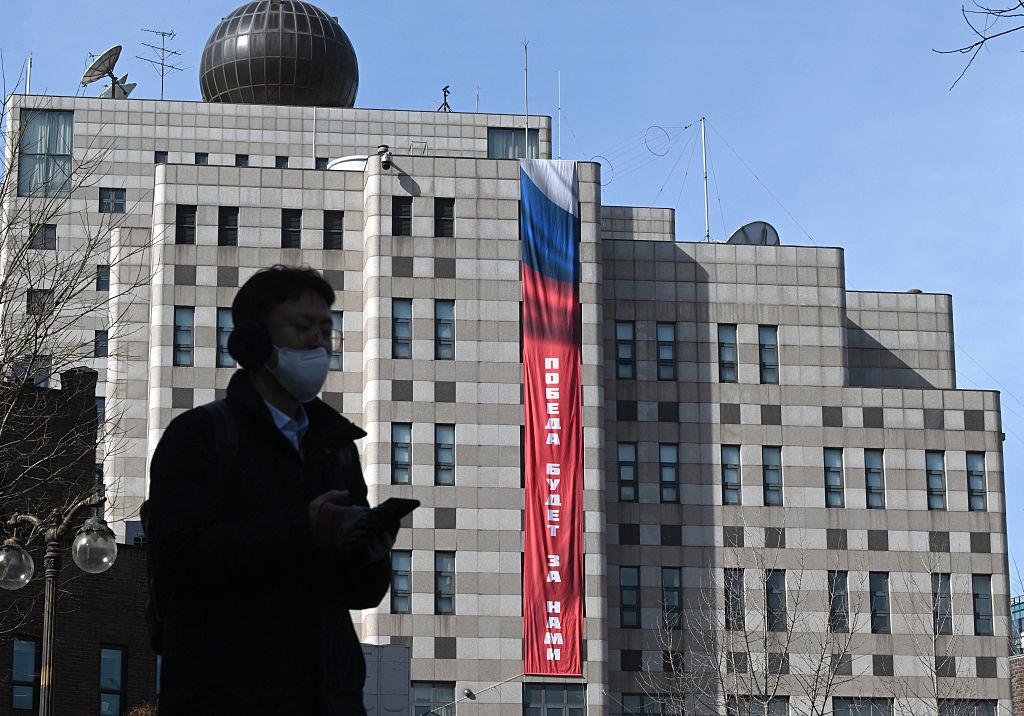
Seoul, South Korea, February 23, 2026 — According to Parliament News, that The victory banner controversy has intensified in the South Korean capital as officials formally requested that a foreign embassy remove a public display referencing wartime triumph. The issue has surfaced just days before the anniversary of the war in Ukraine, placing additional sensitivity on diplomatic messaging and public symbolism.
Government representatives confirmed that the matter is being handled through established diplomatic channels. While embassies operate under international protections, host nations maintain the right to communicate concerns when displays generate public reaction. In this case, the victory banner controversy has become a prominent subject of domestic discussion, international observation, and policy debate.
The banner, positioned on the exterior of the diplomatic compound and visible to passersby, references military success in the ongoing conflict. As the anniversary approaches, the victory banner controversy has drawn attention not only for its content but also for its timing.
Official Position of the South Korean Government
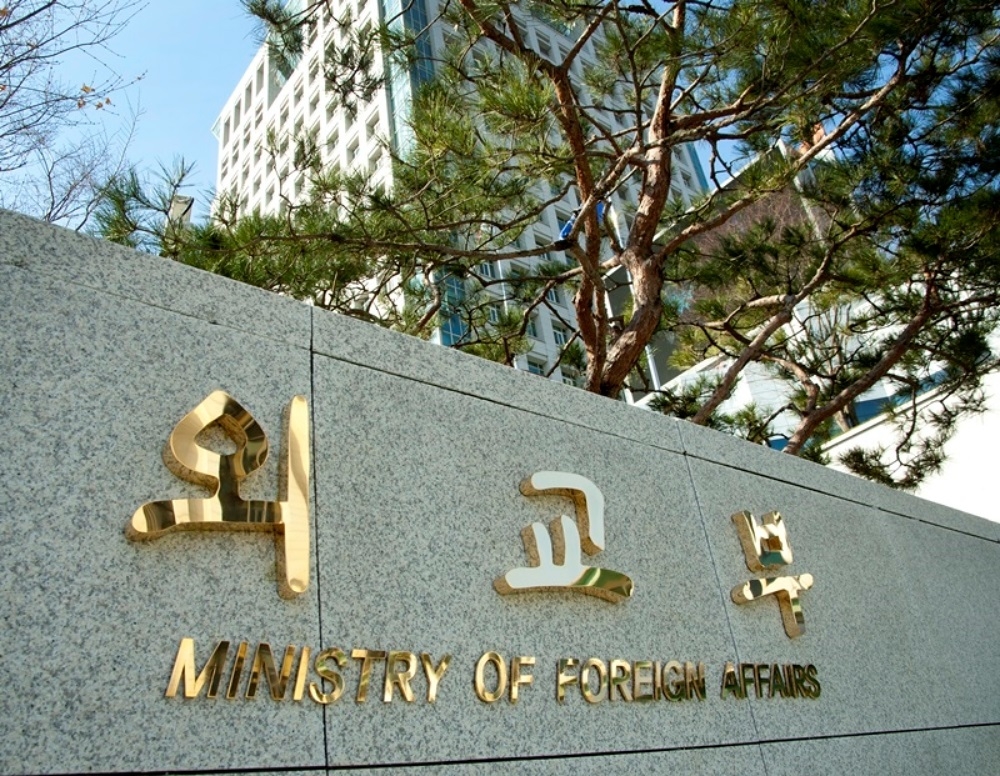
The South Korean Foreign Ministry stated that it conveyed concerns directly to embassy officials, emphasizing respect for diplomatic norms while underscoring the sensitivity of public displays during commemorative periods.
According to ministry sources, the request for removal was presented as a measure intended to preserve public harmony and avoid unnecessary friction. Officials noted that the victory banner controversy reflects broader questions about the responsibilities of diplomatic missions operating within host nations.
Authorities clarified that the appeal does not challenge the sovereignty of the diplomatic compound. Instead, it seeks voluntary cooperation in recognition of the emotional climate surrounding the Ukraine war anniversary.
Public Reaction and Civil Society Response
Public sentiment has been shaped by a mixture of reflection, concern, and debate. Civic organizations have expressed discomfort with overt political messaging displayed in highly visible urban areas, particularly when tied to ongoing hostilities.
Some residents argue that embassies possess the legal authority to display national symbols as they see fit. Others contend that context matters, especially when the anniversary of a war brings remembrance events and public dialogue about humanitarian impact.
The victory banner controversy has therefore extended beyond diplomatic corridors into broader societal conversations. Online platforms have amplified differing viewpoints, demonstrating how symbolic actions can resonate deeply in a connected world.
Community leaders have urged restraint from all sides, encouraging thoughtful discourse rather than escalation.
Diplomatic Law and International Norms
Under the Vienna Convention on Diplomatic Relations, embassies enjoy certain privileges and immunities designed to protect diplomatic activity. These protections, however, do not eliminate the importance of cultural awareness and diplomatic courtesy.
Legal scholars explain that while the physical space of an embassy carries sovereign protections, symbolic actions may still influence bilateral perceptions. The victory banner controversy highlights this delicate balance between sovereign expression and host nation sensitivity.
In practice, disputes involving embassy displays are often resolved quietly through negotiation. Historical precedent suggests that mutual respect and timely communication remain key to preventing long term damage to diplomatic relationships.
Strategic Context in 2026
The geopolitical landscape in 2026 remains shaped by the ongoing consequences of the Ukraine conflict. Alliances have shifted, economic relationships have been reevaluated, and security strategies continue to evolve.
South Korea has positioned itself as a nation advocating stability and adherence to international norms. Within this framework, the victory banner controversy represents a test of diplomatic agility.
Foreign policy analysts note that visible displays tied to military outcomes can carry layered interpretations. At moments of commemoration, such symbols may be perceived differently than during periods of relative calm.
By addressing the matter through formal communication rather than public confrontation, Seoul signals its preference for constructive dialogue.
Economic and Political Implications
Although primarily symbolic, diplomatic disputes can influence broader economic and political dynamics. South Korea maintains extensive trade networks and strategic partnerships across Europe, North America, and Asia.
Analysts caution that even localized controversies can generate ripple effects if mismanaged. Investor confidence, security cooperation, and bilateral negotiations often depend on stable diplomatic relations.
The victory banner controversy thus carries implications beyond its immediate visual presence. Policymakers appear mindful of preventing escalation that could complicate future cooperation.
Media Coverage and Narrative Framing
Domestic and international media outlets have closely tracked developments. Coverage has focused on the intersection of symbolism, international law, and public reaction.
Commentators have debated whether commemorative periods warrant additional restraint from diplomatic missions. Others emphasize the principle of sovereign expression.
The victory banner controversy illustrates how narratives can evolve rapidly, particularly when amplified by digital communication platforms. Within hours, a localized issue can become a global discussion point.
Journalists covering the situation have highlighted the importance of measured language and factual reporting to avoid inflaming tensions.
Historic Comparison
Diplomatic history contains multiple examples of symbolic disputes that tested bilateral relationships. Flag placements, commemorative installations, and public messaging have, at various times, prompted diplomatic exchanges.
In several instances, governments resolved such matters quietly through negotiation rather than public escalation. The victory banner controversy fits within this broader historical pattern, demonstrating that symbolic disagreements are not unprecedented.
Past cases suggest that mutual recognition of sensitivities, combined with direct communication, often leads to pragmatic solutions. While each situation carries unique circumstances, the underlying principles of respect and dialogue remain consistent.
Understanding these precedents provides context for the current dispute and reinforces the value of measured responses.
One Official Statement
A senior government official involved in the discussions stated,
“Diplomatic spaces operate under clear international agreements, but there is also an expectation of mutual respect and awareness of public sentiment during moments of global reflection.”
The statement underscores the administration’s emphasis on balance rather than confrontation. While brief, it signals the tone guiding negotiations surrounding the victory banner controversy.
Regional Security Considerations
South Korea’s strategic position in East Asia requires careful navigation of international relationships. Security cooperation with global partners remains central to national policy.
Symbolic disputes, though limited in scope, can intersect with broader strategic considerations. Observers note that maintaining constructive communication channels is essential in preserving regional stability.
The victory banner controversy emerges at a time when diplomatic relationships worldwide face heightened scrutiny. As such, its resolution carries symbolic weight beyond the immediate parties involved.
Public Reflection and Emotional Dimensions
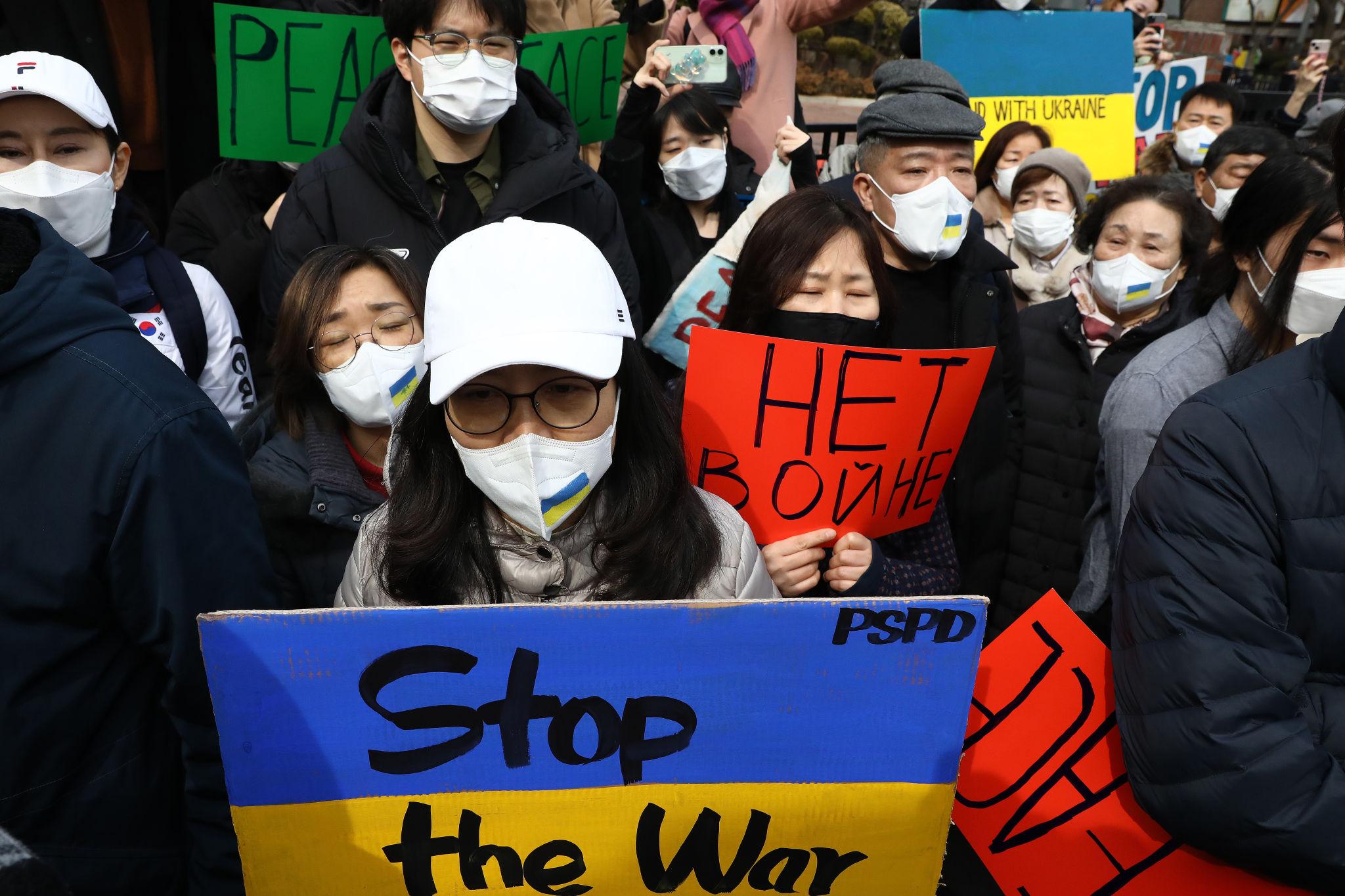
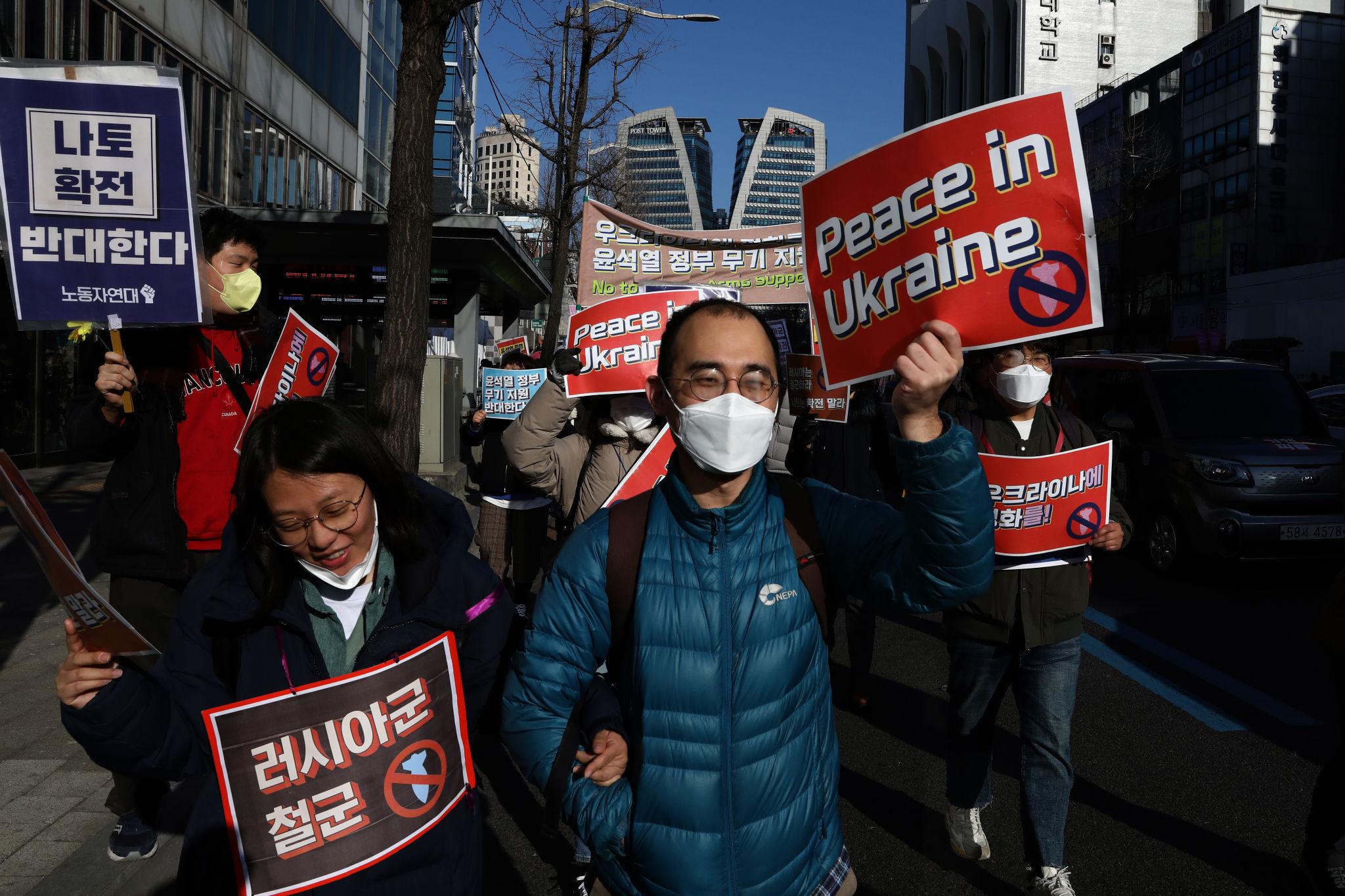
For many citizens, the anniversary of the Ukraine conflict evokes empathy and remembrance. Vigils, discussions, and educational events have been organized to mark the occasion.
In this environment, visible political messaging may be interpreted through an emotional lens. The victory banner controversy therefore resonates not only at a diplomatic level but also within personal narratives shaped by global events.
Community groups have encouraged calm reflection and respectful dialogue. The emphasis remains on preventing polarization while acknowledging diverse perspectives.
Potential Outcomes and Diplomatic Pathways
Observers outline several potential outcomes. The embassy may choose to remove or modify the banner voluntarily, which would likely ease public tension. Alternatively, it may retain the display, prompting continued diplomatic engagement.
Experts in international relations suggest that most symbolic disputes conclude through quiet compromise. The victory banner controversy may ultimately follow a similar course.
South Korean officials continue to engage counterparts through established diplomatic channels, signaling a preference for resolution rather than escalation.
Broader Lessons for Diplomatic Practice
The situation offers broader lessons about the power of symbols in international relations. Visual messaging, especially during sensitive anniversaries, can carry significant interpretive weight.
Diplomatic missions worldwide may observe the outcome of the victory banner controversy as a reference point for their own practices. The balance between sovereign expression and host nation awareness remains a constant consideration.
In an era of rapid information dissemination, symbolic gestures can gain amplified significance. Governments therefore face increasing pressure to anticipate potential reactions to public displays.
Looking Ahead Beyond the Dispute
As discussions continue, attention remains focused on whether the issue will subside or evolve further. Officials emphasize that open communication channels remain intact.
The victory banner controversy has already prompted renewed dialogue about diplomatic norms, public symbolism, and the interconnected nature of global politics.
Regardless of the outcome, the episode underscores how even a single banner can spark far reaching conversations. In 2026, Seoul finds itself navigating a complex intersection of history, emotion, and international diplomacy.
Ultimately, the path forward will depend on measured engagement and mutual recognition of shared interests. Diplomatic relationships endure not only through formal agreements but also through the careful handling of symbolic moments that capture public attention.
As the anniversary approaches, the focus remains on maintaining stability, preserving dialogue, and ensuring that diplomacy continues to serve as a bridge rather than a barrier in times of global reflection.