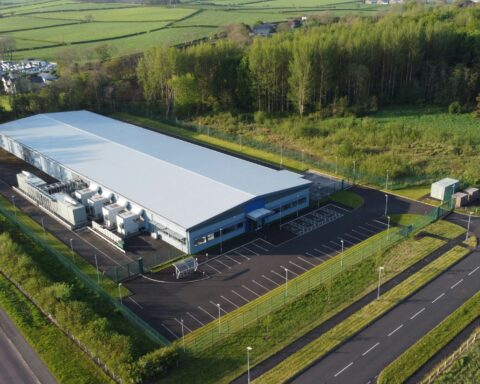
AI data center demand is accelerating across the United States in 2026 as cloud providers expand infrastructure to power artificial intelligence growth.
Technology firms are investing billions in high performance computing facilities to meet rising enterprise and government AI workloads.
Industry analysts say sustained AI data center demand reflects a long term structural shift in the digital economy.
NEW YORK, United States, February 24, 2026 — According to Parliament News, that AI data center demand is accelerating at an unprecedented pace, transforming how infrastructure is built, financed, and regulated across the country. Technology firms, cloud providers, and enterprise platforms are committing billions of dollars to expand server capacity capable of powering next generation artificial intelligence systems.
The surge in AI data center demand reflects a structural shift in the digital economy. Artificial intelligence is no longer confined to experimental labs or niche applications. It now drives business analytics, healthcare diagnostics, logistics optimization, cybersecurity detection, financial modeling, and consumer services. As AI adoption deepens, the need for high performance computing facilities has become central to national economic strategy.
In 2026, infrastructure is not simply expanding; it is evolving. Hyperscale facilities are being constructed at record speed, while existing data centers are retrofitted with advanced cooling systems and specialized processors designed to handle increasingly complex workloads.
Forces Driving the Surge
The rapid rise in AI data center demand stems from exponential increases in computing intensity. Modern machine learning models require massive parallel processing across thousands of specialized accelerators. Training advanced language systems or image recognition models involves processing petabytes of data in continuous cycles.
Corporate executives increasingly treat AI capacity as foundational infrastructure rather than discretionary spending. Businesses that once invested modestly in analytics are now allocating significant capital to integrate AI into core operations. This strategic pivot reinforces the upward trajectory of AI data center demand nationwide.
In addition, public sector agencies are expanding AI use cases in transportation planning, defense systems, environmental monitoring, and public health forecasting. Government adoption contributes further momentum to infrastructure expansion.
Hyperscale Cloud Providers at the Center
Large cloud platforms remain central to the story of AI data center demand. These companies operate global networks of computing facilities capable of delivering scalable resources to enterprises of all sizes.
In 2026, hyperscalers are deploying advanced AI accelerators, high bandwidth networking fabrics, and energy optimized architectures. Their capital expenditure budgets have reached historic highs, with infrastructure investment forming the majority of spending growth.
Competition among cloud providers has intensified. Speed, reliability, and energy efficiency are key differentiators. As enterprises migrate AI workloads to cloud environments, sustained AI data center demand continues to shape strategic decisions within the technology sector.
Semiconductor Production and Hardware Availability
No discussion of infrastructure expansion would be complete without examining semiconductor supply. Specialized chips optimized for artificial intelligence are essential to meeting rising AI data center demand.
Manufacturers have expanded fabrication capacity to address prior shortages. New facilities across the United States aim to secure domestic supply chains while reducing geopolitical vulnerability. Advanced process nodes and packaging innovations enable greater computational density per chip.
However, production remains capital intensive and technically complex. Ensuring consistent hardware availability is critical to sustaining growth momentum in computing infrastructure.

Energy Infrastructure and Sustainability
As server capacity increases, so too does energy consumption. Large scale computing facilities require substantial electricity to power processors and cooling systems. The intersection between AI data center demand and national energy policy has therefore become increasingly prominent.
Companies are signing long term renewable energy contracts to offset carbon emissions. Solar and wind partnerships are now common components of infrastructure planning. Advanced cooling technologies such as liquid immersion systems are reducing water usage and improving efficiency.
Environmental considerations influence site selection decisions. Regions offering stable grid capacity and renewable integration often attract greater investment.
Economic Ripple Effects
The rise of AI data center demand generates widespread economic impact. Construction projects create temporary employment opportunities, while long term operations require skilled engineers, technicians, and cybersecurity specialists.
Local governments compete to attract new facilities through tax incentives and infrastructure support. Communities hosting data centers benefit from property tax revenue and technology ecosystem development.
Economists suggest that sustained infrastructure expansion could contribute significantly to gross domestic product growth in technology oriented states.
Enterprise Transformation Across Industries
Businesses across sectors are accelerating AI integration, further strengthening AI data center demand. Healthcare organizations leverage predictive analytics for patient outcomes. Financial institutions rely on AI driven fraud detection and risk modeling. Retailers optimize supply chains through machine learning forecasts.
These applications require scalable computing backends capable of handling continuous data streams. As enterprises modernize operations, demand for reliable high performance computing capacity remains robust.
Small and mid sized firms also participate by accessing cloud based AI platforms, indirectly supporting broader infrastructure growth.
Financial Markets and Investor Signals
Investors closely monitor AI data center demand as a measure of long term AI monetization potential. Strong capital expenditure by cloud providers often signals confidence in sustained customer demand.
Technology equities tied to server hardware, cooling solutions, and networking equipment reflect expectations around infrastructure expansion. Market volatility sometimes follows earnings guidance that adjusts capital spending projections.
For investors, infrastructure commitments represent tangible evidence that artificial intelligence adoption extends beyond theoretical enthusiasm.
Regulatory Environment and Public Policy
The rapid growth of AI data center demand has prompted policy discussions around grid reliability, water usage, zoning regulations, and cybersecurity safeguards. Lawmakers aim to balance economic opportunity with environmental sustainability.
Some states have introduced streamlined permitting processes to accelerate construction timelines. Others emphasize environmental impact assessments to ensure responsible development.
Federal initiatives supporting semiconductor manufacturing also influence infrastructure planning decisions.
Workforce Development and Talent Needs
Expanding infrastructure requires a skilled workforce. Universities and technical institutes are increasing programs focused on data center management, electrical engineering, and AI systems integration.
The rise of AI data center demand has created opportunities for specialized training in cooling technologies, fiber networking, and power management. Workforce development programs aim to meet growing labor requirements while fostering local expertise.
Industry leaders highlight talent availability as a key factor in site selection decisions.
Historic Comparison
The present wave of infrastructure expansion invites comparison with earlier technological revolutions. During the late 1990s internet boom, data centers multiplied rapidly to support web hosting and e commerce. In the 2010s, cloud computing transformed enterprise IT architectures.
Compared to those periods, today’s AI data center demand represents a deeper structural shift. Earlier waves primarily addressed connectivity and storage needs. The current expansion focuses on intensive computational power capable of training and deploying advanced algorithms.
Unlike past cycles, modern facilities incorporate energy optimization and sustainability planning from inception. The scale of investment and integration into national strategy distinguishes this era from prior technology expansions.
Global Competition and Strategic Positioning
While the United States leads in AI infrastructure investment, global competition is intensifying. Nations in Europe and Asia are investing heavily to capture a share of computing capacity and research leadership.
Cross border collaboration in chip manufacturing and cloud services influences the trajectory of AI data center demand worldwide. Trade policies and export regulations also shape supply chain dynamics.
International competition may accelerate innovation and encourage further capital commitments.
Risk Factors and Market Uncertainty
Despite strong momentum, certain risks could moderate AI data center demand growth. Economic downturns, supply disruptions, or regulatory constraints may influence capital allocation decisions.
High upfront costs require confidence in long term AI revenue streams. If adoption slows unexpectedly, infrastructure expansion could face reassessment.
However, analysts generally view artificial intelligence as a durable secular trend rather than a temporary phenomenon.
One Industry Perspective
A senior infrastructure strategist recently observed,
“Artificial intelligence is redefining computing as a national priority, and infrastructure investment today is being measured in decades, not quarters.”
This perspective underscores the long term planning horizon shaping corporate decisions in 2026.
Strategic Outlook for 2026 and Beyond
Looking forward, continued innovation in chip design, cooling technology, and distributed computing architectures will influence the trajectory of AI data center demand. Modular facilities and edge nodes may complement large hyperscale campuses.
Energy partnerships and grid modernization efforts will remain central considerations. Public private collaboration could accelerate sustainable expansion while mitigating environmental strain.
Industry observers anticipate ongoing growth through the remainder of 2026, with infrastructure serving as a foundational pillar of digital transformation.
Infrastructure as the Digital Backbone
The expansion of AI data center demand signifies more than increased server counts. It reflects a fundamental transformation in how economies operate. Data centers now function as real time intelligence engines supporting decision making across nearly every sector.
As enterprises, governments, and consumers integrate artificial intelligence into daily operations, infrastructure stability becomes synonymous with economic resilience.
The evolution underway in 2026 demonstrates that computing capacity has become strategic national infrastructure. Sustained AI data center demand reinforces the reality that digital intelligence now underpins commerce, healthcare, transportation, defense, and communication.
In this landscape, infrastructure is no longer a background utility. It is the visible backbone of a rapidly advancing digital society.