


The new investment signals that the UK autonomous vehicle startup is gaining traction among institutional backers and global automotive partners. Market analysts describe the funding as a strategic vote of confidence in adaptive AI driven driving systems rather than rigid rule based models.
A senior mobility strategist said,
“Autonomous systems built on continuous learning will define the next era of transportation infrastructure.”
The scale of financial support suggests that long term investors view artificial intelligence not merely as a supplementary feature but as the core operating system of future vehicles.
Manufacturers increasingly seek partnerships with innovative software developers. By collaborating with a UK autonomous vehicle startup, established automakers aim to integrate intelligent driving capabilities directly into production platforms.

Artificial Intelligence as the Engine of Progress
At the center of this development lies a commitment to embodied AI. The UK autonomous vehicle startup emphasizes machine learning systems that adapt dynamically to complex road environments rather than relying exclusively on high definition mapping.
Engineers train neural networks using real world driving data collected across diverse urban and suburban settings. This approach enables vehicles to interpret traffic signals, pedestrians, weather conditions, and unexpected obstacles with increasing precision.
Industry experts argue that adaptive intelligence may ultimately prove more scalable than static mapping frameworks, particularly in dense cities such as London.
Expanding Research Capacity Across Britain
With fresh capital secured, the UK autonomous vehicle startup is expected to expand research operations and recruit specialists in artificial intelligence, robotics, and computational engineering. The funding allows for enhanced simulation testing and larger scale road trials.
High performance computing infrastructure will likely play a central role in processing vast volumes of sensor data. By refining neural networks more rapidly, engineers aim to improve both safety metrics and system responsiveness.
Technology economists suggest that continued expansion could stimulate job creation and attract additional venture investment into Britain’s deep technology ecosystem.
Competitive Dynamics in the Global Autonomy Race
The emergence of this funding milestone for a UK autonomous vehicle startup comes amid fierce global competition. Companies in North America and Asia are investing heavily in robotaxi fleets and advanced driver assistance technologies.
Unlike operators focused on ride hailing services, this company’s model centers on licensing scalable AI software to manufacturers. This strategy may allow faster integration across multiple vehicle brands while reducing operational overhead.
Market observers note that strategic partnerships often accelerate commercialization timelines by aligning startup innovation with established production networks.
Regulatory Landscape and Public Safety
Autonomous systems operate within strict regulatory frameworks. The UK autonomous vehicle startup must comply with rigorous European safety standards before full deployment becomes possible.
Government agencies require transparent validation processes and consistent reliability benchmarks. Funding at this level enhances the company’s ability to collaborate with regulators and conduct comprehensive safety evaluations.
Consumer confidence remains closely linked to demonstrated performance and accountability.

Economic Impact on London’s Technology Sector
Investment in a UK autonomous vehicle startup extends beyond technological innovation. London’s position as a global financial hub supports venture capital inflows, academic partnerships, and research collaboration.
Economic analysts predict that autonomous mobility solutions could contribute to improved logistics efficiency and reduced congestion costs over time. By integrating AI systems into transportation networks, cities may benefit from smarter traffic management and lower emissions.
The funding reinforces Britain’s broader strategy to position itself as a leader in artificial intelligence development.
Integration With Modern Vehicle Architecture
Automotive engineering is increasingly defined by software. The UK autonomous vehicle startup aims to deliver AI platforms compatible with diverse vehicle models, allowing manufacturers to upgrade capabilities through software integration.
Rather than replacing drivers immediately, advanced systems are expected to enhance driver assistance features first. Gradual implementation provides time for reliability testing and consumer adaptation.
Industry observers emphasize that software defined vehicles represent the next logical phase of automotive evolution.
International Expansion Strategy
Following the funding announcement, the UK autonomous vehicle startup is expected to explore international partnerships. Collaboration with global manufacturers may enable deployment across Europe and potentially in North America and Asia.
A mobility consultant stated,
“Scaling through partnerships rather than building independent fleets creates a sustainable pathway for growth.”
Cross border regulatory alignment will be critical for successful expansion.
From Experimental Robotics to Intelligent Mobility
Autonomous vehicle research began decades ago with experimental robotics initiatives. Early prototypes relied on limited sensor systems and rule based algorithms.
Advancements in computing power and machine learning transformed the field. Neural networks enabled vehicles to interpret visual data and respond to complex traffic conditions more effectively.
The rise of a UK autonomous vehicle startup reflects this long arc of innovation. Britain’s academic institutions and technology clusters have contributed significantly to AI research, laying the groundwork for today’s commercial breakthroughs.
Industry Perspectives on the Funding Milestone
Technology leaders and automotive executives continue to evaluate the implications of this investment. A research director based in London remarked,
“Artificial intelligence in mobility is transitioning from theoretical potential to operational infrastructure.”
Observers suggest that the scale of funding reinforces long term commitment rather than short term experimentation. Strategic alliances between startups and legacy manufacturers may define the next stage of autonomous integration.
Confidence in adaptive AI systems appears to be strengthening across global markets.
Public Perception and Adoption Pathways
Despite technological progress, consumer acceptance remains pivotal. The UK autonomous vehicle startup must demonstrate consistent reliability to build trust among drivers and regulators.
Gradual introduction of advanced driver assistance features may serve as a bridge toward higher autonomy levels. Public education campaigns and transparent performance reporting are likely to play important roles.
Adoption timelines will depend on measurable improvements in safety metrics and regulatory clarity.
Urban Infrastructure and Smart City Integration
Autonomous systems operate within complex urban environments. The UK autonomous vehicle startup may collaborate with city authorities to ensure compatibility with smart traffic systems and digital mapping initiatives.
London’s dense transportation network offers both opportunities and challenges for AI driven mobility. Coordinated infrastructure planning could enhance system performance while reducing congestion.
Future smart cities may integrate connected vehicle networks to optimize traffic flow and environmental sustainability.
Long Term Vision for Artificial Intelligence in Transport
The broader significance of this funding milestone extends beyond one company. The rise of a UK autonomous vehicle startup signals a transition toward transportation systems defined increasingly by adaptive software intelligence.
Artificial intelligence has the potential to reshape logistics, personal mobility, and public transportation networks. Incremental advancements may gradually redefine how vehicles interpret and interact with their surroundings.
If development continues at its current pace, the coming decade could witness profound transformation in mobility standards worldwide.
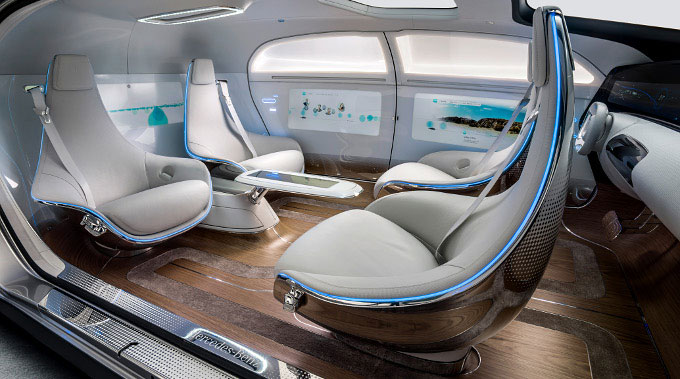
When Algorithms Redefine the Road Ahead
As 2026 unfolds, London stands at the intersection of finance, research, and innovation. The momentum surrounding autonomous mobility reflects a broader shift in how technology shapes infrastructure.
The emergence of a strong UK autonomous vehicle startup reinforces Britain’s global role in artificial intelligence leadership. With sustained investment and collaborative partnerships, adaptive driving systems may become foundational elements of modern transportation.
The journey toward widespread autonomy remains complex, yet the trajectory suggests that intelligent software will increasingly guide vehicles through the cities of tomorrow, marking a new chapter in the evolution of mobility.
