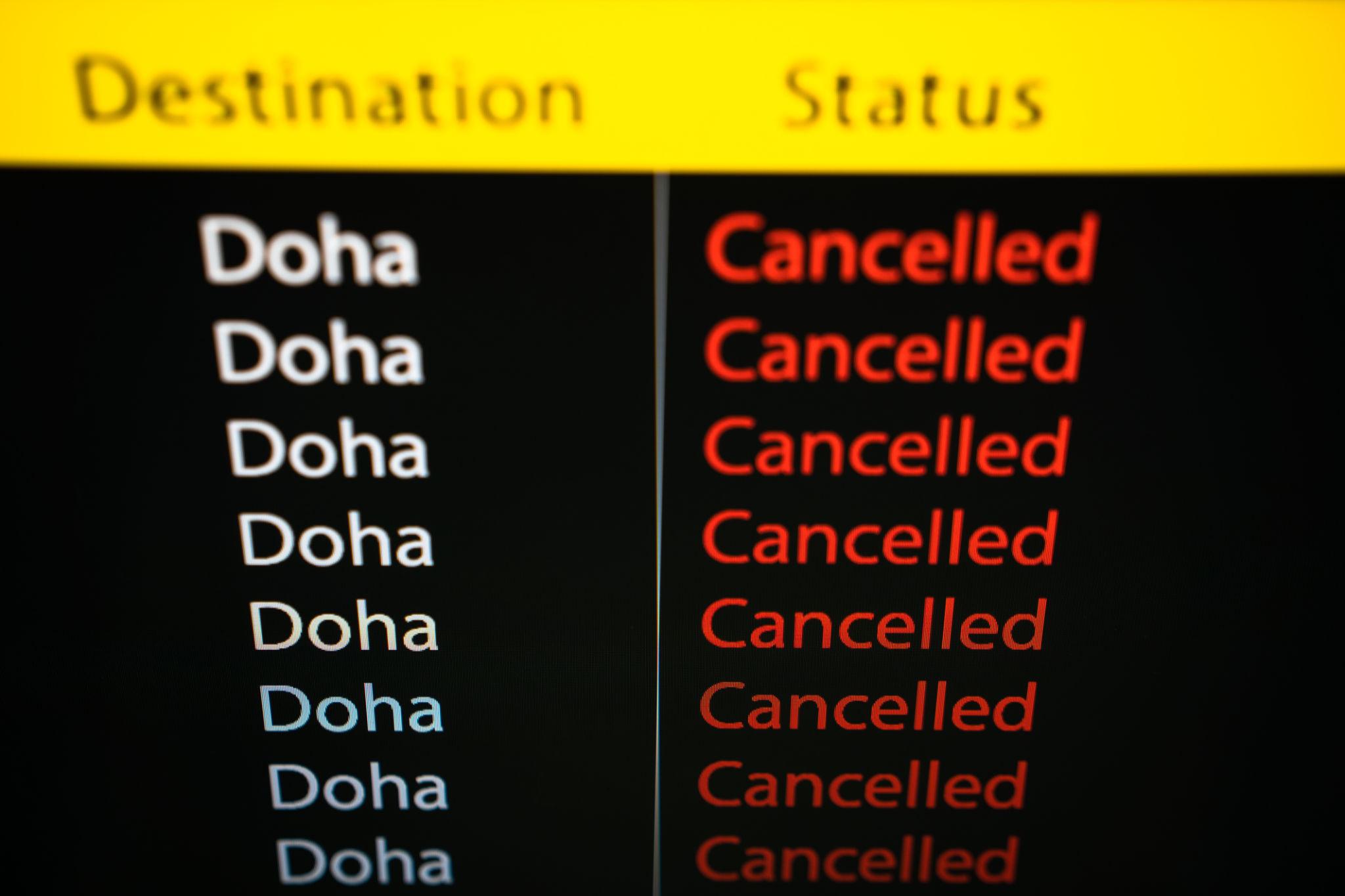
Middle East flight disruption intensifies in Doha in 2026 as regional tensions force emergency airspace adjustments.
Airlines reroute major international corridors while passengers face delays and extended travel times.
Markets, governments, and aviation authorities respond swiftly to stabilize global travel operations.
Doha, Qatar — February 28, 2026 — Parliament News — has become the center of a growing Middle East flight disruption that is affecting travelers, airlines, and financial markets worldwide. Authorities confirmed precautionary airspace restrictions following heightened regional tensions, prompting immediate operational changes across major international carriers. Within hours, departure boards reflected delays, cancellations, and rerouted long haul services connecting Europe, Asia, and Africa.
The Middle East flight disruption unfolded quickly, but its roots lie in broader geopolitical instability. Aviation officials stressed that passenger safety remains the highest priority, even as airlines scramble to adjust schedules and minimize inconvenience. For travelers in transit hubs across the Gulf, the sudden shift in routing created an atmosphere of uncertainty that spread well beyond airport terminals.
Though flights continue operating under revised paths, the scale of the Middle East flight disruption highlights how interconnected global aviation truly is. A decision made in one region can ripple outward, altering travel plans for millions within a single news cycle.
How the Crisis Unfolded
The first indications of trouble appeared when civil aviation authorities issued advisories to avoid specific air corridors. Shortly thereafter, airlines began announcing schedule modifications. The Middle East flight disruption intensified as neighboring countries implemented similar precautionary measures, creating a chain reaction across the region.
Airlines rely on Gulf airspace for its strategic geographic position. The region acts as a bridge between continents, enabling efficient long haul travel. When restrictions were introduced, flight planners had to calculate new routes almost instantly. Crews reviewed fuel loads, alternate airports, and updated weather forecasts for extended journeys.
Passengers boarding aircraft in London, Paris, Mumbai, and Singapore were informed that flight times could increase by one to three hours. Some itineraries required refueling stops, while others were entirely rescheduled. The Middle East flight disruption became a live demonstration of how delicate global scheduling systems can be during periods of instability.
Impact on International Airlines
Global carriers operate on tight margins and precise timing. The Middle East flight disruption forced airlines to revise thousands of flight plans in a matter of days. Operational teams worked through the night adjusting crew rosters and communicating with airport authorities.
Fuel costs represent one of the largest expenses for airlines. Longer routes inevitably raise those costs. Insurance premiums may also fluctuate during regional crises, further increasing operational pressure. For Gulf based carriers whose business models depend heavily on transit traffic, maintaining smooth connections became a formidable challenge.
Despite these hurdles, most airlines avoided widespread shutdowns. Technology played a crucial role. Advanced navigation systems and real time tracking allowed dispatch teams to reroute aircraft safely. Even so, the Middle East flight disruption revealed how dependent global aviation remains on stable political conditions.
The Passenger Experience
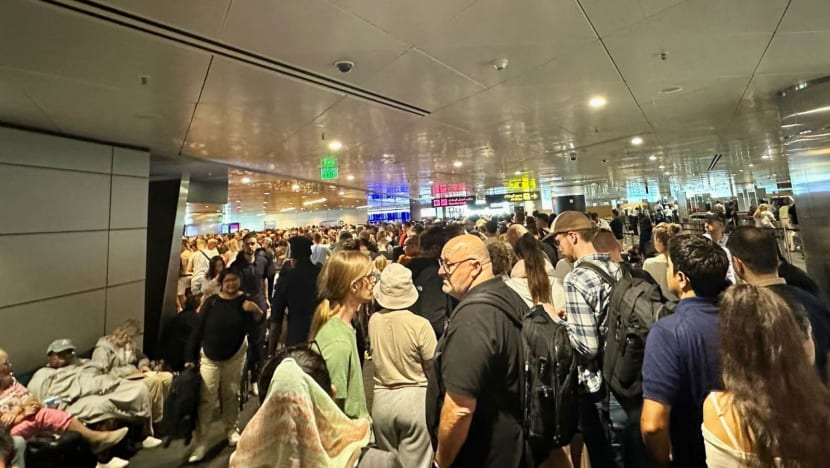
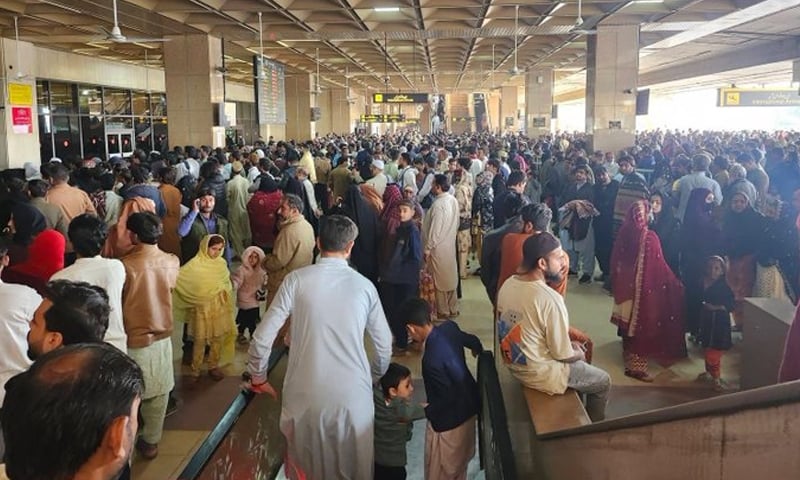
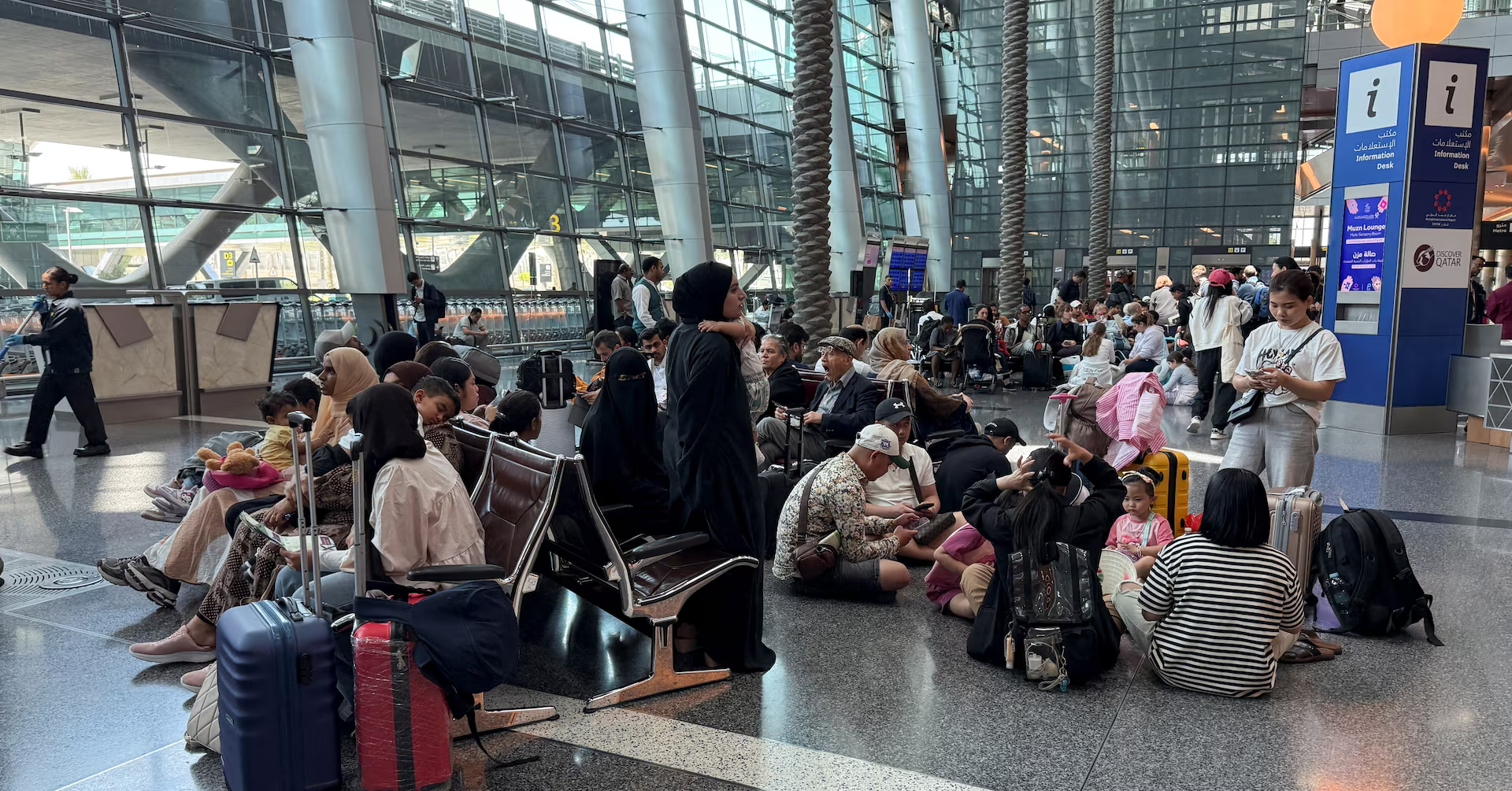
For travelers, the disruption translated into crowded gates and extended layovers. Families on holiday adjusted hotel reservations. Business travelers revised meeting schedules. Airport lounges filled quickly as passengers waited for updates.
Customer service teams reported high call volumes as travelers sought clarity. Some airlines offered flexible rebooking policies to ease the strain. Although frustration was evident, many passengers expressed understanding given the security context.
One aviation consultant explained the broader picture:
“The Middle East flight disruption reminds us that aviation is deeply intertwined with geopolitics. When tensions rise, airlines must prioritize safety over speed.”
This perspective resonated with many travelers who recognized that rerouting flights, though inconvenient, serves a protective purpose.
Economic Ripples Across Markets
Financial markets tend to react swiftly to geopolitical uncertainty. In the days following the announcement, airline shares experienced volatility. Energy markets also showed fluctuations as traders assessed regional risk exposure.
Tourism sectors in the Gulf region monitored booking trends carefully. Conferences, exhibitions, and sporting events depend on predictable air connectivity. Even temporary restrictions can influence traveler confidence.
Economists note that short term turbulence does not always translate into long term damage. Still, the Middle East flight disruption underscores how transportation networks influence trade, tourism, and investor sentiment simultaneously.
Government Coordination and Safety Protocols
Regional governments engaged in continuous dialogue to ensure safe air traffic management. Civil aviation authorities shared data and coordinated route adjustments. International aviation organizations maintained oversight to preserve standardized safety procedures.
Precautionary closures are not unprecedented. Authorities emphasize that such measures aim to prevent risk rather than respond to active incidents. The Middle East flight disruption therefore reflects a proactive stance grounded in aviation safety principles.
Advanced satellite communication and digital mapping technologies allowed aircraft to avoid restricted zones efficiently. These tools helped minimize confusion while ensuring compliance with international regulations.
Environmental and Operational Consequences
Extended flight paths inevitably increase fuel consumption and carbon emissions. Environmental groups highlighted the sustainability implications of prolonged rerouting. Airlines, already under pressure to meet emission reduction targets, faced added complexity.
Crew scheduling also required careful management. Longer journeys affect duty time regulations, which are strictly enforced to maintain pilot alertness and safety. The Middle East flight disruption placed additional demands on airline logistics departments striving to balance efficiency with compliance.
Despite these challenges, the aviation industry demonstrated resilience. Rapid coordination limited widespread cancellations, and most passengers ultimately reached their destinations, albeit later than planned.
Diplomatic Signals in the Sky
Airspace restrictions often serve as subtle diplomatic signals. By adjusting civilian corridors, governments communicate caution without escalating confrontation. Analysts suggest that the Middle East flight disruption carries both practical and symbolic weight.
Diplomatic channels remain active as regional leaders pursue de escalation. History shows that such disruptions frequently resolve once tensions ease. The duration of the current restrictions will depend on evolving security assessments.
Observers emphasize that aviation is often the first sector to feel geopolitical tremors. Aircraft routes become visible indicators of broader political dynamics unfolding below.
Historic Comparison
Previous regional crises have prompted similar airspace adjustments. During earlier conflicts, airlines temporarily avoided specific zones to safeguard passengers. In each instance, the aviation community adapted through collaboration and contingency planning.
What distinguishes the current Middle East flight disruption is the speed of global awareness. Flight tracking applications allow the public to observe rerouted aircraft in real time. Social media amplifies updates instantly, shaping perception as events unfold.
While past disruptions varied in duration, they collectively reinforced the importance of preparedness. Airlines now maintain detailed contingency frameworks designed to activate within hours of emerging threats.
Market Psychology and Investor Response
Investor sentiment often mirrors headlines. As news of the Middle East flight disruption spread, markets displayed short term caution. Airline stocks fluctuated alongside oil prices, reflecting uncertainty.
Financial analysts advised patience, noting that aviation demand remains fundamentally strong. Once stability returns, flight schedules typically normalize quickly. Historical data suggests that markets recover as clarity replaces speculation.
Transparency from aviation authorities can mitigate volatility. Clear communication reassures both passengers and investors that safety protocols are functioning as intended.
Community Voices and Human Stories
Beyond economic statistics, the disruption carries personal dimensions. Airport employees worked extended shifts to manage passenger flow. Families adapted travel plans with resilience. Airline crews navigated longer routes while maintaining calm professionalism.
For many travelers, the experience offered a reminder that modern convenience relies on fragile foundations. Air travel feels routine until circumstances shift unexpectedly. The Middle East flight disruption transformed ordinary journeys into stories of patience and adaptation.
Human resilience emerged as a consistent theme. Travelers shared snacks, offered assistance to elderly passengers, and exchanged updates in crowded terminals. In moments of uncertainty, cooperation often becomes visible.
Looking Ahead
Authorities continue evaluating security developments. Airlines remain prepared to restore standard routes once conditions allow. The aviation sector’s ability to adapt swiftly offers reassurance amid uncertainty.
The broader lesson extends beyond this episode. Global mobility depends on diplomacy, coordination, and trust among nations. The Middle East flight disruption serves as a reminder that aviation is not insulated from politics but deeply connected to it.
As skies gradually stabilize, industry leaders will likely review contingency protocols to strengthen future responses. Innovation in navigation technology and international cooperation will remain central to safeguarding passengers.
When Stability Becomes the True Destination
In 2026 Doha, aircraft still depart and arrive, though along altered paths. The Middle East flight disruption illustrates how quickly circumstances can evolve in an interconnected world. While delays test patience, they also reflect a commitment to safety that underpins global aviation.
Ultimately, the skies mirror human systems below. Stability, diplomacy, and preparedness determine whether routes remain direct or detour through uncertainty. As governments pursue resolution, airlines and passengers alike look toward a return to predictable travel.
The resilience displayed throughout this period suggests that aviation will once again find equilibrium. When that moment arrives, the experience will stand as a reminder that safety and cooperation remain the true cornerstones of global connectivity.