

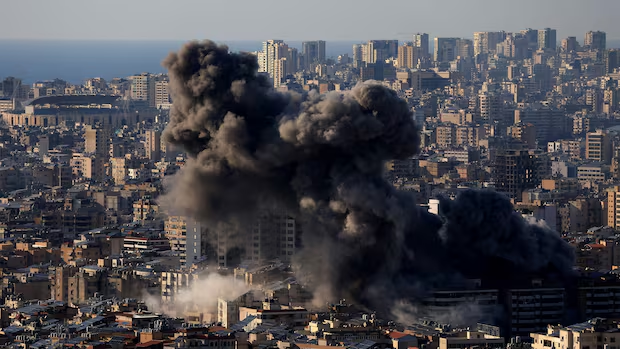
Headline: Canada Issues Warning Amid Rising Violence in Lebanon
In a significant escalation of tensions, the Canadian government has voiced serious concerns about the increasing violence in Lebanon following a brutal attack in Beirut last week that left several civilians dead and many more injured. This alarming situation, marked by conflicts between various factions, has prompted Ottawa to update its travel advisory and urge Canadians to remain vigilant while in the region. The security crisis in Lebanon arises from long-standing political instability, compounded by economic challenges and the fallout from the Syrian civil war, leading to fears of widespread unrest.
Canada’s global reputation as a proponent of peace and stability has rallied its officials to take a firm stand regarding Lebanon’s deteriorating security environment. The Foreign Affairs Minister stated that the situation necessitates immediate attention, calling on international entities to address the crisis collaboratively. Canada is deeply concerned about the humanitarian implications of this violence, particularly regarding vulnerable populations, including women and children, who are most affected by such turmoil.
As Lebanon grapples with its complex political landscape, the recent skirmishes in Beirut have underscored the fragility of peace in the country. The Canadian government’s reaction comes after credible reports revealed increased clashes between rival factions and armed groups, raising fears that Lebanon could be approaching another period of civil unrest. Civilians have expressed their growing anxiety about personal safety, as street battles and neighborhood conflicts become increasingly common.
This escalation has been exacerbated by Lebanon’s economic collapse, where hyperinflation has rendered basic goods and services unaffordable for many. The deteriorating economic conditions have further fueled public discontent, leading to widespread protests against the government. These protests, however, have increasingly turned violent, as demonstrators clash with security forces and rival political groups. The social fabric of Lebanese society, which has historically been woven with threads of diversity and coexistence, is under threat, and the nation’s long-held values are in jeopardy.
Ottawa’s updated travel advisory now categorizes Lebanon as a high-risk destination, urging Canadians to avoid all non-essential travel to the region and encouraging those who remain to exercise heightened caution. Officials are recommending that travelers remain informed about their surroundings and establish contingency plans in case of emergencies. The Canadian government is also coordinating closely with international partners to monitor the situation, seeking to provide timely updates to its citizens abroad.
The crisis in Lebanon is not an isolated issue; it contributes to regional instability that affects various geopolitical dynamics in the Middle East. Canadian officials are advocating for multinational dialogues aimed at restoring peace and addressing the root causes of violence. The importance of political and economic reform in Lebanon has never been more urgent, as systemic issues continue to disrupt the country’s path to stability.
The international response to Lebanon’s crisis is critical. As violence escalates, countries around the world, including Canada, must find ways to support peace initiatives without exacerbating tensions. Canadian non-governmental organizations (NGOs) and humanitarian agencies are already mobilizing resources to provide assistance to affected communities, offering food, medical supplies, and psychological support. These organizations stress the importance of prioritizing human welfare amid the chaos and are calling for diplomatic solutions to address not just the symptoms but the underlying issues that drive violence.
In recent history, Lebanon has endured an array of challenges, from the civil war that spanned 1975 to 1990 to the ongoing impacts of region-wide conflicts. Each upheaval has left scars on the nation; the memories of past violence still resonate throughout the population. As Canada reiterates its commitment to peacebuilding and humanitarian assistance, it is simultaneously aware of the historical context that complicates progress in the region.
Experts warn that the current violence could reverberate beyond Lebanon’s borders, affecting neighboring countries and the stability of the Middle East as a whole. The ramifications of a deteriorating security situation could lead to increased refugee flows, further straining international resources and humanitarian efforts. Canada, as part of the global community, must remain engaged and responsive to these developments lest they foster an environment of continued conflict and instability.
While the situation in Lebanon remains fluid, there is hope for recovery and rebuilding. The resilience of the Lebanese people and their determination to foster unity amid diversity offers a beacon of optimism in dark times. The call for peaceful protests and dialogue amongst citizens demonstrates a willingness to engage constructively rather than resort to violence.
In conclusion, Canada’s swift response highlights the urgency of addressing escalating violence in Lebanon. As tensions rise, the need for a concerted international effort to promote peace and stability has never been more pressing. Canada stands alongside its allies in the pursuit of constructive engagement, urging the Lebanese government and its people to seek calm and resolution in these challenging times. The global community must commit to supporting Lebanon in its time of need, ensuring that the nation can rebuild and reclaim the hope that has been overshadowed by violence and instability.
The future of Lebanon remains uncertain, but through cooperation and shared commitment to peace, there lies the potential for healing and rejuvenation in a country beloved for its rich culture and history.