
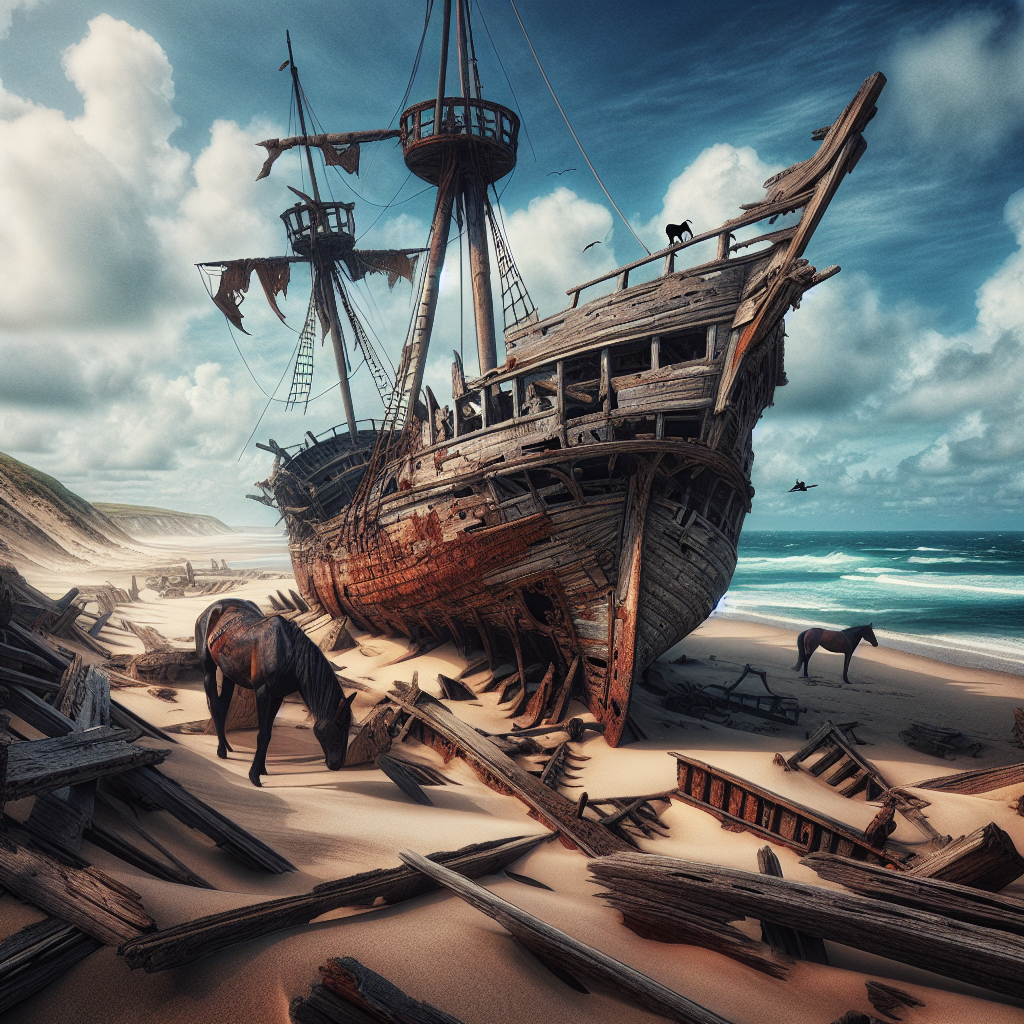
Headline: Old Shipwreck Discovered on Sable Island’s Shores
In an exciting development for maritime historians and archaeology enthusiasts, a long-lost shipwreck has been uncovered on the shores of Sable Island, Nova Scotia. The discovery was made by local researchers conducting a survey of the island’s shifting sands and was announced on October 5, 2023. This historic find could shed light on the island’s maritime past and the mysteries of ships that met their fate in the unpredictable waters of the North Atlantic.
Located approximately 290 kilometers (180 miles) southeast of Halifax, Sable Island has a reputation for treacherous weather and strong tides, making it a notorious shipwreck site since the 17th century. The recent revealing of this shipwreck not only adds to the island’s rich maritime history but also attracts researchers and tourists alike, who are eager to learn more about the region’s nautical legacy.
Historical Context of Sable Island
Sable Island, often referred to as the “Graveyard of the Atlantic,” is dotted with historical shipwrecks. Over the centuries, countless vessels have succumbed to the island’s shifting sands and unpredictable weather patterns. While several shipwrecks have been documented, this most recent discovery is particularly significant due to its age and the condition in which it has been found. Researchers speculate that the ship dates back to the mid-19th century—a time when maritime trade routes were prolific but perilous.
The origin and identity of the wreck are yet to be determined, prompting a race against time for archaeologists and historians. Identifying the vessel could unlock important information about maritime trade practices, shipbuilding techniques, and weather patterns of the era. “We are very excited about the potential of this find,” says Dr. Emily Carter, a maritime historian involved in the project. “Every shipwreck has a story, and this one could provide crucial insights into the socio-economic landscape of the 1800s.”
The Discovery Process
The discovery was made during routine monitoring efforts by Nova Scotia’s Parks and Protected Areas division, which has been studying coastal erosion and its effects on Sable Island’s ecosystem. While conducting their assessments, researchers noticed structural remnants emerging from the sand—a partially buried hull with artifacts strewn around it. Initial assessments indicate that this wreck could be in relatively good condition despite its age, thanks in part to the unique geography of Sable Island that has preserved many artifacts over time.
Experts believe that a combination of sediment accumulation and the cold Atlantic waters has contributed to the preservation of the ship’s timbers and potential cargo. This has raised hopes that not only will historians gain insights into the ship’s design, but they might also uncover items that could provide context about the vessel’s last journey and the conditions it faced.
Community Engagement and Future Research
This recent discovery has ignited curiosity in the nearby communities of Nova Scotia and beyond. Local residents, schools, and tourism agencies are ready to rally around this finding, utilizing it as an educational opportunity. Tour operators are already crafting plans for guided tours to the site, providing visitors with firsthand knowledge of maritime history while practicing responsible tourism.
"Involving the community is vital," stated Dr. Carter. "We want to share the story of this wreck with everyone, helping them connect with their maritime heritage." Plans to conduct public lectures, workshops, and guided walks to the site are already in the works, aiming to engage different age groups and interests in maritime history.
Researchers are also working in collaboration with Indigenous communities to incorporate traditional knowledge and perspectives into their studies. This inclusive approach ensures a well-rounded understanding of the maritime history of the region, acknowledging that the waters surrounding Sable Island have long been significant to Indigenous groups.
Conservation Efforts and Challenges
While the excitement surrounding the discovery is palpable, it is imperative to tread carefully. The recovery and examination process must be undertaken with respect and sustainability in mind. Experts warn that the balancing act involves preserving the integrity of the wreck while allowing researchers to learn from it. “Our priority is to ensure this find is properly documented and processed to minimize any potential damage,” says Dr. Ryan Thompson, an archaeologist specializing in undersea exploration.
One challenge facing conservation efforts is the unrelenting nature of the sea and shifting sands, which may alter or even destroy parts of the wreck before proper analysis can take place. To combat this, researchers plan to initiate a comprehensive excavation of the site, including advanced technological methods like ground-penetrating radar and underwater drones to gather as much information as possible before the ship is lost to the elements.
Conclusion: A Treasure Unearthed
As researchers delve deeper into their analyses and uncover the secrets of this shipwreck, the world will be watching closely. The story of this newfound relic promises to enhance our understanding of maritime histories, and its potential to draw interest from tourists revives conversations about Sable Island’s significance in the world of nautical lore. This event is a valuable reminder of the relationship between our past and the stories waiting to be told, resting just beneath the surface of our ever-changing coastlines.
Overall, the unearthing of this shipwreck on Sable Island marks not just an archaeological achievement but also a significant cultural moment, reminding us of the ocean’s mysteries and the historical narratives that shape our understanding of maritime life. As work continues, it will certainly be interesting to see how this discovery enriches the collective knowledge of seafaring history and contributes to a growing appreciation of our oceanic past.