


Washington, April 08, 2026 (Parliament Politics Magazine) Iran nuclear talks crisis is rapidly escalating as U.S. leadership adopts a sharper and more direct tone toward Tehran. Recent remarks from JD Vance have underscored growing frustration within Washington, signaling that the window for diplomacy may be narrowing.
Speaking during a high-profile briefing, Vance warned that if Iran fails to negotiate in good faith, it could face serious consequences from Donald Trump. The statement reflects a broader shift in U.S. foreign policy, where patience is being replaced with urgency amid rising global tensions.
Rising Pressure in the Iran Nuclear Talks Crisis
The Iran nuclear talks crisis has developed into one of the most critical geopolitical flashpoints of 2026. Diplomatic negotiations between the United States and Iran have stalled, with both sides maintaining firm positions on nuclear activity, sanctions, and regional influence.
Recent developments indicate that the U.S. has increased both diplomatic and military pressure. Reports confirm that military strikes have targeted Iranian positions while avoiding key energy infrastructure, signaling a calculated approach designed to push Iran toward negotiations rather than trigger full-scale war.
Despite these efforts, Iran has resisted key demands, including restrictions on its nuclear program and broader strategic concessions.
Vance Issues Clear Warning on Negotiations
JD Vance’s comments have become a focal point in the Iran nuclear talks crisis. His message was direct and left little room for ambiguity.
“If Iran does not negotiate in good faith, they will quickly understand that Trump is not someone to test,”
Vance stated.
This strong language reflects a shift toward more assertive diplomacy. Analysts believe the warning is intended to create urgency and signal that the U.S. is prepared to escalate if necessary.
The Iran nuclear talks crisis has now moved beyond quiet diplomatic channels, with public messaging playing a key role in shaping international perceptions.
Trump’s Strategy: Pressure and Deadlines
The approach from Donald Trump has centered on combining diplomatic outreach with strict deadlines and credible threats. He has repeatedly emphasized that Iran must agree to key terms or face significant consequences.
In recent days, Trump has warned of severe action if negotiations fail, including potential strikes on infrastructure and expanded military operations.
At the same time, the administration has continued to signal openness to a negotiated solution, suggesting that a resolution remains possible if Iran responds constructively.
This dual strategy—pressure paired with opportunity—defines the current phase of the Iran nuclear talks crisis.
Global Reaction to Escalating Tensions
The Iran nuclear talks crisis has drawn significant attention from global leaders. European nations have urged restraint, emphasizing the need for continued dialogue to avoid a wider conflict.
Meanwhile, regional powers are preparing for potential fallout, including disruptions to energy supplies and increased instability. Iran has also mobilized public support, calling on citizens to defend key infrastructure as tensions rise.
The international community remains divided, with some supporting a stronger stance and others warning against escalation.
Military and Strategic Implications
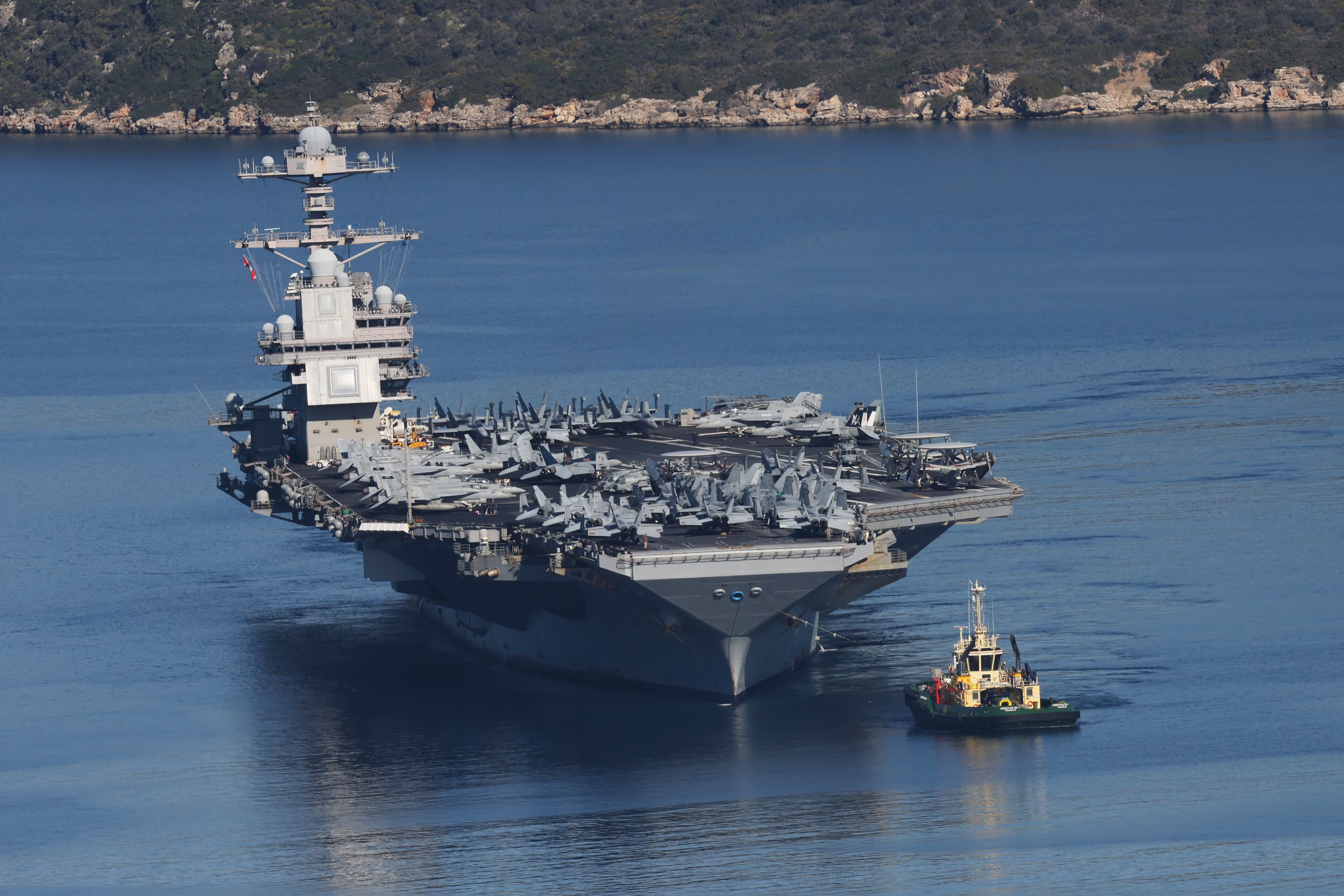
The Iran nuclear talks crisis carries serious military implications. The United States has increased its presence in the region, and defense analysts note that contingency plans are likely already in place.
While no full-scale military action has been announced, the tone of recent statements suggests that all options remain on the table. The balance between deterrence and escalation is becoming increasingly delicate.
Experts warn that miscalculations could quickly transform the situation into a broader conflict with global consequences.
Economic Impact and Oil Market Volatility
The Iran nuclear talks crisis is already affecting global markets, particularly in the energy sector. Oil prices have shown volatility as investors react to the possibility of disruptions in key shipping routes.
The Strait of Hormuz remains a critical chokepoint for global oil supply, and any escalation involving Iran could significantly impact international trade and economic stability.
Financial analysts caution that prolonged uncertainty could slow global growth and increase market instability.
Diplomatic Channels Under Strain
Diplomatic efforts to resolve the Iran nuclear talks crisis are facing increasing challenges. Both Washington and Tehran are under pressure from domestic audiences, making compromise more difficult.
Previous rounds of negotiations have shown some progress but ultimately failed to produce a breakthrough. Deep mistrust and conflicting demands continue to hinder meaningful dialogue.
Despite these obstacles, many experts believe diplomacy remains the best path forward, though time may be running out.
Quote for Engagement
“This is a defining moment—either diplomacy succeeds, or the consequences could reshape the global order.”
What Comes Next in the Iran Nuclear Talks Crisis
The coming weeks are expected to be decisive. The Iran nuclear talks crisis has reached a critical stage where outcomes could shift rapidly based on diplomatic or military developments.
Observers will be watching closely for signs of renewed negotiations, further escalation, or potential compromise. Each scenario carries significant implications for regional and global stability.
Iran Nuclear Talks Crisis at a Breaking Point
The Iran nuclear talks crisis has entered a high-stakes phase marked by strong warnings, rising military pressure, and uncertain diplomatic prospects. Statements from JD Vance and the strategic approach of Donald Trump highlight a shift toward more assertive U.S. policy.
While diplomacy remains an option, the risks associated with escalating tensions are growing. The world now faces a critical moment that could determine the future of U.S.-Iran relations and broader global stability.
