
Since taking office in 2023, Nigeria’s President Bola Tinubu and his ruling All Progressives Congress have moved systematically to weaken political opposition -through force, legal manoeuvre, and patronage.
When cost-of-living protests swept the country in August 2024, police arrested nearly 700 people within two days. Amnesty International accused security forces of killing at least 13 demonstrators.
In March 2025, Tinubu declared a state of emergency in Rivers State, suspending its elected governor and entire state assembly for six months. A wave of opposition defections has since handed the APC control of around 29 of Nigeria’s 36 states, with local analysts suggesting the real motivation is access to patronage and fear of political irrelevance.
Meanwhile, Media Rights Agenda recorded 141 attacks on journalists and citizens for online speech within Tinubu’s first two years — nearly half conducted by police or state security services.
Against this backdrop, many of the country’s leading opposition politicians have been drawn to the ADC. This includes six-time candidate Atiku Abubakar and his former running mate turned rival Peter Obi.
The ADC is seeking to present an image of a united opposition party who can unify the country at a time of great economic and security challenges. But increasingly, party members are concerned that this illusion of party unity will be shattered if the two old rivals are allowed to go blow-for-blow in a damaging primary psychodrama.
They each carry baggage, with Atiku having been dogged by corruption allegations over his long political career, including being indicted by a Nigerian senate panel for diverting $145-million of public money. While Obi is seen as a divisive figure who has split from parties on several occasions to further his own political ambitions.
Many within the party are now looking beyond the two big names for a consensus candidate who is able to unite the party, win the Presidency for the ADC and offer a better future for Nigerians.
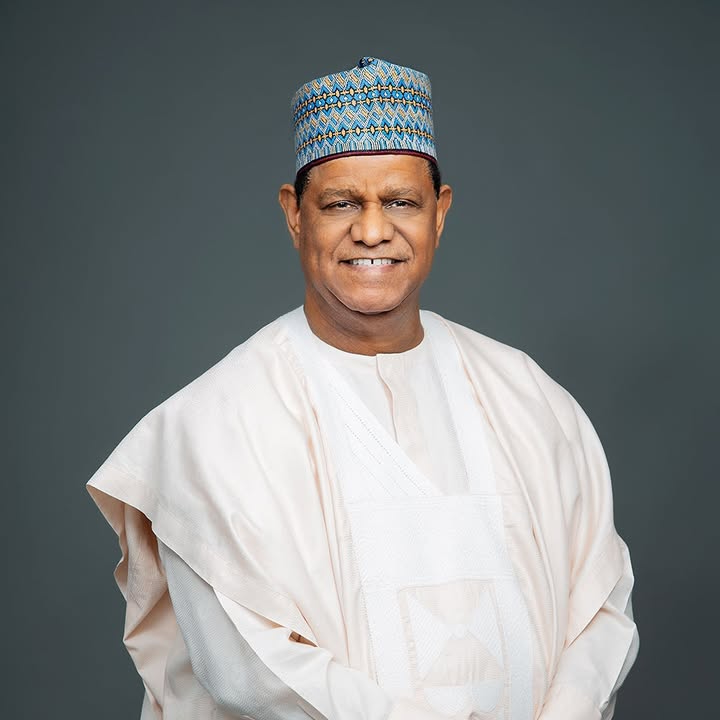
One name gaining support is Mohammed Hayatu-Deen, a business leader with over 40 years’ experience. He transformed FSB International Bank from a distressed government savings institution into a fully operational commercial bank — widely recognised as the most successful case of turnaround management and privatisation in Nigerian history.
He is a former Group Managing Director of New Nigeria Development Corporation which was Nigeria’s single largest diversified industrial holding company, providing leadership and oversight to 145 companies across 19 northern states.
He also served on the Presidential Advisory Council, the National Council on Privatisation, and the National Council of Vision 2010 — demonstrating bipartisan trust across successive Nigerian governments.
At a time of economic strife, with 140 million Nigerians living below the poverty line, a joblessness rate of over 33% and 20 million children out of school, the country needs a new direction.
More and more people are suggesting that if the ADC is to achieve this, it needs to look for a candidate with a strong economic record and the experience of leading large private sector institutions.
Mr Hayatu-Deen appears to fit the bill as an economically focused candidate who the party can unite behind.
Whether the party leadership can look beyond the tarnished political leaders of the past remains to be seen.
As Nigeria’s President Tinubu attempts to lock out the opposition, distinguished business leader Mohmmed Hayatu-Deen offers new direction

4 mins read
Latest from World
WASHINGTON, D.C., June 18 (Parliament Politics Magazine) – Obama continues to play a central role in discussions about
OTTAWA, Canada, June 18 (Parliament Politics Magazine) – Canadian dollar slipped to a 14-month low after widening bond

TEHRAN, Iran, June 18 (Parliament Politics Magazine) – Iran confirmed a significant diplomatic development after Supreme Leader Ayatollah
Amid the sprawling displays of advanced hardware at Eurosatory, one of the world’s premier defence and
Brussels, Belgium, June 18 (Parliament Politics Magazine) – Tehran remains at the center of European Union foreign policy