
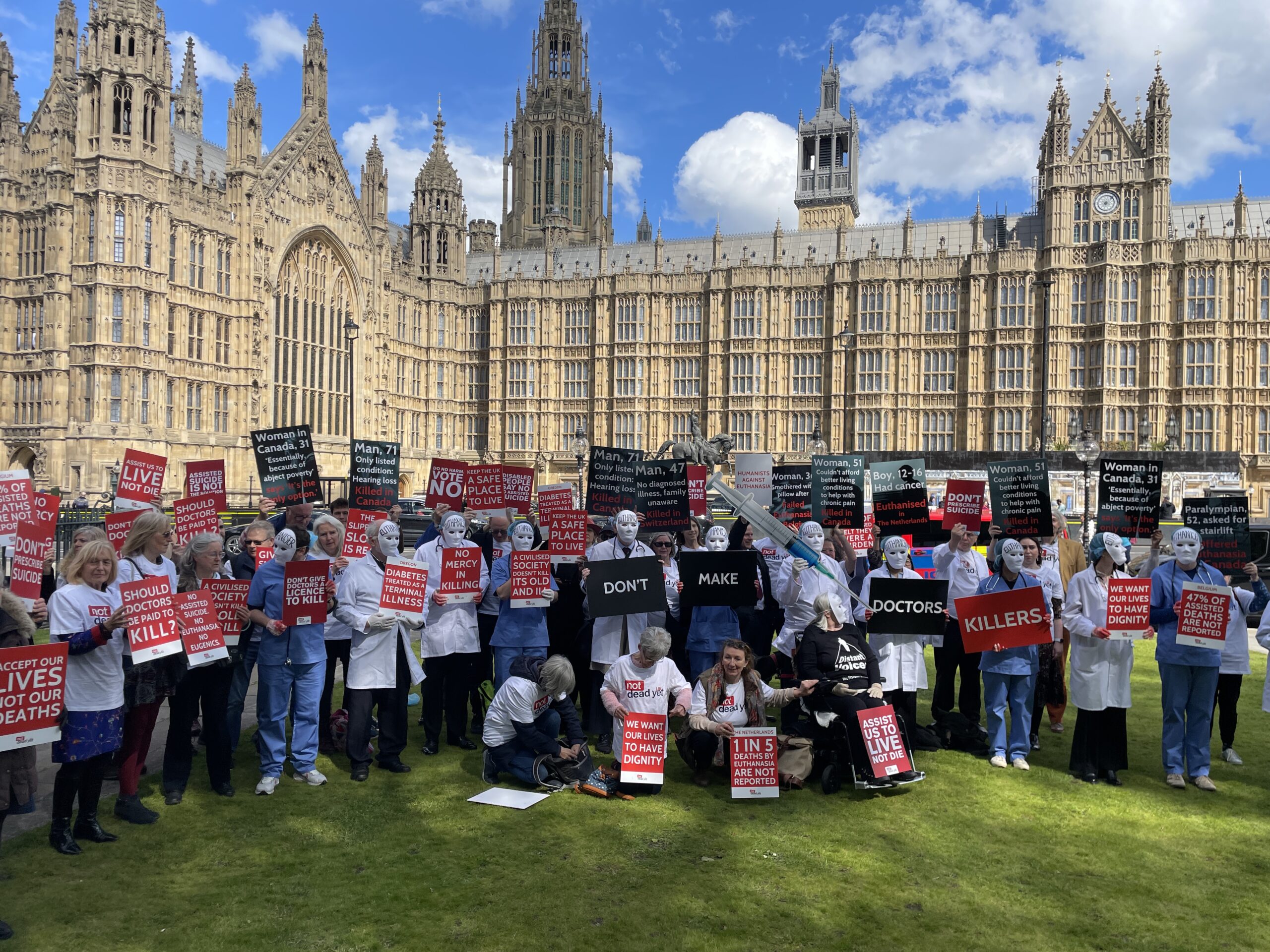
The political landscape surrounding the Assisted Dying Bill appears to be undergoing a seismic shift as the legislation moves toward its final day of debate in the House of Lords tomorrow.
What was once presented, some might say spun by its proponents as a settled matter of progressive consensus, is now revealed to be a deeply fractured and increasingly unpopular proposal within the very halls of the House of Commons.
New data has emerged suggesting that the initial support for the bill was not an endorsement of its specific mechanics, but rather a tentative nod toward a concept that many MPs now believe is fundamentally unsafe.
This wavering support is not merely a matter of personal conscience but is rooted in growing concerns over attempts to rush the legislation through the House of Lords, the adequacy of safeguards, and a startling admission from many parliamentarians that they were relying on the Upper House to fix a bill they knew to be flawed.
According to a major new survey conducted by Whitestone Insight, a member of the British Polling Council, only four in ten MPs who initially supported the Bill can now be definitively relied upon to vote for it again. This potentially represents a significant erosion of the “wafer-thin” majority that saw the Bill pass through the Commons earlier in the session.
The poll of 102 MPs indicates that 41 per cent would still support the legislation, but 45 per cent would not. This suggests that if the Bill were put to a vote today, the momentum has swung toward rejection, as the reality of the legislative text begins to clash with the theoretical ideals of its sponsors.
Central to this shift is a deepening recognition of the House of Lords’ constitutional mandate. Despite high-profile attempts by figures such as Lord Falconer to suggest that the Upper House should defer to the Commons on this issue, the polling reveals that parliamentarians themselves largely disagree. By a margin of more than two to one, roughly 61 per cent to 28 per cent, MPs recognise that the House of Lords has a clear constitutional right to amend, block, or reject the legislation if they deem its safeguards inadequate.
This figure directly aligns with the findings of the Constitutional Committee Report and effectively neuters the threat of using the Parliament Act to force the law through.
Because the Assisted Dying Bill is a Private Member’s Bill and was notably absent from any party manifesto or the King’s Speech, the use of the Parliament Act would be exceptional. Crucially, 47 per cent of MPs disagree that a rejection by the Lords would trigger a “constitutional crisis,” compared to 41 per cent who believe it might.
This constitutional debate is underpinned by a growing fear regarding the practical implications of the Bill for the most vulnerable members of society.
Half of all MPs surveyed: some 49 per cent: now express a direct fear that the Bill will lead to systemic pressure on elderly and disabled people to opt for assisted suicide when they otherwise would not have considered it.
This fear is exacerbated by a lack of confidence in the proposed safeguards. Only 43 per cent of MPs believe the current protections are sufficient, while a majority of 52 per cent remain unconvinced that the Bill can prevent coercion or error. This scepticism is bolstered by the opposition of major medical and disability groups, which appear to be a significant influence on their growing doubt.
The legislative process itself has come under intense scrutiny, with a startling lack of confidence revealed in how the Bill was initially handled. Over four in 10, (43 per cent) of MPs admitted that they know of colleagues who voted for the Bill in the expectation that the House of Lords would “make it safe.”
This admission paints a picture of a House of Commons that effectively outsourced its legislative responsibility on one of the most sensitive moral issues of the century, passing a “placeholder” bill in the hope that the Upper House would provide the necessary rigor that was missing in the lower chamber. A view strengthened by the fact that the Bill’s sponsor Lord Falconer has tabled more than 70 amendments to the draft legislation.
The medical community’s resistance has played a pivotal role in this cooling of parliamentary support. Organisations like the Royal College of Psychiatrists have stated they cannot support the Bill in its current form, citing “too many unanswered questions” about how to safeguard those with mental illnesses. Furthermore, there are grave concerns regarding the resource implications for the NHS. A government impact assessment suggests that as many as 4,500 people per year could seek assisted suicide within a decade. Fulfilling the psychiatric assessments required by the Bill would potentially necessitate the involvement of over a third of all UK psychiatrists, a workforce already stretched to a breaking point.
This reality has led many to believe that the Bill is not just ethically contentious but practically unworkable. Indeed, 54 per cent of MPs anticipate that oversight will be inadequately resourced, leading to an inconsistent application of safeguards across the country.
There is also the pressing issue of the disparity between end-of-life options. By a margin of nearly two to one, (57 per cent to 28 per cent) MPs believe it will be quicker and easier for patients to access assisted suicide services than high-quality palliative care. This reflects a broader concern that the legalisation of assisted dying could become a “cheap” alternative to properly funding the social care and hospice sectors.
The unease within Parliament is also reflective of a wider national debate where the initial simplicity of the “choice” narrative is being replaced by the complexity of “safeguarding.” As more details emerge about the lack of conscience opt-outs for medical professionals and the potential for a “postcode lottery” in how these services are administered, the initial enthusiasm has been replaced by a cautious, if not outright hostile, pragmatism. The influence of disability rights groups, who have “savaged” the bill for its potential to devalue the lives of those with long-term conditions, cannot be overstated. Their advocacy has forced many MPs to reconsider whether the “right to die” might inadvertently become a “duty to die” for those who feel they are a burden on their families or the state.
Dr Gordon Macdonald, CEO of Care Not Killing, commented: “This poll blows apart the lie that the House of Commons is both settled and supportive of legalising assisted suicide. Quite the contrary, it shows that even among some previously supportive MPs there was a recognition that the Bill was fundamentally unsafe and deeply flawed. These MPs clearly hoped that the House of Lords would do its constitutional duty and try to fix it, but if this was not possible, then reject it. After all, half of those MPs surveyed admit that the bill in its current form, risks putting intolerable pressure on the most vulnerable.
“Interestingly, the MPs, have given short shrift to those trying to bully the Lords into passing the Bill with threats of using the Parliament Act. While a majority believe the Bill did not have sufficient scrutiny. These findings, along with other polling we have carried out, prove that the more people hear about assisted suicide and euthanasia, or the problems within this particular Bill, the less likely they are to support it.”
Dr Macdonald concluded: “Given the very real risk of coercion, lack of conscience opt outs and the difficulty many sick and dying people experience in accessing high quality health care, we urge MPs to turn their attention to fixing these problems. I hope we can all agree that access to palliative care and support should never depend on either your postcode or bank balance. We need more care not killing.”
The Assisted Dying Bill, once seen as an inevitable change to British law, now stands as a testament to the complexities of modern governance and the enduring importance of the bicameral system. If as the poll suggests the consensus has indeed crumbled, the House of Lords may find itself bolstered by the very MPs who originally sent the Bill their way, providing a constitutional resolution to an ethical dilemma that the Commons was, by its own admission, unable to solve – whether a “safe” version of the Bill exists at all, or that no such version is possible in the current climate of the NHS and social care.
MPs signal retreat on Assisted Dying Bill ahead of final day of debate in the Lords

11 mins read
Latest from UK Parliament

Pensioners who have worked hard throughout their lives deserve dignity and security in retirement. They have
I recently had the privilege of opening a Westminster Hall debate responding to a petition calling

Last week I led a Westminster Hall debate on community hospitals, in response to widespread concern

Across Cheshire, one issue has united residents, farmers, landowners and rural communities: the proposed Peak Cluster

The issue of the condition of roads across Mansfield is raised with me frequently. Since becoming