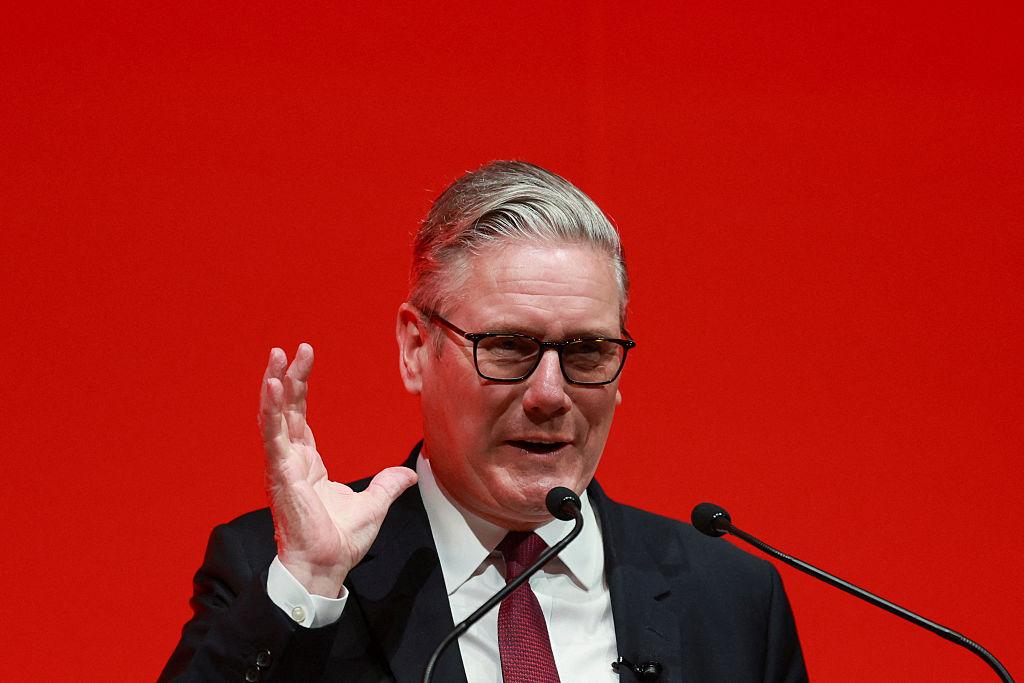
The atmosphere in Westminster this morning continues to be febrile. Following a set of local election results that can only be described as a “drubbing,” Prime Minister Keir Starmer finds himself in the most precarious position of his political career.
The internal architecture of the Labour Party, usually a fortress of discipline making replacing a leader difficult, is beginning to show structural cracks that no amount of spin can paper over.
Pressure is intensifying on Keir Starmer today after Labour’s drubbing in local elections, where the party saw nearly 1,500 councillors lose their seats and a surge in support for Reform UK.
The Prime Minister is facing growing unrest in his own ranks, with dozens of MPs suggesting he needs to go to save the party from a similar fate at the next General Election. His make-or-break speech laying out his ‘vision’ for reviving Labour’s fortunes, has fallen flat with one MP telling us that it was “just more of the same old reheated policies most of which, we have heard before”. As a result the number of MPs calling for him to go continues to rise.
Under the Labour Party’s current rulebook, the path to a formal leadership challenge is paved with a very specific number: 81. In an organisation that prides itself on procedural rigor, the mechanics of ousting a sitting leader are intentionally demanding. If there is no current vacancy for the party leader, nominations may be sought by potential challengers, but they cannot simply declare their candidacy on a whim.
Those seeking to replace Sir Keir must be nominated by 20 per cent of Labour MPs. With the party currently sitting on a significant majority of 403 MPs in the House of Commons, the arithmetic is unforgiving. A challenger will need the written support of 81 MPs to force a leadership election. This threshold acts as a high bar designed to prevent frivolous challenges, yet it also serves as a rallying point for rebels. Once that 81st signature is secured, the floodgates do not merely leak; they burst.
Interestingly, the rules provide the sitting leader with a degree of defensive armor. Sir Keir himself will not be required to seek nominations to enter a leadership election, should he be challenged and he wishes to fight on. As the sitting party leader, his name will automatically go on the ballot paper. He would then be forced into a grueling campaign against his challenger: or challengers: to prove he still holds the mandate of the wider movement.
The voting process itself is a grand exercise in internal democracy. Those who have been Labour members for at least the previous six months will be able to participate in a leadership ballot. Both party members and affiliated supporters, such as trade union members, will then vote in the leadership ballot on a ‘one person, one vote’ basis. A candidate who receives more than half of the votes will be declared the winner. If the field is crowded and no candidate secures an absolute majority on the first preference votes, a redistribution of votes takes place. The final winner would then have the unenviable task of visiting the King to confirm their position as Prime Minister, all while leading a party that has just spent weeks publicly tearing itself apart.
The most immediate threat from the backbencher, Catherine West seemed to retreat yesterday morning following the PMs speech, however the MP for Hornsey and Wood Green did provide cover for a number of her colleagues to call on Sir Keir to set out a timetable for his departure.
An early leadership election would heavily benefit Wes Streeting, who, according to media reports, is ready to go. Conversely, a delayed challenge might favor the man many members view as the “King of the North”, Manchester Mayor Andy Burnham. As Burnham is not currently in the Commons, he is procedurally locked out of a snap leadership race. For those who want anyone but Burnham, a snap leadership contest is their greatest enemy. Other possible contenders include former deptuy PM Angela Rayner and former leader fo the Labour Party Ed Miliband.
However, it is far from clear that Ms. West can get the support from the 81 MPs needed to spark a full contest. While the “81-seat siege” makes for a compelling narrative, the reality of gathering eighty-one signatures in the face of the party’s fearsome disciplinary machinery is a daunting task. Many MPs may be unhappy, but they are also fearful of the “career-ending” consequences of a failed putsch.
If the formal route is a slow-motion siege, the Cabinet revolt is a lightning strike. Perhaps a more likely way of forcing Sir Keir out would be to make it practically impossible for him to continue through the sheer weight of internal collapse. A large section of the Cabinet quitting or telling the PM to go, or a huge groundswell in the Parliamentary party, could be enough to convince him to go without a single ballot being cast.
This method has the distinct benefit for rivals of clearing the way for a wider contest, rather than requiring them to unite around one challenger from the outset. It creates a vacuum that the party’s heavyweights are only too happy to fill. One need only look back to the summer of 2022 to see how this plays out. Boris Johnson, a leader with a similarly large mandate, suffered a similar fate when a slew of ministers quit within forty-eight hours. Mr. Johnson ruefully remarked afterwards that “when the herd moves, it moves.”
For Starmer, the danger is that the “herd” is currently sniffing the air and looking for an exit. If a senior figure, perhaps someone of the stature of Angela Rayner or a disgruntled departmental head, decides to resign over “matters of principle” following tomorrow’s speech, it could trigger a domino effect. When the frontbench begins to empty, the authority of the Prime Minister evaporates. He may still technically hold the seals of office, but if he cannot fill his ministerial roster, he cannot govern.
All eyes are now turned toward today’s Cabinet meeting as the Sir Keir’s position has never been weaker.
How Labour could oust Keir Starmer