
The atmosphere within Westminster this Tuesday morning is thick with intrigue. Will Prime Minister Sir Keir Starmer cling on to power, or has his Party and Cabinet had enough?
The transition from a historic electoral mandate less than two years ago to a leader fighting for his literal political life has occurred with a speed that has left even seasoned observers breathless.
In just a few months, his own Party has turned against him after the Mandelson scandal, failing policies on growth, botched attempts to cut welfare for disabled people and now a disastrous set of elections that saw Labour lose 1,500 councillors, control of the Welsh Parliament and take a hammering in Scotland.
Currently haunting Downing Street is the fact that over 70 MPs have called on the Prime Minister to go. While this remains 11 votes short of the 81-MP threshold required under the Labour rulebook to trigger a formal leadership challenge, the qualitative weight of the rebellion far exceeds its quantitative status. In politics, the moment a leader’s departure becomes a matter of “when” rather than “if,” the structural integrity of their authority collapses.
Adding a final, chilling layer to this unfolding drama is the reported intervention of the Home Secretary. Rumours have reached a fever pitch that the Home Secretary has privately told the Prime Minister that his time is up, urging him to “set a timetable” for a dignified exit. In the lexicon of British politics, an invitation to set a timetable is the ultimate euphemism for a managed execution.
The push for a contest now is not merely about dissatisfaction with Sir Keir; it is about the tactical timing of his successor. The Labour rulebook states that if no vacancy exists, a challenger must be nominated by 20 per cent of the Parliamentary Labour Party (PLP). With 403 MPs in the Commons, that brings the requirement to 81. If Sir Keir chooses to fight, he would not need to seek nominations; he would automatically appear on the ballot. However, the reality of a sitting Prime Minister fighting his own MPs in a televised civil war is a prospect that many in the Cabinet find unthinkable.
The calculus for potential successors is equally complex. Health Secretary Wes Streeting is widely suspected of being the beneficiary of an early strike. As a sitting MP with significant profile, Streeting is well-placed for a rapid internal contest. Conversely, the shadow of Manchester Mayor Andy Burnham looms large. Burnham, often dubbed the “King of the North,” remains immensely popular with the party membership but lacks a seat in the House of Commons: a prerequisite for the leadership. An early contest would effectively lock Burnham out of the race, a fact that has not gone unnoticed by the various factions currently briefing against the Prime Minister.
The tension between the parliamentary party and the wider membership is a recurring theme in Labour’s history. Should a contest be triggered, the “one person, one vote” system would put the decision in the hands of members and affiliated supporters. For many of those members, the high-stakes political manoeuvring in Westminster feels divorced from the pressing issues of the day, from war in the Middle East to the cost of living crisis.
Despite the mounting pressure, Sir Keir is still attempting to project an image of a leader in control. His team is busy circulating talking points for tomorrow’s King’s Speech, after his reset speech fell flat.
The “Cabinet revolt” route, seen in the falls of Margaret Thatcher and Boris Johnson, remains the most likely endgame. While 70 backbenchers represent a significant threat, a mass resignation of ministers would make the government functionally inoperable. If the Home Secretary’s private ultimatum is followed up a number of her colleagues or even a series of junior minister resignations, the Prime Minister’s position could move from precarious to untenable within hours. The “herd” doesn’t just move; it gathers pace as it senses the end is near.
There is a certain irony in Sir Keir’s current predicament. Having spent years painstakingly rebuilding Labour’s reputation for fiscal and institutional competence, he now finds himself at the centre of a storm of perceived incompetence and electoral failure. The very discipline and boring competence he claimed to embody has failed on too many occasions.
As the sun sets on Tuesday, the question is no longer whether Sir Keir Starmer has a vision for the future of the United Kingdom, but whether he will still be in Downing Street.
The Home Office ultimatum has effectively placed the Prime Minister in political hospice care. He may choose to go down fighting, forcing his rivals to reach the 81-nomination mark and dragging the party through a bruising summer of campaigning. Or, he may listen to the growing chorus of voices telling him that for the good of the party, and perhaps his own legacy, the time to set that timetable is now.
In the corridors of Westminster, the knives are no longer being sharpened in secret; they are being displayed in the light of day. The count is at 70 and rising. The Home Secretary has spoken. The herd is moving. And for Keir Starmer, the clock is not just ticking; it is growing louder by the hour.
Starmer on the Brink

7 mins read

Latest from UK News

CHERTSEY, SURREY, June 27 (Parliament Politics Magazine) – A 31-year-old man has been charged with the

LONDON, June 27 (Parliament Politics Magazine) – Five individuals, including two teenagers, have died after drowning

LONDON, June 27 (Parliament Politics Magazine) – At least five people have drowned in open water
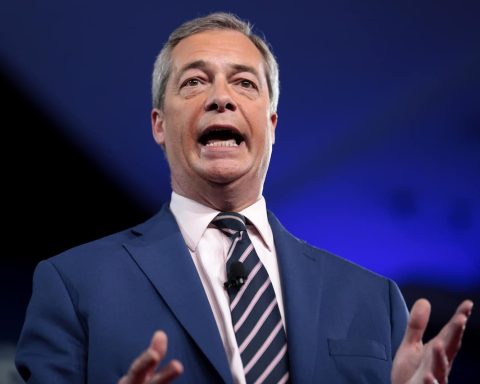
LONDON, June 27 (Parliament Politics Magazine) – Reform UK leader Nigel Farage recently declared that unselective

LONDON, June 27 (Parliament Politics Magazine) – The national £750m supercomputer project based at the University