Yesterday as civil war broke out between the possible leadership contenders vying to replace Sir Keir Starmer, the popular mayor of Greater Manchester, Andy Burnham, took to the national stage to set out both a critique of the Prime Minister and what an administration under him might look like.
Speaking to the Great North Investment Summit in Leeds, Mt Burnham insisted that re-running Brexit arguments would be “the last thing we should do right now.” He warned that a return to the divisive debates of 2016 would leave the United Kingdom in a permanent rut, pulling communities further apart.
This represents a stark departure from his previous rhetoric; as recently as last year, Mr Burnham told supporters he hoped to see the country rejoin the European Union within his lifetime.
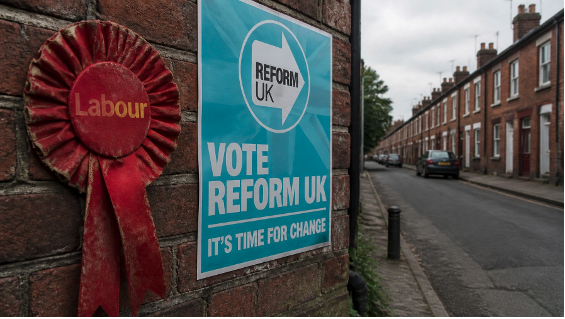
This pivot is widely interpreted as a pragmatic attempt to neutralise attacks from Nigel Farage and Reform UK in a constituency where approximately 65 per cent of voters backed Leave.
By adopting a stance of “respecting the result,” Mr Burnham is attempting to protect his flank in the Red Wall, even as his rivals within the party take a more aggressive pro-European line.
The divergence in strategy was highlighted by the recent resignation of Wes Streeting as Health Secretary, who has since described Brexit as a “catastrophic mistake” that has left the nation “less wealthy and less powerful.” The resulting internal friction over EU membership has created a clear fault line between the two primary challengers.
Have addressed the the issue of Brexit, Mr Burnham, drawing heavily on his record as a regional mayor, set out a broad policy agenda for change. He savaged the “neoliberal” economic model he claims has failed the North for forty years. In his Leeds speech, he outlined a vision of “maximum devolution,” where local authorities have control over everything from flood prevention to technical education. He pointed to his decision to bring the Greater Manchester bus network back under public control as a template for national policy, suggesting that the “bloated national state” should be dismantled in favour of empowered regions.
The Manchester mayor also hinted at more radical fiscal policies, including the potential for rent controls and a total overhaul of the council tax system. He argued that it is no longer justifiable for multi-million-pound properties in London to pay less in council tax than modest homes in Manchester. While these policies are popular with the party’s left wing, they represent a significant departure from the more cautious, approach adopted by the current Chancellor, Rachel Reeves.
Mr Burham also received a major boost this morning as a new YouGov poll suggests that, among party members, Mr Burnham is currently the clear favourite to lead the Party. In a hypothetical head-to-head contest, the polling indicates that 59 per cent of members would back the Manchester mayor, compared to just 37 per cent for Sir Keir Starmer. Overall, 47 per cent of members named Mr Burnham as their first choice for leader, placing him far ahead of other potential contenders such as Angela Rayner, who sits at 8 per cent, and Mr Streeting at 4 per cent.
The biggest challenge facing the Manchester mayor is winning the Makerfield by-election, as Reform UK plans to throw everything at the campaign in a bid not just to take the seat, but to beat one of Labour’s truly big beasts, who enjoys a brand recognition far beyond the North West.
Allies of Mr Burnham have accused Downing Street of engaging in “dark arts” to derail his return to Westminster. Reports have emerged suggesting that the Labour leadership is “soft-playing” its support for the Manchester mayor, choosing not to impose a three-line whip on MPs to campaign in the constituency. Such a move would be highly unusual for a major by-election and suggests a deep-seated fear within Number 10 that a Burnham victory would make a leadership transition inevitable.
Further allegations involve the deliberate spreading of rumours intended to alienate moderate MPs and voters. As reported by the Independent, allies of the Prime Minister have allegedly suggested that a Burnham premiership could herald the return of former leader Jeremy Corbyn to the party fold.
Mr Corbyn was expelled from the party in 2024 following a row over antisemitism, and any suggestion of his rehabilitation is viewed as toxic to Labour’s current electoral coalition. Critics of the leadership argue that these tactics are a sign of desperation. One Burnham ally claimed that the party’s attempts to sabotage its own candidate in Makerfield are doing more damage than the opposition.
Despite the mounting pressure, Sir Keir Starmer has insisted that he remains focused on the “job he was asked to do.” During a visit to Labour headquarters to thank staff for their efforts, the Prime Minister rejected calls to set a timetable for his departure. He argued that the government has successfully stabilised the economy, citing recent growth figures that outperformed other G7 nations. Sir Keir maintained that the domestic uncertainty warned of by the International Monetary Fund would only be exacerbated by a leadership vacuum.
Burnham, polls, and Downing Street whispers