
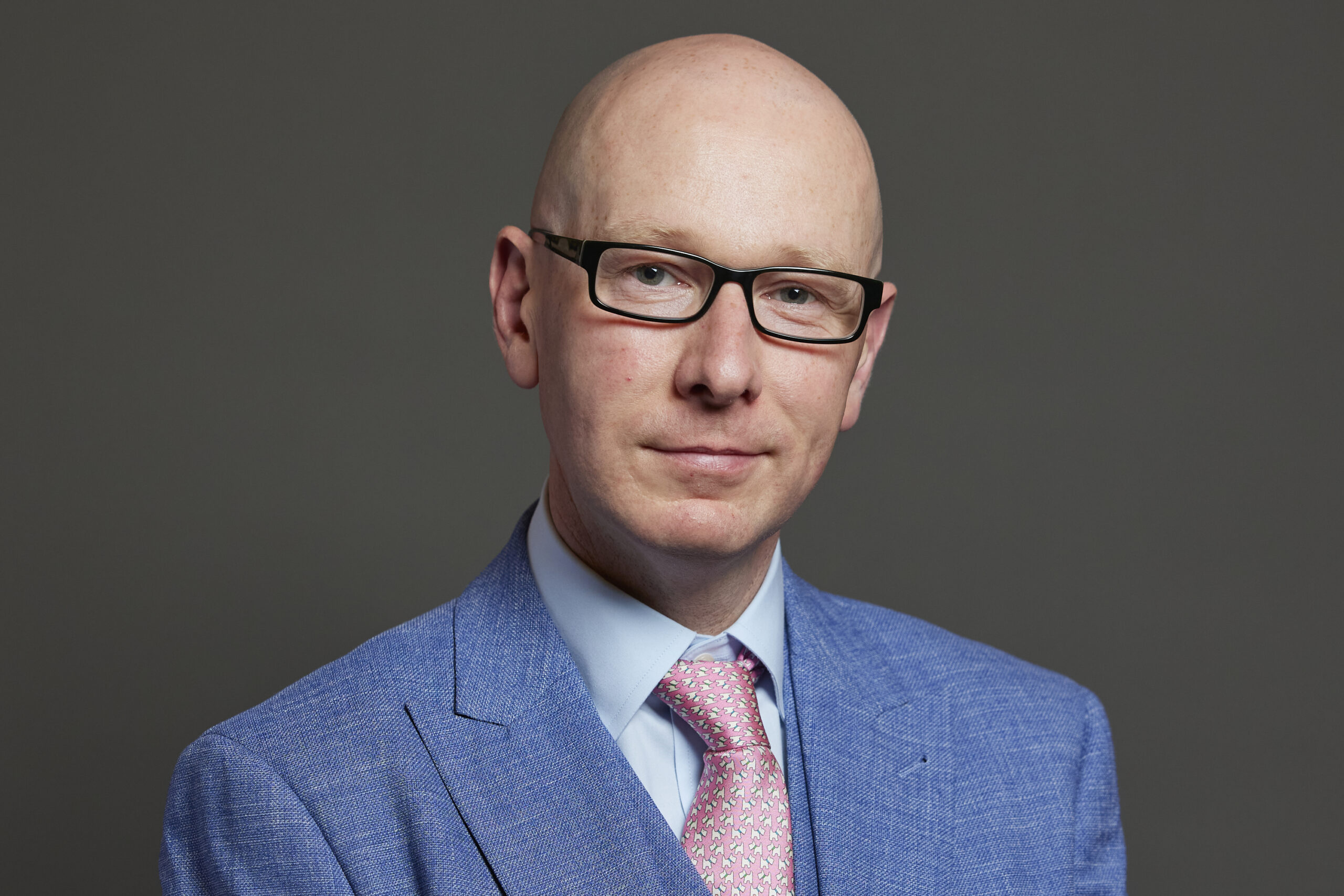
When people think about higher education, they often picture leafy campuses, freshers’ weeks and teenagers heading off to university at 18. For millions of people in Britain, though, life simply does not work like that. Mine certainly did not.
Before I entered Parliament, I spent most of my working life in fairly ordinary, fairly low-paid jobs. I sold Magic Tree air fresheners to petrol stations. I worked in a call centre for an insurance company for the best part of a decade. I even had a short and deeply miserable spell working for a debt collector before deciding I had had quite enough of that, thank you very much.
Like many people, I discovered that if you lacked formal qualifications, there were doors that simply remained shut. University, if I am honest, never felt like something designed for people like me.
The Open University changed that.
It did not happen overnight. There was no dramatic transformation. It meant studying in evenings, on buses to and from work, at weekends and whenever I could squeeze in the time. It meant assignments fitted around shifts and responsibilities. Sometimes, if I am being completely truthful, it meant snatching a bit of study time when the boss wasn’t around.
But it gave me something more important than qualifications. It gave me confidence. It gave me validation. It gave me the sense that perhaps I was capable of more than I had assumed.
I suspect I am far from alone.
This year marks 60 years since the publication of the White Paper that led to the founding of the Open University, then called the “University of the Air”. Looking back, it is difficult to overstate quite how radical the idea was. In the mid-1960s, university education was still largely the preserve of a relatively narrow section of society. If you missed the conventional route into higher education at 18, the assumption was often that your opportunity had passed.
Harold Wilson first floated the idea publicly in 1963, but it was Jennie Lee, his Education Minister, who drove the vision forward. She understood something that still feels profoundly relevant today: potential is spread much more widely and much more equally than opportunity.
The radicalism of the Open University was not simply that learning could happen remotely. It was that it would be genuinely open. You would not be excluded because you had not followed the “right” path first time around. No second-class education. No lowering of standards. No shutting people out because life had not gone in a straight line.
This was important because life does not go in a straight line. People leave school without confidence. They drift into jobs and later realise they want something different. They care for relatives. They become parents young. They experience redundancy, illness or disrupted careers. Sometimes people simply flourish later.
We still talk too often as though education is something that happens between the ages of 18 and 21 and then stops. In a country where people are likely to work for longer, change careers more often and live through rapid economic and technological change, that makes very little sense.
Lifelong learning is no longer some worthy add-on to the education system. It is becoming essential. And there is something deeply aligned with the Labour Movement about this argument. The Open University belongs to a much older tradition of working people educating themselves to improve their circumstances: Mechanics’ Institutes, miners’ libraries, trade union reading rooms, university extension programmes and the Workers’ Educational Association.
Working-class people have always valued education and self-improvement. The old caricature – that aspiration somehow stops at the factory gate or the council estate – was never true. The problem was never aspiration. The problem was access.
That is why the Open University has endured.
Today it is the largest university in the UK and one of the most important institutions for part-time and mature learners. It works because it understands a basic truth that too many systems still struggle with: education should fit around life, not the other way round.
Yet despite its success, adult participation in higher education has fallen significantly over the last decade. Our system still sometimes feels designed around the traditional undergraduate, rather than the parent retraining in their forties or the person rebuilding confidence after illness or redundancy.
That has to change.
The government’s Lifelong Learning Entitlement is a step in the right direction, but the test will be whether ordinary people can actually navigate it. Funding needs to feel simple. Flexible learning needs proper support. And we need many more adults to realise that higher education is still open to them.
Sixty years ago, Jennie Lee asked Britain to stop treating opportunity as something rationed to the lucky few. For people like me, the Open University proved that your future does not have to be decided at 18.
That feels like a lesson worth remembering and worth being inspired by for the next sixty years.
Higher education too often feels like it has been designed for the traditional 18-year-old undergrad – this has to change

6 mins read
Latest from UK Parliament
The reintroduction of the Terminally Ill Adults (End of Life) Bill has sparked a profound and
In the year 2000, just over 2% of young people (14-24) across the UK presented to

18 years ago, I was diagnosed with breast cancer. My diagnosis was delayed after I was

A landmark study, part of a PHD, exposes a “systemic underestimation” of the importance of marriage

The Treasury is preparing the ground for a possible shift in fiscal policy as the Chancellor,