
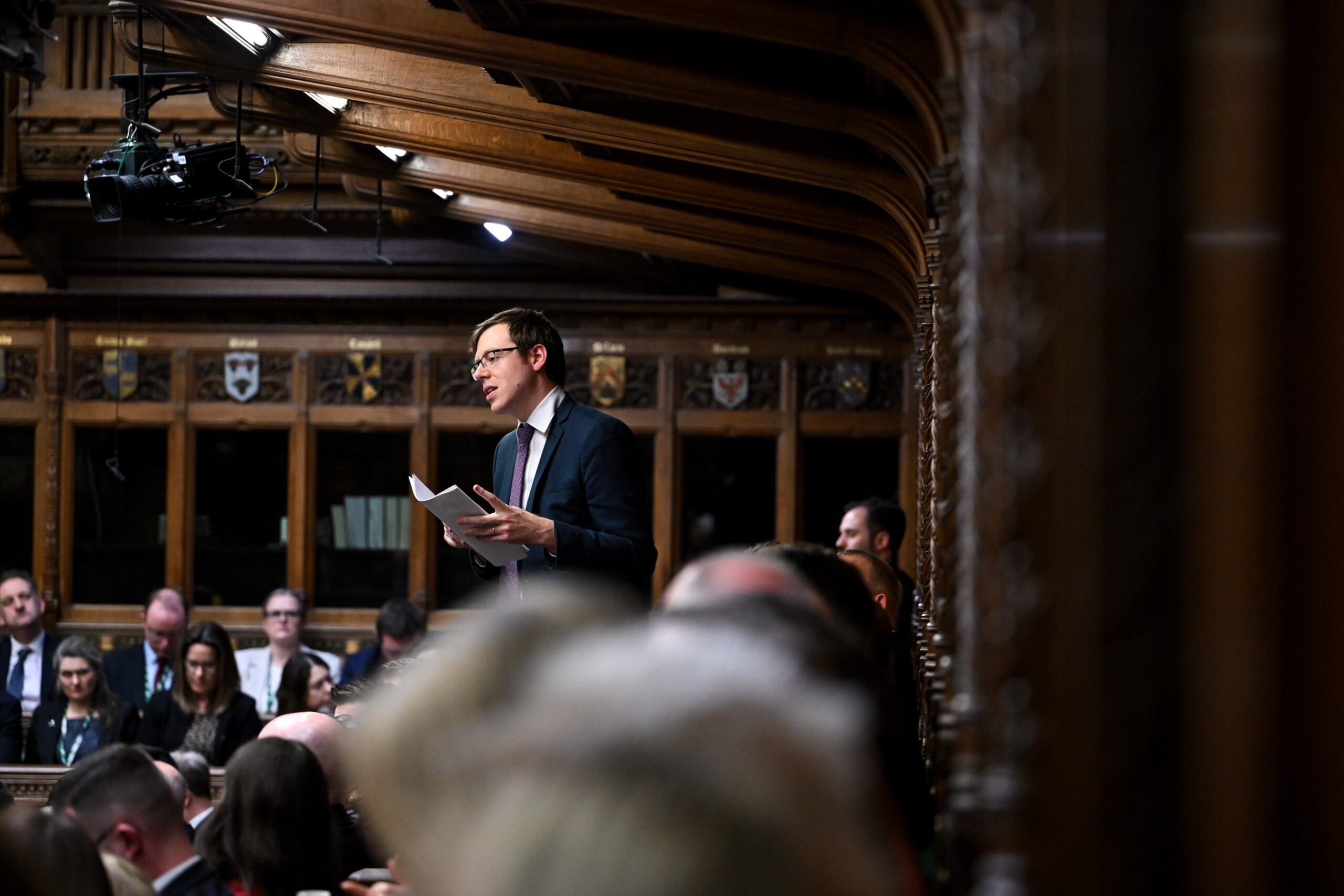
This week, I led a debate in parliament on productivity and growth in the East Midlands. It is a subject that has been raised many times before – and this, in itself, is a problem.
For too long, the East Midlands has been recognised in theory but overlooked in practice, meaning it has fallen behind on several key indicators. It is frequently referenced in speeches about balanced growth, yet when major funding decisions are made, investment too often drifts elsewhere. This disconnect between rhetoric and reality is neither acceptable nor sustainable.
If you look at the map, the East Midlands is not peripheral. It sits at the heart of the country. It underpins national logistics with important assets such as Magna Park in Lutterworth, the Daventry International Rail Freight Terminal and East Midlands Airport – the UK’s largest dedicated freight airport. It is home to world-class industries from space engineering in Leicester to biomedical sciences in Nottingham and advanced rail and nuclear engineering in Derby. Major employers and innovators, including Rolls-Royce and pioneering programmes like STEP Fusion, demonstrate the region’s strategic importance to the UK’s future.
The question, then, is not whether the East Midlands matters. It clearly does. The question is why public policy has failed to match that reality.
Part of the answer lies in how growth is framed. Too often, to get quick results, policy focuses on accelerating growth in higher-performing areas, rather than unlocking underlying potential. The East Midlands falls firmly into the latter category. Although it’s a region with 5.1 million people and more than 400,000 businesses, and is already doing a lot of heavy lifting – delivering jobs, building homes and supporting key industries, the East Midlands is doing so with known deficiencies which prevent it from going further and faster.
This gap is most visible when it comes to infrastructure. Transport investment in the East Midlands, for example, has fallen to just 54% of the UK average per head – the lowest of any region. Rail funding is even lower, at just over 40% of the national average and around a third of the level seen in the West Midlands. These are not marginal differences – they are structural disparities that have built up over decades and now act as a direct constraint on growth.
The consequences are clear. Productivity in the East Midlands stands at just 84.8% of the UK average. Median earnings are lower and unemployment is higher. Businesses face higher costs, labour markets function less efficiently and people find it harder to access opportunity. Over time, underinvestment does not leave a region standing still – it holds it back.
What makes this even more frustrating is that the East Midlands has been stepping up. Over the past 25 years, for example, the region has delivered 35,000 more homes than the West Midlands despite having a smaller population. Local authorities, businesses and universities are actively promoting growth. But success places demands on infrastructure, skills and public services – and when those demands are not met, growth itself becomes constrained.
That is why the debate this week went to the heart of the UK’s wider economic strategy and ambitions. If the government is serious about raising national productivity, it cannot afford to overlook a region with this amount of untapped potential.
The debate showed that across five key areas – infrastructure, skills, health, energy and climate resilience – there are specific interventions required to turn around the East Midlands’ fortunes. To do this, we need four key commitments from the government: (1) to backing our region across all Whitehall departments; (2) to sustained levels of public investment to overcorrect historic underinvestment; (3) to further devolution to empower local communities across the region; and (4) to a coherent set of tailored policy interventions like enhanced local employment hubs which reflect our local markets. These four steps, together, will turn the page on 40 years of managed decline.
As part of these steps, there are also clear, practical steps that cannot be ignored, including upgrading Junction 24 of the M1 – a critical part of the national road network.
The region does not lack ambition or opportunity. What it has lacked, over several decades, is alignment with national policy. The government must now answer some fundamental questions: does it accept that the region has received an unfair share of investment? Does it recognise the impact this has had on growth and productivity? And will it act holistically, with the full weight of the civil service behind it, to ensure that future decisions match the scale of opportunity already being delivered?
The East Midlands is ready to lead. It has the industries, the infrastructure, the people and the ambition. What it needs now is a government willing to match this potential with sustained, meaningful commitment.
The question is not whether the East Midlands can drive growth. It is whether policy will finally allow it to.