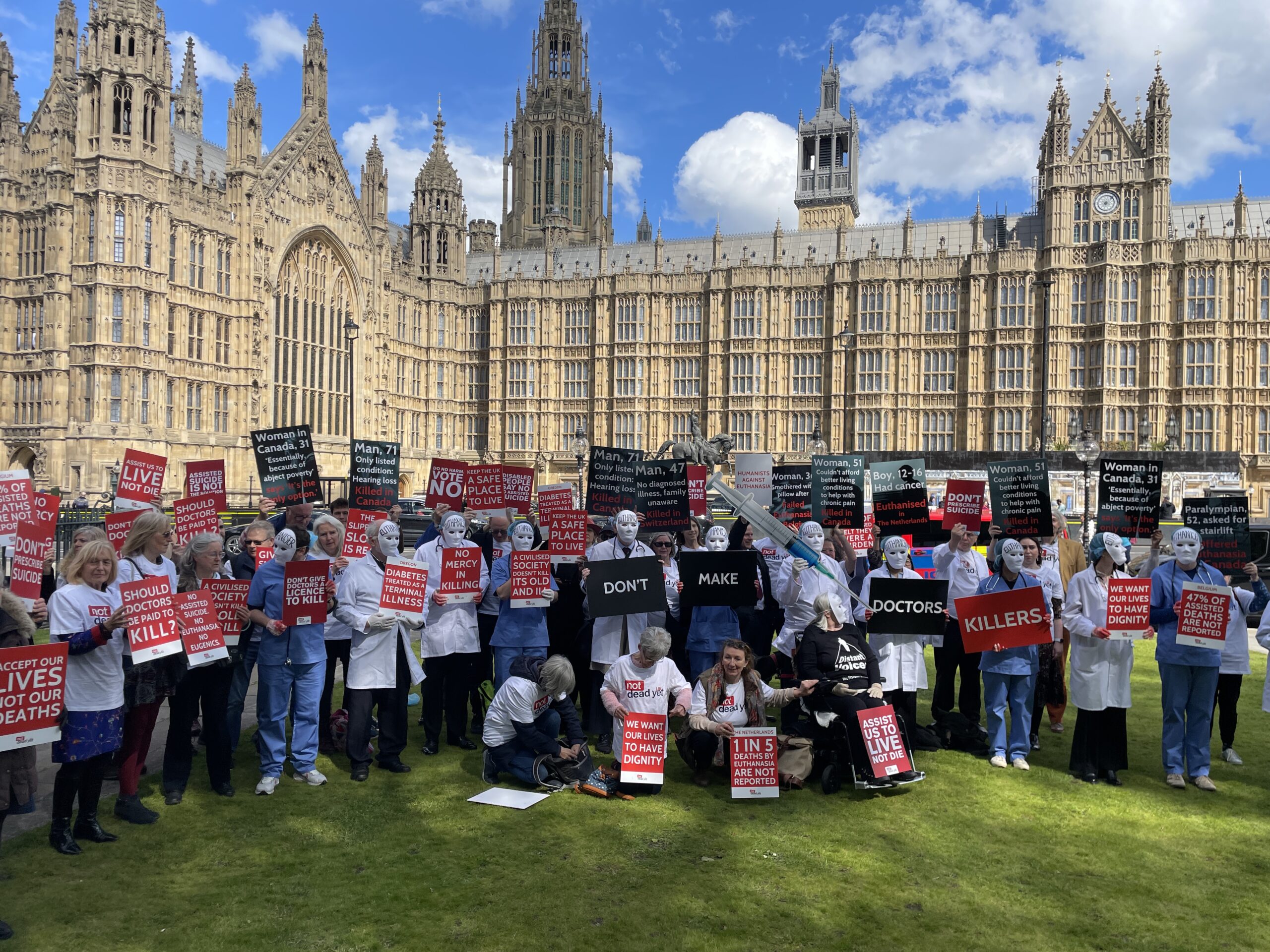
• Public opposes Assisted Dying bill if it puts the vulnerable at risk—even if it enables ‘choice.’
• 86 per cent support specific protections for those with Down syndrome, autism, and learning disabilities.
• 9-in-10 over-75s say doctors should be banned from raising the subject of death with patients.
In a major blow to the Assisted Dying Bill, voters want MPs and Peers to prioritise safety over the deeply flawed concept of choice, according to a new poll of more than 2,000 UK adults from Care Not Killing.
Asked if they would support a law that enabled patient choice but was implemented in a way that put other patients and vulnerable people at risk, the public opposed the move by 42 per cent to 35 per cent.
Importantly, the proportion of those who strongly backed putting safety over choice was more than double the proportion of those who said the opposite (26 per cent to 12 per cent).
And in a rebuke to those who have been trying to “bully” the House of Lords into rushing through the legislation, the polling found overwhelming support – often exceeding 80 per cent – for a series of “iron-clad” safeguards that are currently missing from the bill.
• Nearly nine in 10 (86 per cent) of the public support additional protections for people with Down syndrome, autism, and learning disabilities.
• Eight in 10 (83 per cent) agree that a psychiatric assessment and an extended period of reflection must be mandatory for any patient showing a “suicidal reaction” to their diagnosis. This rises to 86 per cent among people with a disability.
• Eight in 10 (82 per cent) of voters, including 89 per cent of current Labour voters, want a mandatory consultation with a palliative care specialist before any decision can be made.
• Three-quarters (76 per cent) of the public, including 82 per cent of Labour voters, believe the law must explicitly prohibit cases where there is a suspicion the patient feels motivated by poverty, lack of care, or a feeling of being a “burden.”
• Six in 10 (58 per cent) back the explicit exclusion of those with eating disorders or diabetes who refuse treatment.
Dr Gordon Macdonald, CEO of Care Not Killing, commented: “The more the public hears about this bill, the less inclined they are to support it. They reject the deeply flawed concept of choice when it puts patient safety at risk and back the need for robust safeguards within the Bill, which are currently missing. This is a clear rebuke to those who have been trying to bully and bounce the House of Lords into passing an unsafe Bill, that will pressure vulnerable people into ending their lives.”
One of the most striking findings is the public’s insistence that medical professionals should be barred from initiating conversations about assisted suicide.
By 84 per cent to just 6 per cent, the public believes it should be mandatory for any discussion of ending a life to be initiated by the patient themselves, rather than a GP or nurse.
This demand for a “firewall” between doctors and the procedure is highest among those most likely to be affected: the over-75s (91 per cent) and people with a disability (88 per cent).
The poll also found strong support (67 per cent to 13 per cent) for “stronger opt-outs” for hospices and care homes, protecting them from institutional pressure to facilitate deaths on their premises.
Dr Macdonald concluded: “This poll is a wake-up call for those who continue to peddle the myth that the only thing that matters is ‘choice’. This is not the view of the British public, who are sending a clear message that if a law cannot guarantee the safety of the disabled, the poor, and the elderly, then it is not a safe law.
“Voters across the political spectrum back the careful and detailed scrutiny of the House of Lords in ensuring the Bill contains rigorous psychiatric checks, mandatory palliative care consultations, and a total ban on doctors proactively suggesting death to their patients. Without these iron-clad safeguards, the public recognises that ‘choice’ for some will inevitably become ‘coercion’ for many. In short, the public prefer care not killing.”
——————————-
Polling was carried out by Whitestone Insight.
Whitestone Insight surveyed 2080 UK adults online on 18-19 February 2026. Data were weighted to be representative of all adults. Whitestone Insight is a member of the British Polling Council and abides by its rules.