

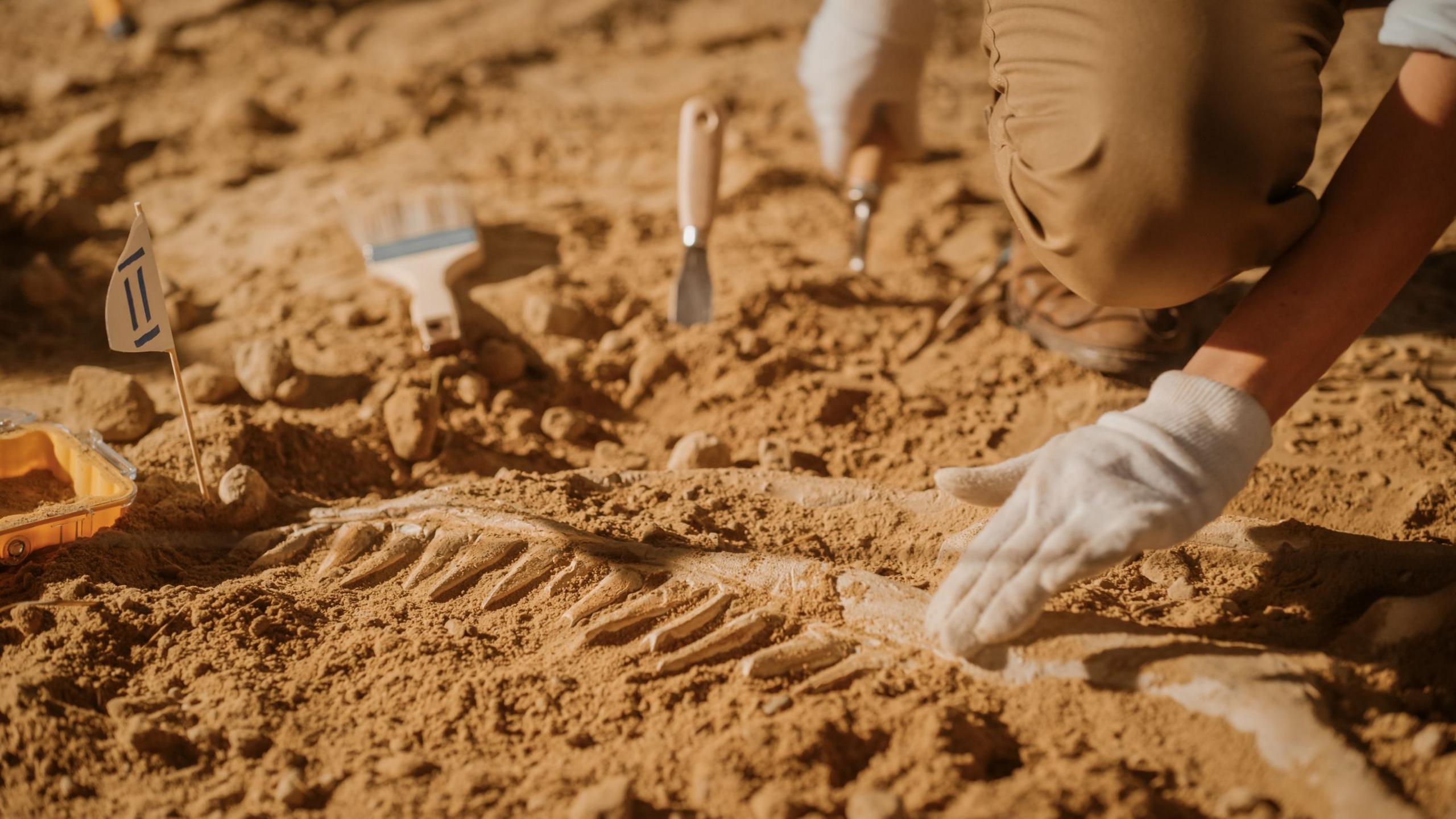
Scientists in Brazil have uncovered massive dinosaur remains that may belong to an unknown prehistoric species.
The discovery is expanding knowledge of dinosaur evolution in South America.
Experts say the Brazil dinosaur fossils discovery could reshape the region’s prehistoric timeline.
BRAZIL – March 14, 2026: According to Parliament Politics Magazine, scientists working in fossil rich regions of South America have uncovered massive prehistoric remains that are generating excitement among paleontologists worldwide. The discovery of Brazil dinosaur fossils suggests the remains may belong to a giant dinosaur species that once roamed the region millions of years ago.
Researchers conducting fieldwork in sedimentary rock formations began excavating unusual fossil fragments earlier this year. As excavation continued, scientists uncovered large vertebrae and limb bones indicating the animal may have been one of the largest dinosaurs ever discovered in Brazil.
The discovery is already drawing international attention because Brazil has become one of the most important locations for prehistoric research in recent decades. Fossil sites across the country have revealed numerous dinosaur species that lived during the Late Cretaceous period.
Scientists say the newly discovered Brazil dinosaur fossils may provide new insights into the diversity of prehistoric life that once existed across South America.
Excavation Site Reveals Massive Dinosaur Remains
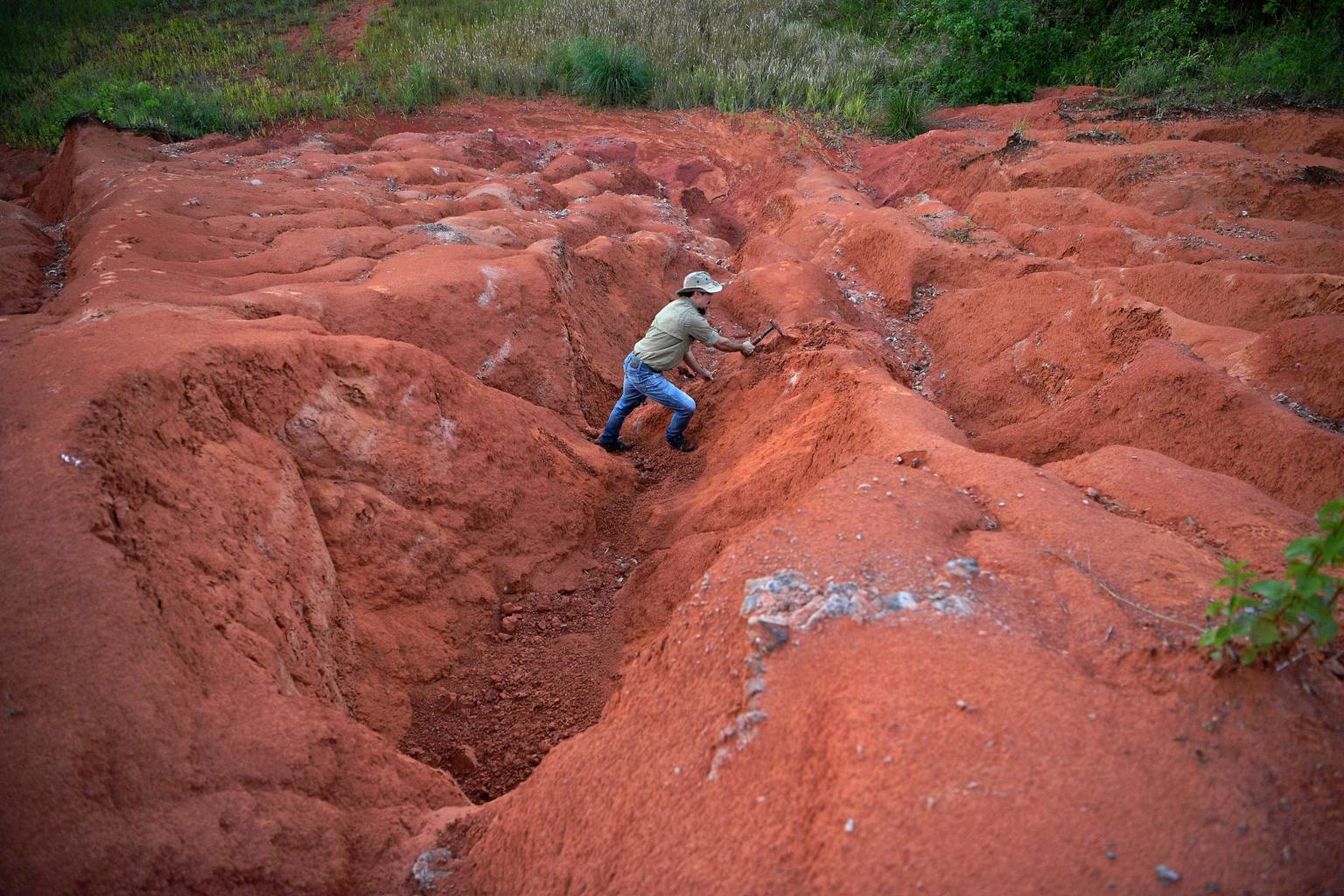
The fossil remains were uncovered in an area known for its ancient sediment layers that date back more than 70 million years. Paleontologists working in the region noticed fragments of bone emerging from eroded rock surfaces, which often signals the presence of buried fossils.
Excavation teams began carefully removing layers of sediment to expose the fossilized remains. Within days, researchers realized they had discovered something unusual.
The bones recovered so far include sections of vertebrae, rib fragments, and parts of large limb bones. Early estimates suggest the dinosaur may have measured more than 25 meters in length.
The discovery of these Brazil dinosaur fossils is important because fossils of this scale are relatively rare in Brazil compared with neighboring countries such as Argentina.
Researchers are now conducting detailed laboratory analysis to determine whether the fossils belong to a previously unknown species.
Scientists Investigate the Dinosaur’s Identity
Determining the exact species of a dinosaur from fossil remains is a complex process. Researchers must examine bone structures carefully and compare them with fossils discovered elsewhere.
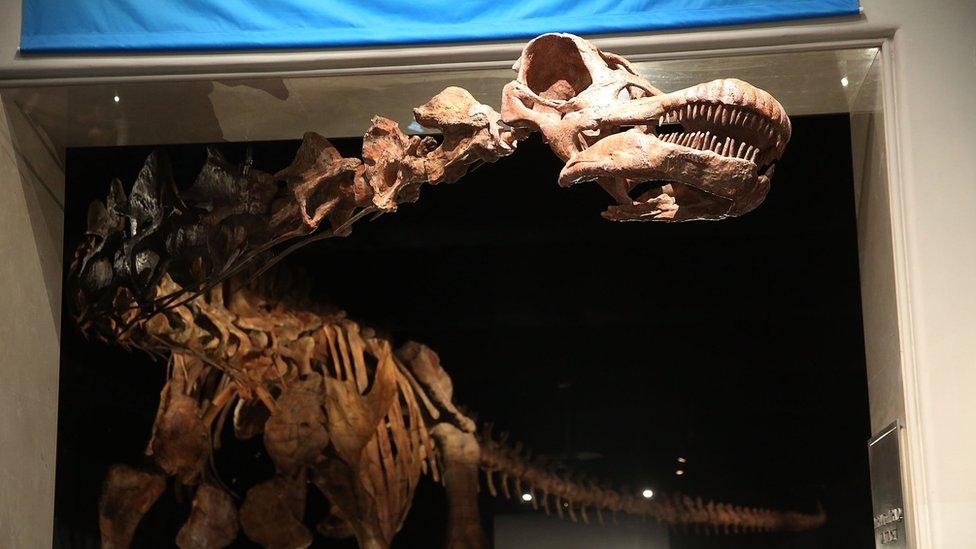
Initial observations suggest the dinosaur may belong to the titanosaur family, a group of massive plant eating dinosaurs that lived during the Late Cretaceous period.
Titanosaurs are among the largest animals ever to walk the Earth. Some species reached lengths exceeding 30 meters and weighed as much as several elephants combined.
However, scientists studying the Brazil dinosaur fossils say there are subtle differences in bone structure that could indicate a new species.
Further analysis will involve scanning the fossils using advanced imaging technology to study internal bone structures without damaging the remains.
Prehistoric Environment of Ancient Brazil
Millions of years ago, the environment of present day Brazil looked dramatically different from today. Instead of modern rainforests and cities, the landscape consisted of vast plains, river systems, and prehistoric forests.
These environments supported a wide variety of plant eating dinosaurs, which in turn attracted large carnivorous predators.
The discovery of Brazil dinosaur fossils helps scientists understand how these ecosystems functioned and how dinosaur species adapted to different environments.
Fossil evidence suggests that ancient South America was home to diverse dinosaur populations, many of which evolved independently after the breakup of the supercontinent Gondwana.
Understanding these ecosystems helps researchers piece together the broader story of dinosaur evolution.
Technology Unlocks Clues From Ancient Bones
Modern paleontology relies heavily on technology to study fossils. Scientists are using CT scanning and digital reconstruction to analyze the fossil remains without damaging them.
These techniques allow researchers to create detailed three dimensional models of bones and compare them with fossils from around the world.
The Brazil dinosaur fossils are currently undergoing digital analysis that may reveal details about the dinosaur’s movement, diet, and growth patterns.
Advanced technology also helps scientists determine the age of fossils by analyzing surrounding rock layers.
This combination of traditional excavation and modern technology is helping researchers learn more about prehistoric life than ever before.
Historical Context of Dinosaur Discoveries in Brazil
Brazil has played an increasingly important role in dinosaur research over the past several decades.
One of the most famous discoveries in the country occurred in the Araripe Basin, where exceptionally preserved fossils have revealed detailed information about prehistoric animals.
The history of Brazil dinosaur fossils discoveries dates back more than a century. Early fossil hunters in the region uncovered remains of small dinosaurs and prehistoric reptiles.
In recent years, however, Brazil has become known for discoveries of large dinosaurs that once roamed ancient South American landscapes.
The latest discovery adds to a growing list of significant fossil finds that continue to reshape scientific understanding of prehistoric life.
Global Scientific Reaction
The discovery has generated strong interest among paleontologists around the world.
Researchers from several universities have already expressed interest in studying the fossils and collaborating with Brazilian scientists.
One paleontologist involved in the excavation said the discovery highlights how much remains unknown about dinosaur diversity.
“Every new fossil discovery reminds us that our understanding of prehistoric life is still incomplete,”
the researcher said.
“The Earth continues to reveal new chapters of its ancient history.”
Experts say discoveries like the Brazil dinosaur fossils help scientists reconstruct ancient ecosystems and understand how species evolved over millions of years.
What Happens Next for the Fossils
Although the fossils have already attracted global attention, researchers say the scientific work is only beginning.
The bones must be carefully cleaned and preserved before detailed analysis can take place. This process often requires months of laboratory work.
Scientists also plan to continue excavating the site in hopes of uncovering additional fossils that may complete the dinosaur’s skeleton.
More discoveries could provide clues about the dinosaur’s skull, tail, and overall body structure.
Further study of the Brazil dinosaur fossils may eventually lead to the formal identification of a new dinosaur species.
Why This Discovery Matters
Paleontologists emphasize that fossil discoveries are essential for understanding Earth’s biological history.
The age of dinosaurs lasted more than 160 million years, yet only a fraction of species have been identified through fossils.
Each discovery helps fill gaps in the fossil record and improves scientific knowledge about how prehistoric animals lived and evolved.
The discovery of Brazil dinosaur fossils is particularly important because it provides new evidence about dinosaur diversity in the southern hemisphere.
Researchers believe South America still contains many undiscovered fossil sites that could reveal additional species.
The Hidden Giants Beneath Brazil’s Ancient Soil
Beneath layers of rock across Brazil lie the preserved remains of animals that once dominated the planet.
The recent discovery offers a glimpse into that ancient world and reminds scientists that many prehistoric secrets remain hidden beneath the Earth’s surface.
As researchers continue studying the fossils, the discovery may reveal new information about dinosaur evolution and prehistoric ecosystems.
For now, the Brazil dinosaur fossils discovery stands as one of the most exciting paleontological developments of 2026.
Final Overview of the Discovery
The discovery of Brazil dinosaur fossils has opened a new chapter in the study of prehistoric life in South America. Scientists believe the remains could belong to a giant dinosaur species that lived millions of years ago.
Researchers are continuing to analyze the fossils using advanced technology while excavation teams search for additional bones at the site.
The discovery highlights the importance of Brazil’s fossil regions and their potential to reveal new dinosaur species.
As scientists continue studying the Brazil dinosaur fossils, the findings may reshape current understanding of dinosaur evolution and the ancient ecosystems that once existed across South America.
