

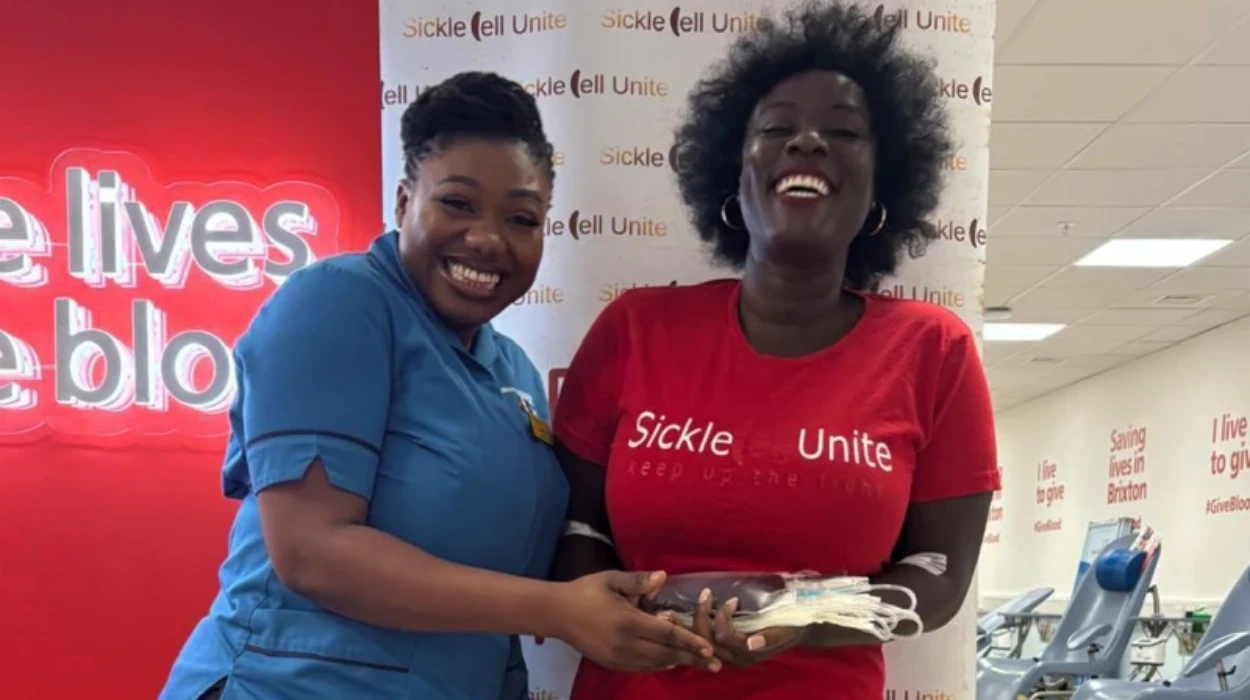
London (Parliament Politics Magazine) – Brixton Blood Centre launches group donations to encourage Black donors and support sickle cell patients through a community approach.
As reported by Jess Warren for the BBC, Brixton Blood Centre has launched a new initiative to encourage more Black donors to give blood.
How are group bookings encouraging more black donors in Brixton?
The South London blood centre has launched a new system allowing people to donate blood alongside friends or community members.
The move comes after input from Black heritage groups, who argue they were more likely to become regular donors if blood could be given with faith groups, community, or peers.
Mark Chambers, from NHS Blood and Transplant (NHSBT), said,
“The initiative is about creating a shared experience that makes donating more welcoming, inspiring, and impactful – especially for first-time donors – in a setting that feels more like community than clinic.”
Geraldine Parker, national partnerships manager at NHSBT, stated,
“Many potential donors may have concerns about eligibility or the donation process. Partner organizations, like The Science Gap, can help dispel myths and provide clear, accurate information to encourage participation.”
She said,
“Community organizations can help tailor messaging that resonates with Black communities by addressing specific health concerns, such as the need for Black Heritage blood donors to help patients with sickle cell disease.”
“The center plays a crucial role in recruiting Black heritage blood donors, essential for treating conditions like sickle cell disease, which disproportionately affects the Black community. By focusing on this need, the center directly contributes to improving health outcomes within the community,” Ms
Parker continued.
Sarah-Jane Nkrumah from Sickle Cell Unite, a London-based group that trialed a new system, said,
“We believe group bookings are incredibly important because they bring the community together. People are often more comfortable donating blood when they attend with friends or as part of a group; that sense of shared purpose really matters.”
She added,
“It becomes more than just an opportunity to save lives; it’s a chance to do something meaningful together.”
How do sickle cell patients rely on hundreds of donors each year?
Sickle cell is Britain’s fastest-growing inherited blood disorder, affecting around 15,000 to 18,500 people and making it the country’s most common genetic condition.
Around 300 babies in the UK are diagnosed with sickle cell each year, with a higher prevalence in Black communities.
Blood donors from African, Caribbean, and mixed ethnic backgrounds are ten times more likely than white donors to carry the Ro blood subtype essential for treating sickle cell. Patients with sickle cell disease may require blood from up to 100 donors each year to maintain their health.
What are the symptoms of sickle cell disease?
- People with sickle cell often experience anemia, which can cause fatigue and weakness.
- Pain episodes, known as sickle cell crises, occur due to blocked blood flow in the body.
- Individuals may have swelling in the hands and feet caused by blocked blood circulation.
- Frequent infections can happen because sickle cell affects the spleen’s ability to fight bacteria.
- Some patients experience delayed growth or puberty due to a shortage of healthy red blood cells.
