

Headline: Canadian Coast Guard Captain Dismissed for Ignoring Distress Call
In a significant ruling from the Canada Industrial Relations Board, a captain of the Canadian Coast Guard has been terminated for allegedly "willfully" ignoring a distress call from a vessel in peril. The incident, which occurred in 2021, has raised questions about the accountability and operational procedures within the Coast Guard. The decision marks a crucial moment in maritime governance and brings to light the implications of neglecting duties in critical situations.
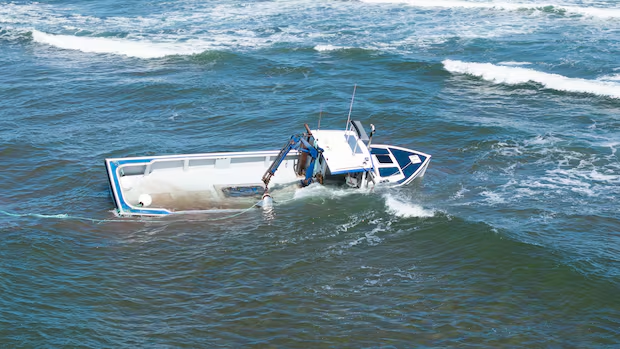
On the evening of June 23, 2021, the Coast Guard received a distress signal from a fishing vessel off the coast of Newfoundland, requesting immediate assistance due to engine failure in turbulent waters. Instead of taking appropriate action, the captain reportedly chose to continue a non-essential activity instead of responding to the emergency. This decision not only endangered the lives of those aboard the distressed vessel but also placed significant operational strain on the Coast Guard’s emergency response protocols.
The board’s ruling, released on August 15, 2023, emphasized that the captain’s actions constituted a serious violation of duty and were deemed unacceptable within a public safety framework. The board noted that the captain was well aware of the distress call and had the resources to respond, thereby categorizing the neglect as "willful" rather than merely negligent. This action reinforces the high level of responsibility placed on Coast Guard personnel, whose primary mission is to ensure maritime safety.
Following the incident, an internal investigation was swiftly launched by the Canadian Coast Guard. Testimonies from crew members and other witnesses pointed to a culture of neglect concerning emergency protocols at the time, which further complicates the matter. The investigation revealed that this was not an isolated incident; several crew members had expressed concerns about operational shortcomings that could further endanger lives.
In light of these revelations, the labour board’s decision has sparked widespread discussions about the need for accountability in the Coast Guard. Maritime safety advocates argue that the incident highlights a systemic issue that requires immediate addressing. "This ruling is a pivotal moment for the Coast Guard. It sends a clear message that neglecting safety protocols will not be tolerated," stated Linda Harper, maritime safety expert. "There must be rigorous guidelines to ensure that every crew member understands the gravity of their responsibilities."
Moreover, the incident has reignited calls for improved training and education for all Coast Guard personnel. Experts suggest implementing regular drills that simulate distress situations to better prepare crews for real-life emergencies. "Training is key, and the culture of obedience to emergency protocols must be reinforced," commented John Mitchell, a veteran Coast Guard officer.
The labour board’s findings have also caught the attention of lawmakers, prompting discussions in Parliament regarding oversight mechanisms within the Canadian Coast Guard. Many representatives emphasize the need to evaluate current practices and improve procedures for handling distress calls. "Canadians trust the Coast Guard to respond when lives are at stake. We must ensure that our laws, regulations, and training reflect that trust," said Member of Parliament Carla Dunlop during a recent session.
In the wake of the decision, the captain has expressed intentions to appeal the ruling, claiming the dismissal was disproportionate given the circumstances. The captain maintains that the distress call was ultimately mismanaged by Coast Guard headquarters, complicating communication and response efforts. This defense adds another layer to an already intricate case, as it raises questions about organizational accountability versus individual responsibility.
This incident has prompted significant media coverage, with many outlets highlighting the implications on Coast Guard operations across Canada. The Canadian public, known for its high regard for the services rendered by the Coast Guard, is closely following the developments. Social media has been ablaze with reactions, ranging from strong support for the board’s decision to criticism of the internal procedures potentially allowing such neglect to occur.
Following the ruling, the Canadian Coast Guard has announced its commitment to reviewing existing policies and implementing necessary changes. A statement released by the organization stressed that maritime safety is paramount and that they are taking steps to reinforce their commitment to responding to distress calls effectively. "Every life counts, and we are deeply dedicated to continuous improvement in our operations," the statement read.
As this case unfolds, it remains to be seen what broader changes may result from the ruling against the former Coast Guard captain. Industry observers continue to watch closely, noting that a failure to learn from this event could have dire consequences in future operations. The key focus for the Coast Guard moving forward will likely hinge on balancing accountability while ensuring that all staff have the tools and training necessary to fulfill their essential roles as guardians of Canada’s waterways.
In conclusion, the firing of the Canadian Coast Guard captain serves as a critical wake-up call, underscoring the vital importance of emergency readiness and accountability in public safety roles. As discussions unfold in various spheres—from legal, political, and public perspectives—it’s evident that the ramifications of this incident will resonate far beyond the boundaries of individual responsibility, impacting policies and practices for years to come.