

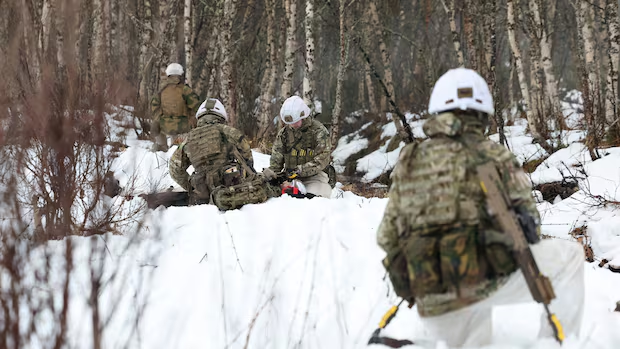
NATO Thrives in Norway: Carney Joins Arctic War Games
In a significant military operation, NATO is set to conduct a series of Arctic war games in Norway, with U.S. General John Carney taking a central role. Scheduled for this month, the exercises aim to bolster allied defense capabilities in the region amid growing tensions with Russia. Norway’s rugged landscapes will serve as the backdrop for these maneuvers, which are designed to enhance interoperability among NATO forces while ensuring readiness for potential conflicts in the Arctic.
As geopolitical tensions rise, particularly due to Russia’s assertive posture in the northern hemisphere, the Arctic region has become a focal point for strategic military preparations. The series of exercises, known as "Cold Response 2023," will bring together thousands of troops from various NATO member countries, including the United States, Canada, and the United Kingdom, to demonstrate unity and deterrence.
Strengthening NATO’s North
General Carney, the deputy commander of U.S. Northern Command, emphasized the importance of these war games in a recent press briefing. “In light of the evolving security challenges in the Arctic, it’s essential for NATO to demonstrate a collective defense posture. Our presence here underscores our commitment to ensuring security in this vital region,” he stated.
The exercises will not only showcase traditional land and air combat capabilities but will also place a significant focus on naval operations, a critical aspect given the Arctic’s extensive maritime boundaries. With climate change leading to reduced ice cover, new shipping routes are becoming accessible, prompting nations to recalibrate their military strategies to address emerging threats and opportunities.
The Geopolitical Landscape
Tensions between NATO and Russia have intensified over recent years, highlighted by events such as the annexation of Crimea and military maneuvers near NATO borders. Russian forces have increasingly established a presence in the Arctic, boosting their military infrastructure and capabilities. In this context, NATO’s exercises serve both as a warning to adversaries and a reassurance to member nations of their collective security commitment.
Russian officials have responded to NATO’s maneuvers with strong rhetoric, warning that the war games could escalate military confrontations. Kremlin spokesperson Dmitry Peskov described them as a "threatening presence," although NATO leaders maintain that these exercises are defensive in nature. “Our goal is not to provoke, but rather to ensure that we are prepared for any eventuality that may arise,” added General Carney.
Comprehensive Military Engagements
"Cold Response 2023" will include various operational scenarios, focusing on crisis management, humanitarian assistance, and combat readiness. Troops will participate in joint operations aimed at enhancing coordination and understanding among NATO allies, ensuring seamless integration in real-world situations.
The exercises will include a series of simulated responses to potential crises, ranging from disaster relief operations to full-scale military engagements. The diverse environment of Norway, featuring fjords, mountains, and urban landscapes, poses unique challenges that will test the adaptability and resilience of participating forces.
Implications for Security in the Arctic
The Arctic is rich in natural resources, including oil, gas, and minerals, making it a strategic area for future economic endeavors. As these resources become more accessible, regional disputes are expected to increase. By conducting war games in such a strategically critical zone, NATO signals its intent to maintain a proactive stance in safeguarding its members’ interests, while also entering into diplomatic discussions to manage potential conflicts.
Moreover, as climate change accelerates the melting of Arctic ice, previously uncharted territories will likely become battlegrounds for influence among global powers. Observers believe that NATO’s efforts in Norway will serve as a blueprint for how alliance forces can adapt to future conflicts and cooperative security arrangements in the high north.
Enhancing Operational Capabilities
Participating NATO countries will benefit from sharing technological expertise and operational strategies, further enhancing interoperability. This knowledge exchange will ensure all member nations are equipped to respond efficiently and effectively, irrespective of the challenges posed by the harsh Arctic environment.
Logistics will also be a critical component of the exercises, given the remoteness of many training locations. NATO forces are adapting their supply chain management and operational planning to address the unique challenges presented by the Arctic climate, ensuring that support systems can operate under various conditions.
Public Awareness and Military Readiness
The exercises are attracting significant public and media attention, indicative of the heightened awareness surrounding NATO’s role in global security. Engaging the public through transparent communication will build support for military initiatives, highlighting the importance of collective defense.
NATO officials are also emphasizing the character of these exercises as a measure of deterrence. The visibility of military operations can serve to dissuade potential aggressors while reassuring citizens within member states that their safety is a top priority.
Conclusion: A Collaborative Future
As NATO heads into "Cold Response 2023," the alliance is not only aiming to strengthen military ties but also to foster a spirit of collaboration and understanding among its diverse members. The Arctic’s geostrategic significance continues to grow, underscoring the importance of adaptive responses to new global challenges.
With General Carney at the helm, NATO’s maneuvers in Norway will serve as both a demonstration of military capability and a vital step in shaping future security strategies in a region that is poised for both challenges and opportunities. As the world watches, NATO aims to solidify its role as a critical actor in preserving peace and stability in the Arctic, acting decisively and collaboratively amongst its allies.