
The Israeli-Palestinian conflict stands as one of the longest-running and most intricate disputes in modern history. Rooted in competing national identities, territorial claims, and historical narratives, it involves profound questions of sovereignty, human rights, security, and international law. Far beyond a mere regional conflict, it embodies broader issues of nationalism and self-determination that have captivated global attention over generations.
Historical Origins and National Movements
The origins of the Israel-Palestine conflict trace to the late 19th and early 20th centuries, when political movements among the Jewish and Arab populations began fervently expressing national aspirations. Zionism, emerging as a response to widespread anti-Semitism and persecution in Europe, sought the establishment of a Jewish homeland primarily in historic Palestine.
Theodore Herzl, widely regarded as the father of modern Zionism, advocated this national revival that attracted increased Jewish immigration, especially following World War II and the Holocaust.
At the same time, Arab nationalism developed among the diverse communities inhabiting the territory, emphasizing Palestinian identity and self-rule. The Ottoman Empire’s collapse after World War I, combined with British control through the Mandate system, intensified political tensions.
The British Balfour Declaration of 1917 supporting a Jewish homeland clashed with promises made to Arab leaders, sowing seeds of conflict. Jewish immigration surged, while Palestinian Arab communities sought to preserve their land and political rights, eventually culminating in violent clashes and mutual resistance.
Key Wars and Territorial Changes
The establishment of the State of Israel in 1948 marked a turning point, triggering the first Arab-Israeli war as neighboring Arab states invaded. Israel’s victory resulted in the displacement of roughly 700,000 Palestinians in what is commemorated by Palestinians as the Nakba (“catastrophe”).
Armistice lines left Israel controlling more territory than initially allocated under the UN partition plan, while Jordan controlled the West Bank and Egypt the Gaza Strip.
A subsequent series of wars—including the Six-Day War of 1967—resulted in Israel capturing the West Bank, Gaza Strip, East Jerusalem, Sinai Peninsula, and Golan Heights. These military occupations have remained central to the conflict’s disputed geography.
UN Security Council Resolution 242 called for Israel’s withdrawal from territories occupied in 1967 and emphasized the inadmissibility of acquiring land by force, setting the framework for future peace efforts.
Palestinian Governance and Political Divisions
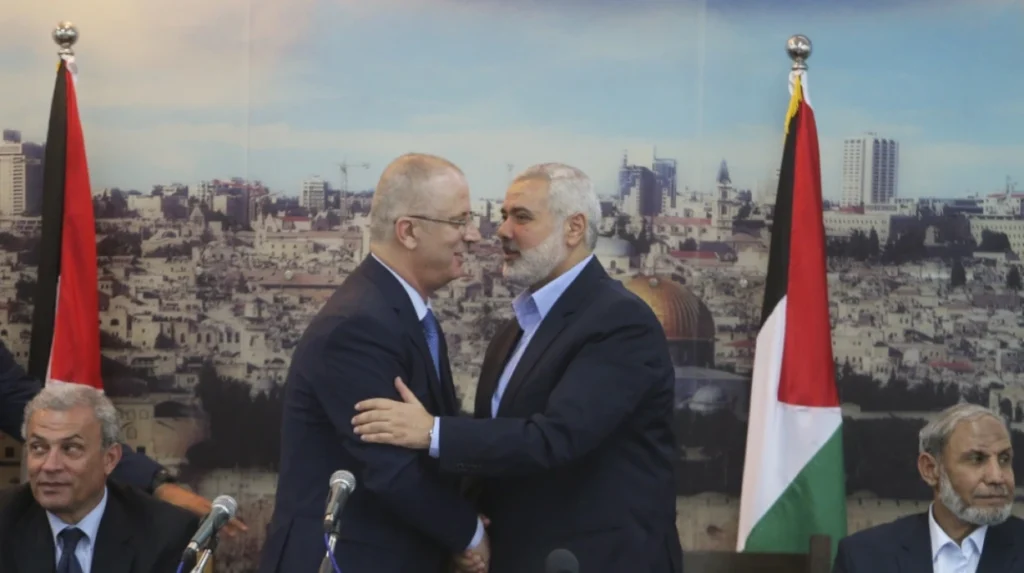
The Palestinian Authority (PA), established through the Oslo Accords in the 1990s, exercises limited self-governance over parts of the West Bank, while Hamas controls the Gaza Strip. The rivalry between these factions has fragmented Palestinian political unity, complicating peace negotiations and cohabitation.
Despite multiple agreements, key issues such as the status of Jerusalem, Israeli settlements, refugees, borders, and security arrangements remain unresolved. Periodic Palestinian uprisings, or intifadas, notably the first in 1987 and the more violent second starting in 2000, underscored the intensity of Palestinian resistance to occupation and Israeli policies.
Humanitarian Impact and Civil Rights Issues
The prolonged conflict has had devastating humanitarian effects. Palestinian civilians face restricted movement, limited access to essential resources like water and medical care, and the consequences of military operations. Refugees and internally displaced persons number in the millions due to successive waves of violence and displacement.
Human rights organizations frequently document violations on both sides, calling for adherence to international humanitarian law and protection of civilians. Israeli security concerns are cited to justify many of the restrictions and military actions, yet critics argue these measures frequently breach human rights standards and deepen animosities.
Major Events and Peace Efforts
Over decades, numerous peace initiatives have attempted to resolve the conflict, including the 1993 Oslo Accords, the 2000 Camp David Summit, and recent proposals like the 2019 “Peace to Prosperity” plan. Although some agreements produced positive outcomes such as limited autonomy and security cooperation, a comprehensive peace deal has remained elusive.
The construction of the West Bank barrier beginning in 2002 aimed to enhance Israeli security but was met with Palestinian condemnation as a land grab and segregationist measure. Continued settlement construction in occupied territories represents one of the most contentious obstacles to lasting peace.
Recent Developments and Conflict Escalations
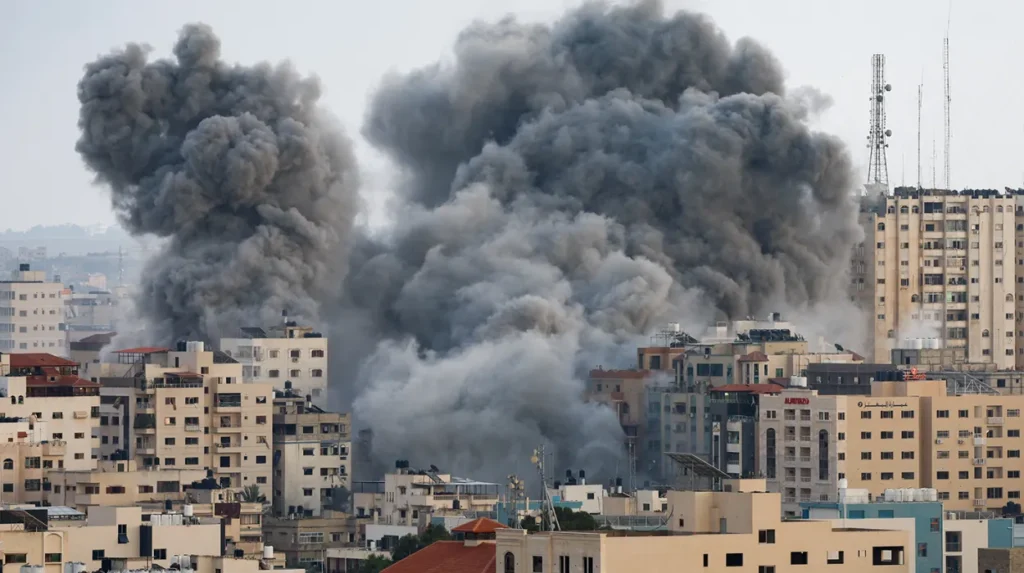
The years 2023-2025 saw renewed conflict on a devastating scale. Hamas’s surprise attack on Israel in October 2023 led to airstrikes and ground operations by Israeli forces in Gaza, resulting in substantial civilian casualties and infrastructure damage.
Both Palestinians and Israelis suffered significant losses, with hostilities escalating to involve other regional actors.
Humanitarian crises worsened amid blockades and destruction of civilian facilities, prompting global calls for ceasefire and humanitarian access. International courts issued arrest warrants for leaders associated with war crimes during the hostilities, underscoring the grave legal aspects of the conflict.
Despite intermittent ceasefires and diplomatic mediation efforts, underlying tensions and unsettled issues persist.
Essential Facts About Israel and Palestine
- The conflict largely stems from competing nationalist movements and territorial claims rather than purely religious differences.
- Israel declared statehood in 1948, leading to displacement of hundreds of thousands of Palestinians known as the Nakba.
- The Six-Day War (1967) resulted in Israeli occupation of the West Bank, Gaza Strip, and East Jerusalem, altering regional boundaries.
- Palestinian governance is divided between the Palestinian Authority in the West Bank and Hamas in Gaza, complicating unity.
- Israeli settlements in occupied territories are widely considered illegal under international law and hinder peace efforts.
- Palestinians face severe humanitarian challenges including displacement, restricted access to resources, and civil rights issues.
- Multiple peace initiatives have been attempted, yet a comprehensive resolution remains elusive after decades.
- Recent escalations in 2023-2025 resulted in significant casualties and humanitarian crises affecting both populations.
Understanding facts about Israel and Palestine is crucial to appreciating the complexity and longevity of the conflict. Rooted in competing national aspirations, territorial disputes, and historical contexts, the conflict remains a major challenge for regional stability and international diplomacy. Although peace efforts continue and international law provides frameworks for resolution, the situation on the ground is shaped by deep-rooted mistrust and diverging narratives.
Educating oneself on these enduring facts lays the groundwork for informed engagement, constructive dialogue, and hopeful paths toward peace.