

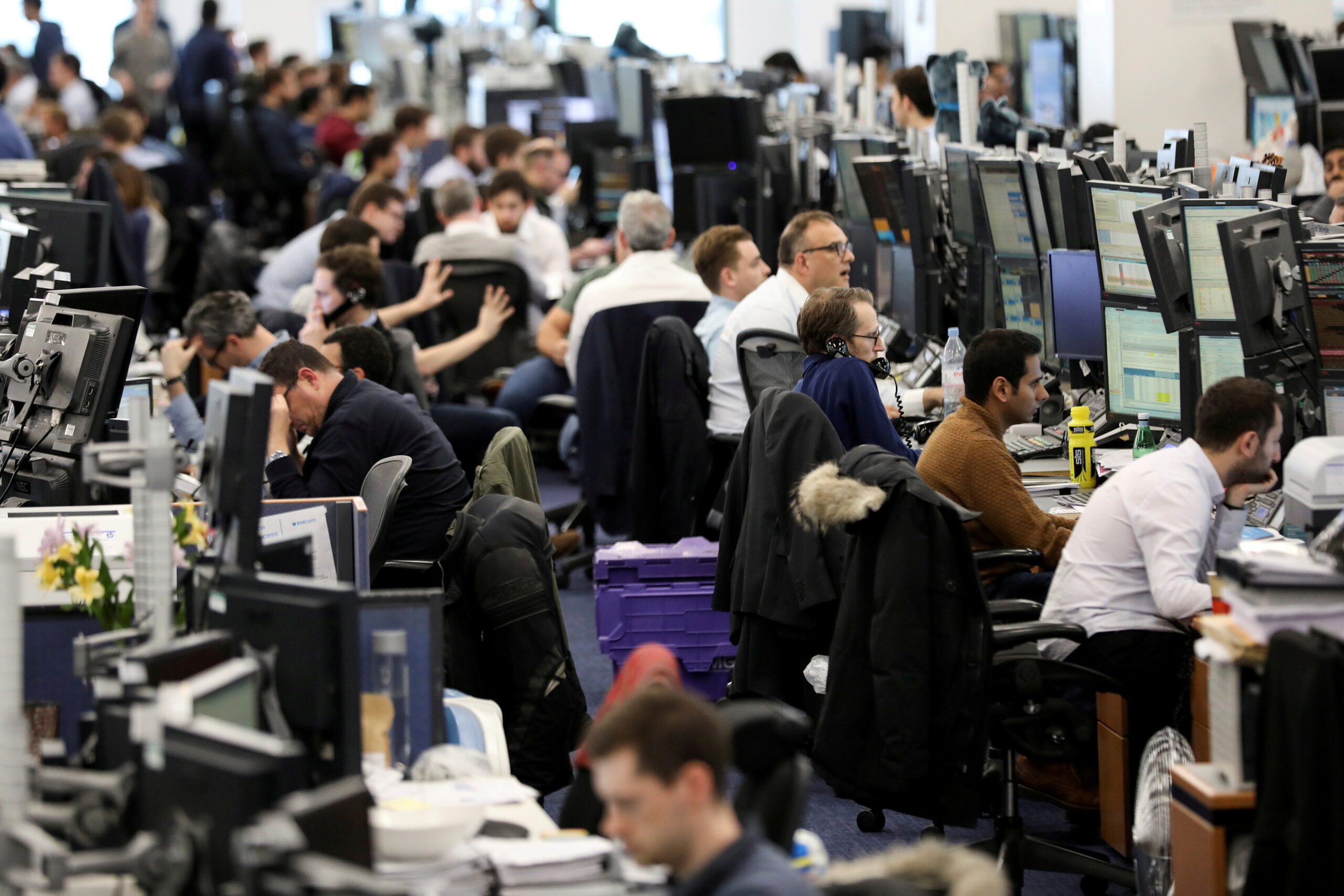
Brussels, Europe, February 4, 2026 — Parliament News, Notes that The European stock market today reflects a period of transition as investors balance economic resilience against lingering uncertainty. Across major exchanges, trading patterns point to caution rather than fear, with participants carefully assessing corporate performance, monetary policy signals, and sector-level dynamics shaping the region’s financial outlook.
While volatility has eased compared with previous years, momentum remains uneven. Markets are no longer driven by broad optimism or panic, but by selective confidence rooted in fundamentals. This environment has reshaped how capital is allocated and how risk is perceived across Europe’s financial centers.
Cautious Trading Defines the Current Landscape
Equity markets across Europe have entered a phase characterized by restrained movement and disciplined positioning. Investors appear reluctant to make aggressive bets, preferring incremental exposure adjustments rather than sweeping portfolio shifts.
This measured approach has become a defining feature of the European stock market today, where modest gains in some sectors are frequently offset by pullbacks in others. The result is a market that appears stable on the surface while undergoing subtle internal rotation.
Macroeconomic Signals Shape Investor Behavior
Economic indicators continue to send mixed messages. Inflation has moderated compared with recent peaks, yet growth remains uneven across the euro area. Employment levels have held up relatively well, supporting consumption, but higher borrowing costs still weigh on investment decisions.
These conditions have reinforced a wait-and-see mindset within the European stock market today, as traders seek confirmation that economic stabilization can translate into sustainable earnings growth.
Sector Performance Highlights Divergence
Sector-level performance has become increasingly important. Energy and utilities have provided consistent support, benefiting from pricing discipline and stable cash flows. Financial stocks have shown resilience, supported by interest margins despite slower lending growth.
At the same time, technology and healthcare shares have faced valuation pressure. This divergence underscores how the European stock market today is being shaped more by sector fundamentals than by broad market sentiment.

Corporate Earnings Drive Selective Confidence
Earnings season has reinforced the importance of company-specific performance. Firms delivering clear guidance and cost control have been rewarded, while those issuing cautious outlooks have seen swift market reactions.
This selective response reflects a maturing European stock market today, where investors are prioritizing transparency and execution over growth narratives alone.
Monetary Policy Expectations Remain Central
Central bank policy continues to exert a powerful influence. While markets anticipate eventual easing, the timing and pace remain uncertain. Policymakers have emphasized data dependence, keeping investors attentive to inflation and growth releases.
As a result, the European stock market today remains sensitive to policy commentary, with even subtle shifts in tone capable of influencing short-term trading behavior.
Global Influences Add Complexity
External developments continue to shape European equities. Movements in U.S. markets, geopolitical developments, and commodity price fluctuations all feed into regional sentiment.
These global linkages mean the European stock market today cannot be viewed in isolation, as cross-border capital flows and international risk perceptions play an increasingly important role.
History of European Market Cycles
Europe’s equity markets have experienced multiple cycles over the past decades, ranging from rapid expansion to periods of consolidation. Following years of accommodative monetary policy and strong liquidity, valuations expanded significantly across many sectors.
The shift toward tighter financial conditions marked a turning point. This transition laid the groundwork for a more disciplined environment, setting the stage for the European stock market today to evolve into a phase defined by recalibration rather than exuberance.
One Market Voice Reflects the Mood
A senior European market strategist said,
“Investors are not stepping away from equities, but they are demanding stronger fundamentals and clearer signals before committing new capital.”

Trading Volumes Indicate Measured Participation
Market turnover has remained moderate, reflecting limited speculative activity. Institutional investors appear content to hold core positions while adjusting exposures at the margins.
This behavior reinforces the perception that the European stock market today is in a consolidation phase, with patience valued more highly than rapid positioning.
Currency Movements Play a Supporting Role
Foreign exchange dynamics have had a limited but notable impact. A relatively stable euro has reduced volatility for exporters and multinational firms, allowing equity performance to reflect operational results rather than currency swings.
With exchange rates steady, attention in the European stock market today has remained focused on earnings quality and balance-sheet strength.
Retail Investors Remain Engaged
Retail participation has stabilized after periods of heightened volatility in previous years. Individual investors continue to show interest in dividend-paying stocks and defensive sectors.
This steady engagement contributes to liquidity and supports the European stock market today, even as institutional players remain cautious.
Regulatory Environment Shapes Long-Term Outlook
Regulatory developments, particularly around sustainability and disclosure, continue to influence corporate strategy. Companies investing in compliance and transparency are increasingly favored by long-term investors.
These structural factors add depth to the European stock market today, aligning capital flows with evolving policy priorities.
Technology Adoption and Market Infrastructure
Advances in trading technology and data access have improved market efficiency. Faster execution and broader information availability have reduced information asymmetry across participants.
Such improvements support confidence in the European stock market today, even as macroeconomic uncertainty persists.

Risk Management Takes Priority
Risk management has become a central focus for both asset managers and individual investors. Diversification, hedging strategies, and scenario planning are increasingly common.
This emphasis reflects lessons learned from recent volatility and contributes to the stability observed in the European stock market today.
Economic Data Remains a Key Catalyst
Upcoming economic releases continue to attract close attention. Indicators related to growth, inflation, and employment are likely to influence near-term market direction.
Until clearer trends emerge, the European stock market today is expected to remain range-bound, with investors reacting selectively to new information.
Long-Term Investors Focus on Quality
Long-term capital is gravitating toward companies with strong governance, predictable cash flows, and sustainable business models. This shift favors established firms over speculative growth stories.
Such preferences are shaping the European stock market today, reinforcing a quality-driven investment landscape.
Outlook for the Remainder of 2026
Looking ahead, analysts expect continued balance rather than dramatic movement. Any sustained rally will likely depend on clearer economic momentum and policy support.
For now, the European stock market today represents a market in transition, adapting to a new equilibrium shaped by discipline, selectivity, and patience.
A Market Defined by Discipline and Adaptation
The current phase of European equities reflects an industry learning to operate without excess stimulus or unchecked optimism. Participants are recalibrating expectations while maintaining engagement.
How investors and companies navigate this environment will determine competitiveness and resilience well beyond the current year. In this context, the European stock market today stands as a reflection of maturity rather than weakness.