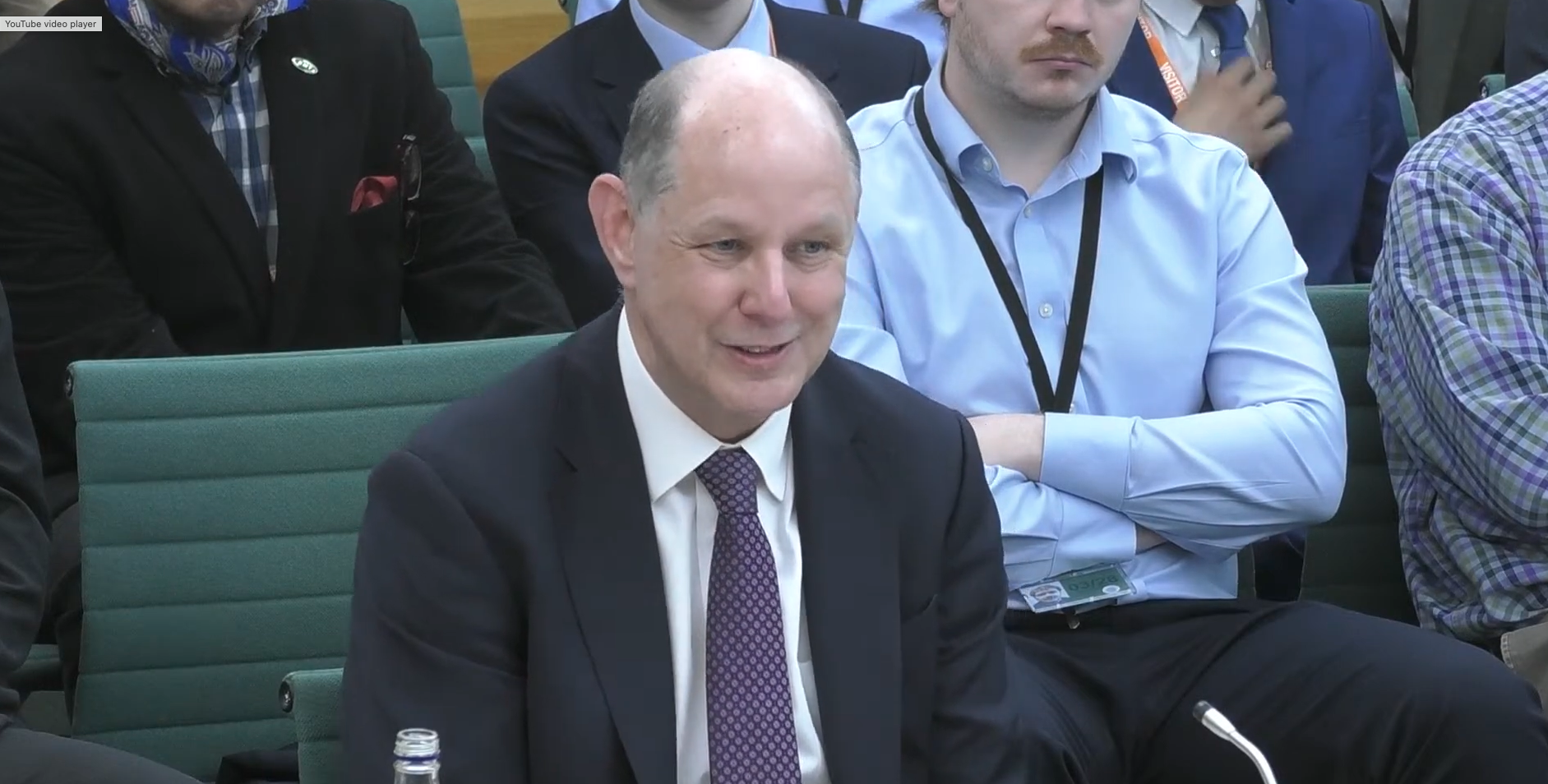
Yesterday, Sir Philip Barton, the former permanent under-secretary at the Foreign, Commonwealth and Development Office (FCDO), delivered a series of startling revelations to the Foreign Affairs Committee about the appointment process of Peter Mandelson.
In highly charged session, Sir Philip laid bare a culture within the current administration that appeared to prioritise political expediency over the rigorous security protocols that have long governed the British civil service.
His testimony suggests a government that was not merely eager to place a political heavyweight in Washington but was willing to disregard the “normal order” of business to do so.
The core of the controversy remains the decision to announce Peter Mandelson as the British Ambassador to the United States before his security vetting had been concluded. To the seasoned observers in the committee room, the timeline presented by Sir Philip was nothing short of extraordinary. The former Foreign Office chief admitted that he was explicitly told to get on with the appointment, a directive that came despite his own deeply held reservations. These “worries,” as he described them, were not rooted in mere procedural pedantry but in the tangible reputational and security risks associated with Mandelson’s past, specifically his well-documented links to the disgraced financier Jeffrey Epstein.
Sir Philip’s evidence painted a picture of a civil service leader caught between his duty to protect the integrity of the diplomatic corps and No 10, which seemed indifferent to Mandelson’s past association and determined to have in place before President Tump’s inauguration.
One of the most damning aspects of Sir Philip’s testimony involved the role of the Cabinet Office. He described the advice received from the centre of government, suggesting that Mandelson might not vetting at all.
For a diplomat of Sir Philip’s standing to make such a claim is a significant indictment of the procedural shortcuts being attempted at the highest levels. The suggestion that a high-profile political figure, with a career marked by both brilliance and controversy, should bypass the checks required of every other senior civil servant and diplomat suggests a tier of exceptionalism that Sir Philip clearly found difficult to reconcile with standard FO practices.
The committee heard that Downing Street’s attitude throughout the process was one of marked disinterest in the substance of the vetting itself. Instead, the pressure exerted on the Foreign Office was focused almost entirely on the “speed” of the appointment.
Sir Philip recalled a Downing Street that was “uninterested” in the complexities of the vetting process, viewing it as a bureaucratic hurdle to be cleared as quickly as possible rather than a necessary safeguard for national security. This drive for haste led to the “normal order” of government being abandoned. Under standard procedures, an appointment of this magnitude would never be announced publicly until the individual had cleared all necessary security hurdles. By jumping the gun, No 10 effectively backed the Foreign Office into a corner. Sir Philip warned the MPs that if the vetting team had eventually recommended against Mandelson’s clearance after the public announcement, it would have precipitated a constitutional and diplomatic “crisis” of the first order, leaving the government’s credibility in tatters on both sides of the Atlantic.
Despite the intense pressure, Sir Philip sought to correct the record on one specific point of contention, a reported phone call between himself and Morgan McSweeney. Rumours had circulated in Westminster that a direct and perhaps confrontational conversation had taken place regarding Mandelson appointment, including the PM’s former Chief of Staff swearing at the Mandarin. Sir Philip was categorical in his denial, stating that the reported call “didn’t take place.”
While this might offer some temporary relief to those in the Prime Minister’s inner circle, it does little to mitigate the broader image of an administration that viewed the civil service’s caution as an obstacle to be bypassed.
Despite the Prime Minister winning a crucial vote in Parliament last night on whether the his conduct should be investigated by Parliament’s privileges committee, the fallout from this testimony is likely to be significant and a slew of Government papers is due to be released imminently providing more details and insights into the appointment process – the danger for Sir Keir Starmer is far from over.
Ex-Foreign Office boss raises mores questions about Mandelson Appointment