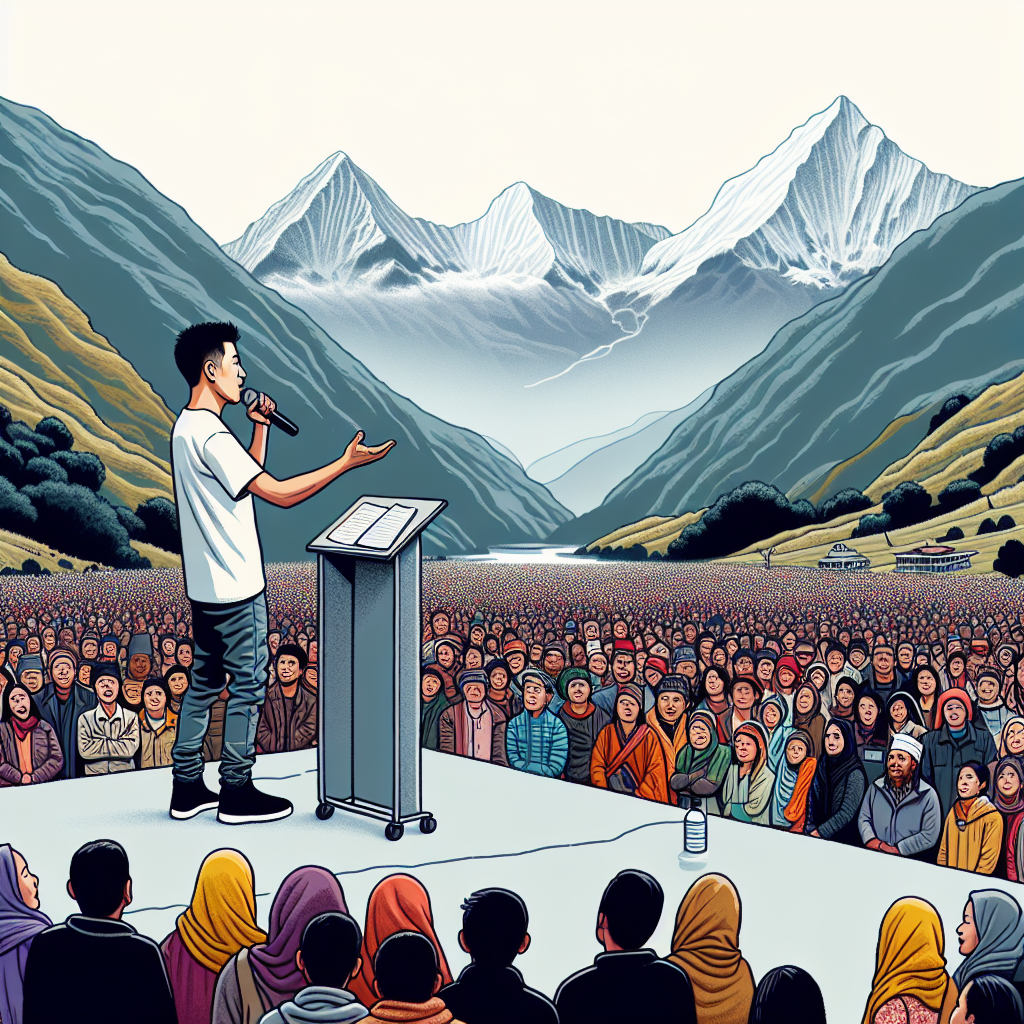
Headline: Former Rapper’s Party Dominates Nepal Elections
In a stunning political transformation, the newly formed political party led by former rapper Prashant Thapa swept the recent elections in Nepal, held on October 1, 2023. Thapa’s party, which champions progressive policies and youth engagement, garnered widespread public support, marking a significant shift in the nation’s political landscape. The election results indicated a collective demand for change, reflecting the electorate’s desire for fresh leadership amidst ongoing social and economic challenges in the country.
Thapa, who transitioned from a celebrated music career to politics, has captured the hearts of many young Nepalis through his relatable messaging and dynamic campaigning tactics. Drawing on his experiences in the music industry, he effectively utilized social media and grassroots movements to engage a demographic that often feels overlooked by traditional political figures. His party, coined “New Voices for Nepal,” focused on issues like education reform, sustainable development, and anti-corruption measures that resonate deeply with the youth and working-class voters.
The recent elections saw a voter turnout of approximately 75%, significantly higher than previous elections, suggesting an increase in political awareness and engagement among the populace. Thapa’s victory, alongside a coalition of like-minded candidates, signals a shift away from established parties that have dominated the political arena for decades.
In his victory speech, Thapa emphasized the importance of unity and collaboration to address Nepal’s pressing issues. “This victory does not belong to me alone; it belongs to every single Nepali who believes in a brighter future. Together, we will rebuild our nation,” he declared, inspiring hope among his supporters while promising to prioritize transparency and accountability in governance.
The implications of Thapa’s win extend beyond party lines, as it highlights a growing trend of younger leaders stepping into politics across the globe, reflecting similar movements in places like Brazil and the Philippines. Many political analysts regard Thapa’s rise as a significant indicator of evolving electoral dynamics in Nepal, where traditional party loyalties are increasingly challenged by innovative approaches and diverse leadership styles.
In forming his government, Thapa faces the daunting task of tackling issues including rampant poverty, political instability, and infrastructure deficits. His party’s agenda focuses on harnessing technological advancements and fostering entrepreneurship to stimulate economic growth. Thapa has garnered support from local businesses and startups that view his policies as conducive to fostering a favorable investment environment.
Social media has played a pivotal role in Thapa’s electoral success. From viral music videos to impassioned live streams, his digital strategies not only engaged voters but also mobilized volunteers and raised crucial funds. By using platforms popular with younger audiences, Thapa ensured that his party’s message reached far beyond traditional campaign methods, revolutionizing how political campaigns are conducted in Nepal.
Critics, however, caution that the transition from celebrity to politician is fraught with challenges. Thapa’s party has already faced scrutiny regarding its ability to deliver on ambitious promises without extensive political experience. Observers are keenly watching to see whether Thapa can translate his popularity into effective governance, particularly in a fragmented political landscape where coalition-building will be essential for implementing policies.
The election results also reflect the sentiments of an electorate weary of entrenched corruption and inefficiency within established political parties. Thapa’s success symbolizes a rejection of the status quo, suggesting that voters are eager for innovation and refreshing perspectives in leadership. His party’s swift ascendancy illustrates how cultural figures can leverage their public platforms to enact significant change in the political sphere.
As Thapa prepares to take office, speculation mounts about his cabinet selections and the policies he will prioritize. Early indications suggest a focus on integrating youth voices in decision-making processes, with plans for town hall meetings and public consultations to solicit citizen input. This approach could foster a more inclusive government model, ensuring that the voices of marginalized populations are heard.
Looking ahead, the next few months will be critical for Thapa and his party. The necessity for economic recovery in a post-pandemic landscape requires swift action and cooperation with international partners. If Thapa can successfully navigate these challenges, he may not only reshape the political discourse in Nepal but also set a precedent for future leaders domestically and internationally.
International observers are closely monitoring the implications of this election, as Thapa’s victory could inspire similar shifts in leadership worldwide. Political analysts suggest that the trend toward youthful, fresh candidates may continue to gain momentum, representing a departure from traditional political norms that often alienate younger voters.
In conclusion, Prashant Thapa’s electoral sweep may prove to be a pivotal moment in Nepal’s political history, embodying a collective yearning for change and resonance with younger generations. As he embarks on this uncharted journey into governance, the world watches with anticipation to see how his administration will address the nation’s challenges and harness the aspirations of a new generation of Nepalese citizens.
Through sound governance and a commitment to transparency, Thapa has the opportunity to transform his party’s promise into measurable achievements that could redefine the trajectory of Nepal.