

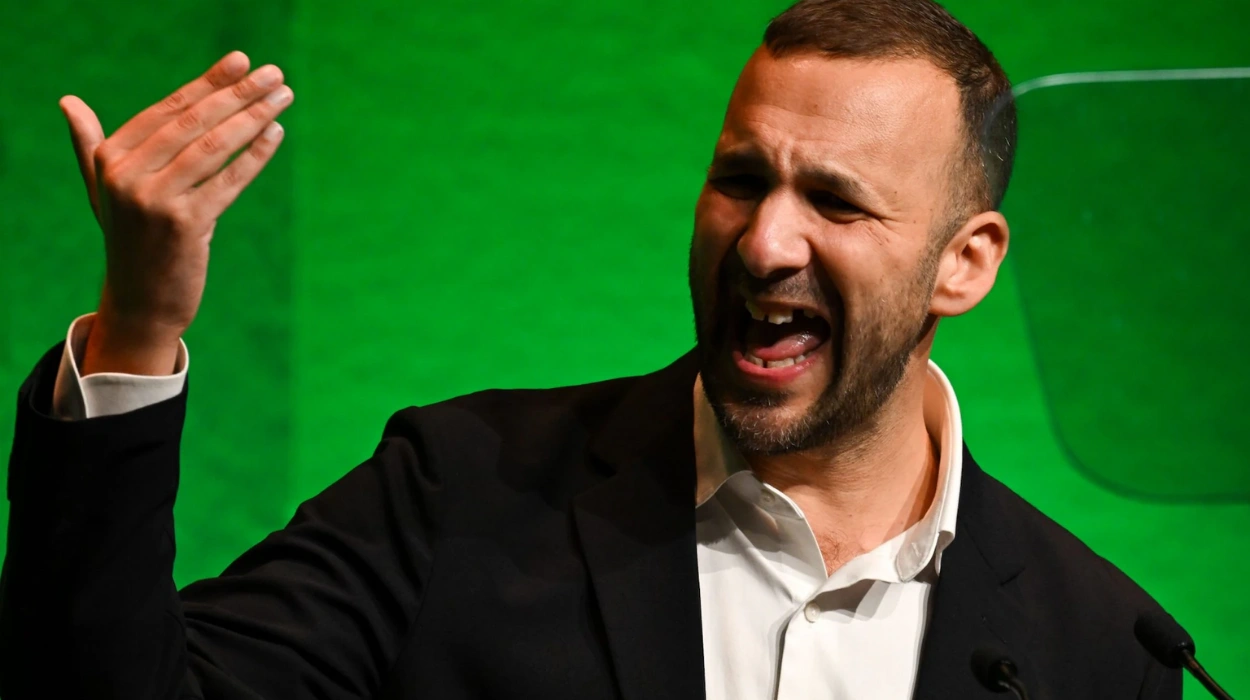
UK (Parliament Politics Magazine) – Leaked Green Party dossier warned men could face sanctions for disagreeing with women, exposing legal and internal tensions under Zack Polanski’s leadership.
As reported by The Telegraph, the Green Party is considering rules that could discipline men for correcting women.
The party leaders may broaden the Greens’ definition of misogyny, where any disagreement between men and women could trigger sanctions.
What did the leaked Green Party dossier say about disciplining men?
An internal 53-page document on the Green Party’s legal and reputational risks has been leaked to The Telegraph.
The report highlights broader disputes over the Greens’ trans and LGBT policies, posing significant legal and financial challenges to Zack Polanski’s party.
The party’s own lawyers drafted a report warning that guidance on transphobia and “queerphobia” risks penalizing members who question gender theory.
According to the leaked dossier, the Green Party council was “very close” to including guidance on misogyny and sexism in its ethics framework.
It says,
“This document lists ‘being corrected’ as one example of how women experience ‘misogynistic’ behaviour – an example so broad that it is liable to justify any disagreement between a man and a woman as a sanctionable disciplinary offence.”
The report also stresses that the party cannot legally discriminate against members holding gender-critical views, which are protected under the 2010 Equality Act.”
Dr Shahrar Ali, former deputy leader of the Greens, received £9,100 last year after a court ruled his dismissal over his biological beliefs was improper.
The leaked report highlighted that the process to remove Dr Ali was “procedurally unfair.” He has filed a new legal case against the party, accusing it of repeated “procedural abuse” and continuing to discriminate against him over his gender-critical views on biological sex.
The party later conceded that Dr Ali’s dismissal involved procedural shortcomings.
What did Zack Polanski say about trans policies and asylum?
Under Zack Polanski, the Green Party is currently seeing a historic surge in the polls, as its popular support has more than doubled from seven per cent at last year’s election to 15.5 per cent in current polling.
According to several polls, the Green Party is now outperforming Prime Minister Sir Keir Starmer’s Labour Party, amid pressure from internal critics to adopt a more left-wing agenda.
In April, Mr Polanski dismissed the Supreme Court ruling that defines sex as biological, defending disputed trans ideology and calling it “thinly veiled transphobia.”
During his summer leadership campaign, he insisted on the importance of upholding self-ID policies, allowing trans individuals to legally confirm their gender without a recognition certificate.
In an interview, Mr Polanski said,
“A woman can have a penis … If a woman is transitioning, then they can have a penis.”
He told The Times last week that Britain should increase its intake of asylum seekers.
How did the Green Party respond to the leaked misogyny dossier?
Commenting on the leaked dossier, a Green Party spokesman said,
“Parts of this report are factually inaccurate but we do acknowledge the need to improve our disciplinary processes and in particular to tackle delays. That work is under way.”
They added,
“Our party policy is clear – trans women are women, trans men are men, and non-binary identities exist and are valid.”
A spokesperson confirmed the party’s governance bodies will maintain full legal and political compliance.
How do Labour and Conservatives approach disciplinary rules for members?
The Tory Party has a published, structured Code of Conduct that sets expected behavior standards and outlines a formal, multi-stage disciplinary process. Complaints are typically investigated by a panel, with appeals possible.
Labour’s stance is often characterized by strong enforcement of party discipline from the leadership, especially on voting. MPs have been removed for “repeated violations of party discipline,” such as rebelling against the government on key votes.
Both parties use the withdrawal of the party whip (suspension from the parliamentary party) as the immediate disciplinary action for serious allegations.
