Headline: Capturing Black Holes: A New Frontier in Astronomy
In a groundbreaking achievement, astronomers have unveiled innovative techniques to film black holes in action, enabling real-time observation of these cosmic phenomena. Utilizing advanced imaging technologies and vast networks of radio telescopes, scientists from the Event Horizon Telescope (EHT) Collaboration have successfully recorded the dynamic behavior of black holes, offering pivotal insights into their formation and role in the universe. This remarkable feat adds to the understanding of black holes and was accomplished through a coordinated effort that began in April 2023, spanning observatories across the globe. The significance lies not just in the technology, but in the potential to enhance our grasp of fundamental physics and the nature of spacetime.
A New Era of Astrophysics
Black holes have long fascinated both scientists and the general public, shrouded in mystery due to their elusive nature and powerful gravitational pull. Until recent years, direct imaging of these celestial giants was nearly impossible. Yet, advancements in radio astronomy have paved the way for groundbreaking discoveries, culminating in the infamous imaging of Sagittarius A*, the supermassive black hole at the center of our Milky Way galaxy, in 2019.
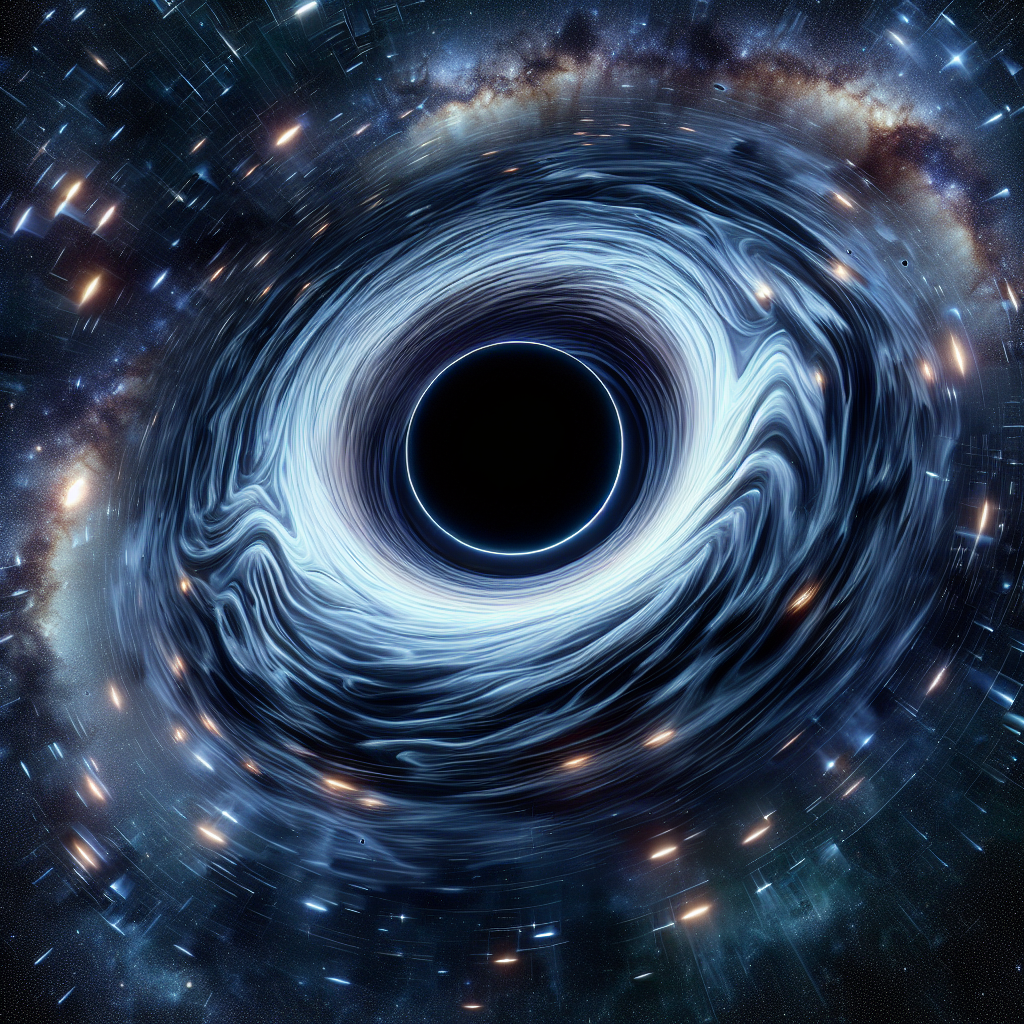
Now, researchers are venturing further into the realm of dynamic imaging, aiming to record not just static pictures but the interaction of black holes with their surroundings. This entails capturing the swirling accretion disks and the gravitational lensing effects that these massive entities exert on nearby stars and light.
The Techniques Behind the Capture
Filming a black hole in action involves the use of the Very Long Baseline Interferometry (VLBI) technique, which synchronizes multiple radio telescope facilities across the globe into a singular observational platform. This method enhances the effective aperture, allowing astronomers to achieve unprecedented resolution—comparable to using a telescope the size of Earth itself.
In April 2023, a series of coordinated observations commenced, focusing on a number of black holes known to demonstrate dynamic behavior, including the active galactic nuclei of distant galaxies. The sheer scale of this operation, often involving dozens of observatories, showcases modern astronomy’s collaborative spirit.
Using advanced algorithms, researchers process the collected data, converting radio signals into high-definition images that illuminate the enigmatic phenomena surrounding black holes. The team at EHT continues to refine these techniques, pushing the boundaries of what we can observe in the universe.
Understanding the Dynamics of Black Holes
One of the primary reasons for capturing black holes in action is to deepen our understanding of their dynamic processes. By observing the interactions between black holes and the matter surrounding them, scientists hope to shed light on various astrophysical phenomena, including jet formations—the powerful streams of particles ejected at nearly the speed of light.
These jets provide a wealth of information about the mechanics of black holes, such as their mass, spin, and the behavior of space and time near their event horizons. As researchers delve into these intricate details, they aim to create more comprehensive models of black hole dynamics, exploring how they influence galaxy formations and the evolution of the universe.
The Impact on Theoretical Physics
The implications of these discoveries extend beyond observational astronomy; they touch upon the foundational principles of physics. One of the greatest puzzles in modern science is reconciling general relativity—a theory that explains gravity on a cosmic scale—with quantum mechanics, which governs the microcosm of particles.
Filming black holes offers data that could potentially bridge these theories, revealing aspects of gravity that have remained elusive. As the EHT team and other researchers document real-time black hole activity, they accumulate evidence that might confirm or challenge existing physical models, leading to revolutionary advancements in our theoretical understanding of the universe.
Future Prospects and the Road Ahead
The fascination with black holes is set to expand, as scientists plan for additional observations that will capture broader ranges of stellar activity and interactions. Future missions may include the development of space-based telescopes and even proposals for interferometric networks comprising satellites orbiting Earth, further enhancing the resolution and capabilities for imaging black holes.
Such endeavors are not just academic; the pursuit of understanding black holes is intertwined with humanity’s quest to uncover the secrets of the cosmos. As renowned astrophysicist Dr. Jane Hawking remarked, "Understanding black holes is not just about the stars; it’s about understanding our place in the universe."
Conclusion: A Bright Future for Astronomical Exploration
As technological advancements and international collaboration pave the way for breakthroughs in black hole observations, the universe becomes a more accessible and comprehensible domain. The ability to film black holes in action promises not just to unveil the mysteries of these cosmic giants but also to inspire and ignite curiosity within the minds of future generations of astronomers and scientists.
By continuing to push the envelope of astrophysical research, we stand on the brink of foundational discoveries that could alter our understanding of space, time, and the very fabric of reality itself.
In summary, the fascinating journey of capturing black holes in action showcases the best of human ingenuity and collaboration, demonstrating that even the most elusive phenomena can be studied and understood, not just through theories, but through direct observation. As we look to the cosmos, the promise of what lies ahead is undeniably bright.