
Iran (Parliament Politics Magazine) January 12, 2026 – Iran’s Foreign Ministry confirmed ongoing communications with the United States through established diplomatic channels. The statement coincides with reports that President Donald Trump’s administration is reviewing potential responses to Tehran’s recent crackdown on nationwide protests against economic hardship and government policies. No specific actions have been announced by either side as of Monday afternoon.
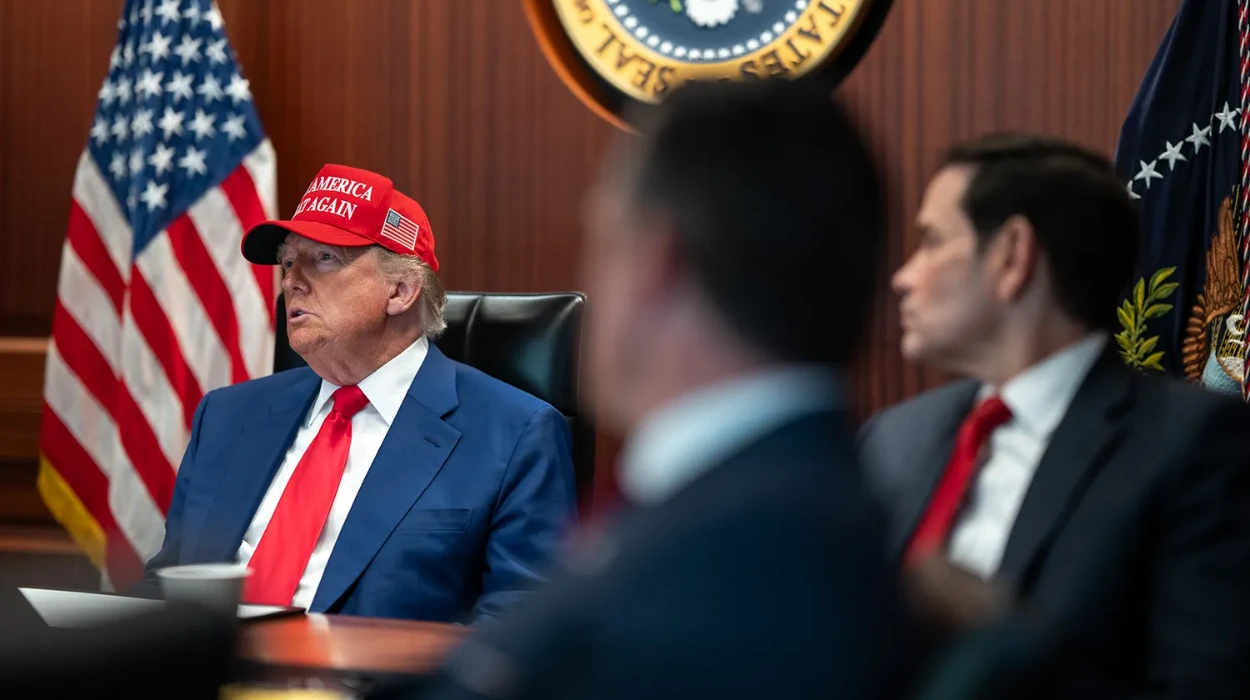
The Iranian position emerged following weekend meetings between Iranian and US intermediaries in Oman. Trump’s national security team convened Sunday evening to assess intelligence on protest suppression tactics employed by Iranian security forces.
Iran’s Foreign Ministry confirms open communication channels
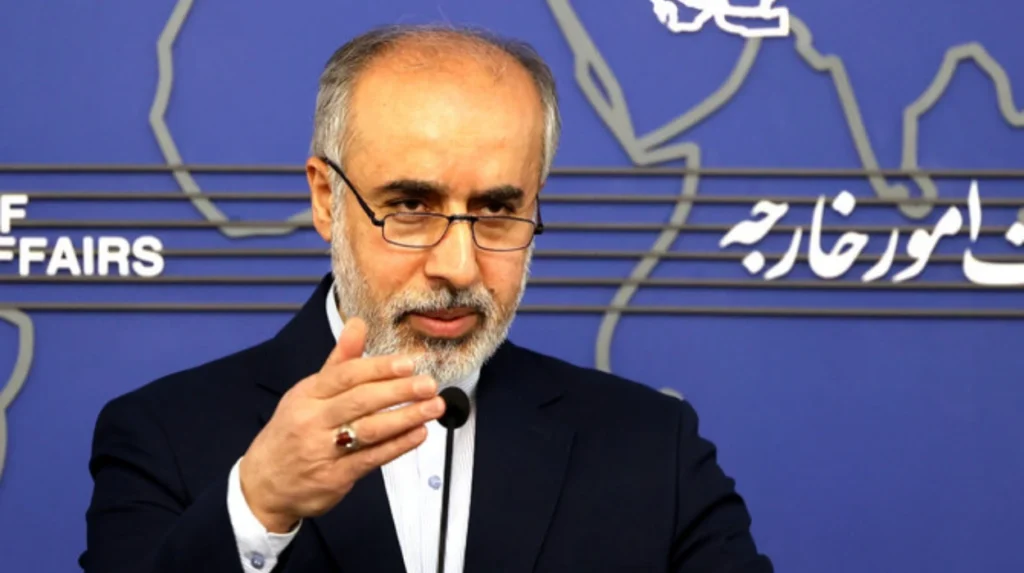
Iranian Foreign Ministry spokesperson Nasser Kanaani stated during Monday’s press briefing in Tehran that
“all communication lines remain open with the United States through appropriate intermediaries.”
Kanaani emphasised continuity of dialogue despite domestic unrest, as reported by Reuters’ Jana Choukeir, Nayera Abdallah, and Tala Ramadan.
bne IntelliNews said in X post,
“Iran confirms communication channel with US special representative remains open with active message exchanges, as Foreign Minister Araqchi claims protests under control and Trump…”
Iran confirms communication channel with US special representative remains open with active message exchanges, as Foreign Minister Araqchi claims protests under control and Trump… https://t.co/yzoLRm2Yc7 #Iran #USCommunicationChannel #Trump #ForeignPolicy #InternationalRelations
— bne IntelliNews (@bneintellinews) January 12, 2026
The remarks followed Iran’s deployment of 15,000 Basij paramilitary forces to major cities, including Tehran, Isfahan, and Shiraz, over the weekend. State media IRIB reported 247 arrests linked to protest activities since Friday, with internet restrictions imposed in 14 provinces.
Kanaani addressed US concerns directly, noting, “Iran handles its internal matters sovereignly while maintaining readiness for constructive dialogue,” according to Fars News Agency transcripts. The spokesperson referenced prior Oman-mediated talks in December 2025 covering nuclear compliance and regional security.
Trump’s statement signals military review amid protests
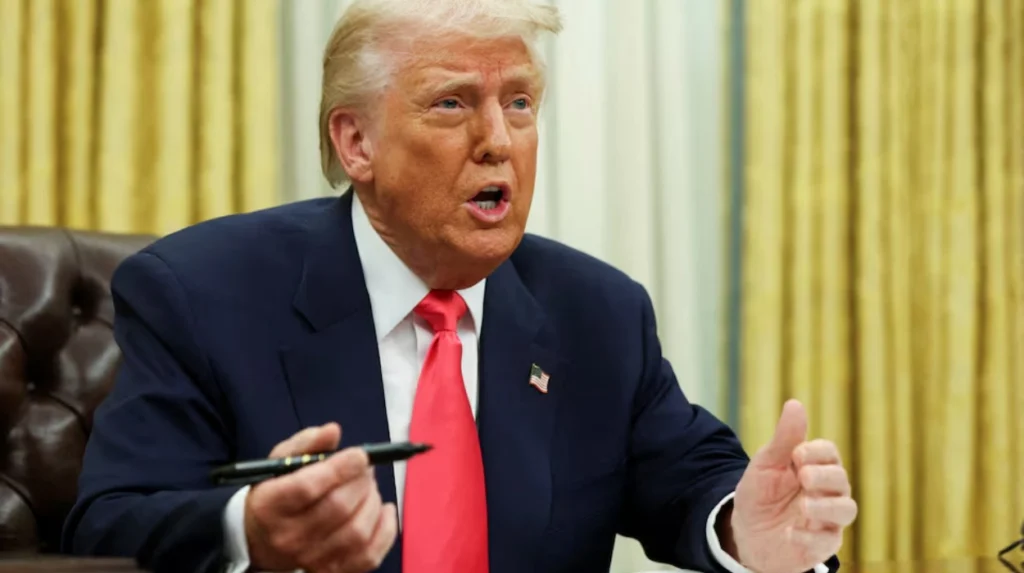
US President Donald Trump addressed the Iranian situation directly on Monday morning. Channel 4 News said in X post,
“US President Donald Trump says the military is looking at ‘very strong options’ in Iran amid deadly anti-government protests in the country. Trump claims the leaders of Iran have called him and a meeting will be set up to ‘negotiate’ as there are reports of hundreds of people killed in the demonstrations.”
US President Donald Trump says the military is looking at ‘very strong options’ in Iran amid deadly anti-government protests in the country.
— Channel 4 News (@Channel4News) January 12, 2026
Trump claims the leaders of Iran have called him and a meeting will be set up to ‘negotiate’ as there are reports of hundreds of people… pic.twitter.com/b07DIusZMa
The White House confirmed Trump’s remarks followed a Pentagon briefing on regional force posture. National Security Adviser Michael Waltz attended the Oval Office discussion with Joint Chiefs Chairman General Dan Caine.
Trump Administration assesses intelligence on protest crackdown
President Trump’s national security adviser, Michael Waltz, confirmed Sunday evening that the administration
“carefully reviews all intelligence regarding Iranian internal developments.”
Waltz spoke following a Situation Room meeting attended by Secretary of State Marco Rubio, CIA Director John Ratcliffe, and Joint Chiefs Vice Chairman Christopher Grady.
White House Press Secretary Karoline Leavitt issued a statement reading,
“The United States monitors Iran’s suppression of peaceful assembly and stands with the Iranian people’s aspirations for freedom.”
The statement avoided specifics on potential measures, directing questions to the ongoing interagency review.
Satellite imagery analysed by Maxar Technologies shows tented security checkpoints erected at Tehran’s Revolution Square and Enghelab Street, key protest sites. US officials received briefings on Iranian Revolutionary Guard Corps movements, including helicopter deployments over Mashhad.
Timeline of recent protests and Government response
Protests erupted on January 8 following a 47 per cent petrol price hike announced by Iran’s Oil Ministry. Demonstrations spread to 87 cities by Sunday, with labour unions reporting 312 injuries treated at public hospitals.
Iranian state television broadcast confessions from 43 detained organisers on Sunday evening, attributing unrest to “foreign agents.” Supreme Leader Ali Khamenei’s office released a statement characterising protests as “economic sabotage orchestrated externally.”
Security forces deployed water cannons, tear gas, and non-lethal munitions in Isfahan Saturday night, dispersing 8,000 demonstrators. Mahsa Amini protest coordination networks reactivated, sharing videos of clashes via VPN circumvention tools.
Omani-mediated communications between Washington and Tehran
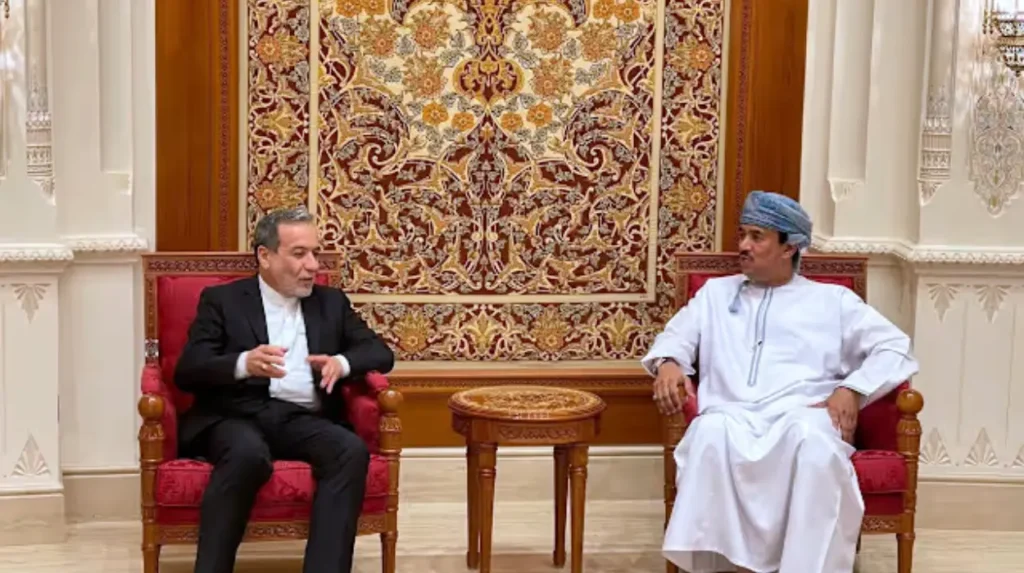
Omani Foreign Minister Badr al-Busaidi hosted Iranian Deputy Foreign Minister Majid Takht-Ravanchi and US Special Envoy Steve Witkoff in Muscat on January 10. Talks covered IAEA nuclear inspections and Houthi Red Sea activities, per the Omani state media Saba.
A US official confirmed to CNN’s Kylie Atwood that protest developments constituted one agenda item among broader bilateral issues. The three-hour meeting produced no public deliverables but established daily liaison contacts through Oman.
Iran’s UN Ambassador Amir Saeid Iravani told Security Council colleagues Friday that Tehran welcomes “any constructive US engagement free from preconditions.” The statement preceded the weekend protest escalations.
Trump’s National Security team meeting details
The Sunday 7:00 pm ET principals committee meeting reviewed Central Command assessments of Iranian military readiness. National Intelligence Director Tulsi Gabbard presented a damage estimate from protest-related property destruction exceeding $450 million.
Rubio advocated calibrated messaging, distinguishing regime behaviour from civilian aspirations, according to sources speaking to The Wall Street Journal’s Vivian Salama. Ratcliffe highlighted cyber indicators of external coordination among protesters.
Trump received a 15-minute oral update post-meeting, photographed reviewing briefing binders aboard Marine One, Monday morning. No scheduled public remarks on Iran appear on the White House calendar.
Iranian domestic context and economic pressures
Iran’s Central Bank reported inflation at 42.3 per cent for December 2025, with youth unemployment exceeding 28 per cent. Petrol subsidy cuts are aimed at addressing $18 billion fiscal deficit projected for the 2026-27 budget.
Protests mark the largest since the 2022 Mahsa Amini demonstrations, which resulted in 551 deaths per UN Human Rights Council findings. Current casualty figures remain unverified, with Iranian authorities reporting four security personnel killed.
Protests erupted across Iran after a 47% petrol price hike was announced on January 8. Rising costs, 42.3% inflation, and 28% youth unemployment have fueled unrest in 87 cities, especially industrial suburbs.
Petrol subsidy cuts aimed at reducing a projected $18 billion deficit triggered public backlash as food prices surged 65% year-on-year. Authorities report 247 arrests and 312 injuries. Demonstrators condemned subsidy reductions and corruption, marking the largest unrest since 2022 despite heavy Basij deployments in Tehran, Isfahan, and Shiraz.
Revolutionary Guard commander Hossein Salami warned Saturday of “decisive response to rioting elements,” broadcast on state television. Interior Minister Ahmad Vahidi announced the formation of 120 local security committees nationwide.
US Congressional reactions to Iranian developments
Senate Foreign Relations Committee Chair Jim Risch (R-ID) scheduled a classified briefing for Thursday, requesting CIA and State Department testimony. House Foreign Affairs Ranking Member Gregory Meeks (D-NY) called for a multilateral approach, avoiding unilateral escalation.
Israel’s UN Ambassador Danny Danon told reporters Monday that Jerusalem coordinates closely with Washington on Iran monitoring. Saudi Foreign Minister Adel al-Jubeir expressed Gulf Cooperation Council support for dialogue in Riyadh comments.
European External Action Service spokesperson Anouar El Anouni reiterated the EU’s commitment to nuclear talks, welcoming the Oman channel activation.
Previous Trump Administration’s Iran policy framework
Trump withdrew from the 2015 JCPOA nuclear accord in 2018, imposing maximum pressure sanctions, reducing Iranian oil exports by 95 percent. 2025 return targeted 52 per cent GDP contraction and rial devaluation.
Recent signals indicate pragmatic engagement prioritising nuclear restraint over regime change rhetoric. Witkoff’s December Muscat visit yielded an Iranian pause on 60 per cent uranium enrichment, per IAEA verification.
US sanctions relief discussions encompass frozen Iranian assets held in South Korea ($7 billion) and Iraq ($5 billion), linked to hostage releases.
Intelligence assessments on protest coordination
US intelligence assesses primary protest drivers as domestic economic grievances rather than foreign orchestration. Social media analysis identifies organic labour union mobilisation concentrated in industrial suburbs.
VPN usage surged 340 per cent in Iran since January 8, facilitating Signal and Telegram coordination. Tor network traffic indicates attempts to evade state filtering.
National Security Agency tracking confirms no significant US government contact with protest elements. Russian and Chinese embassy communications monitored for potential support to Tehran.
International diplomatic channels remain active
Qatari Emir Tamim bin Hamad Al Thani offered mediation services on Sunday, hosting Iranian Vice President Mohammad Reza Aref. Turkish Foreign Minister Hakan Fidan spoke with his Iranian counterpart, Abbas Araghchi Monday morning.
UN Secretary-General António Guterres urged restraint through spokesperson Stéphane Dujarric, citing freedom of assembly obligations under international law.
IAEA Director General Rafael Grossi scheduled a Tehran inspection for January 20, assessing compliance with the modified Code 3.1 safeguards agreement.
Economic market reactions to developments
Brent crude futures rose 1.8 per cent to $79.42 per barrel on Monday, reflecting Strait of Hormuz transit risk premium. Tehran Stock Exchange composite index fell 3.7 per cent at open.
US Treasury 10-year yields held steady at 4.28 per cent despite Middle East headlines. Gold spot price climbed 0.9 per cent to $2,684 per ounce.
Iranian rial traded at 892,000 to $1 on the Dubai free market, down 2.1 per cent since protests began. Euro cleared 1,048,000 rials, matching December lows.
Diplomatic and intelligence monitoring continues without announced deadlines. Further Situation Room sessions are scheduled for Tuesday morning.
