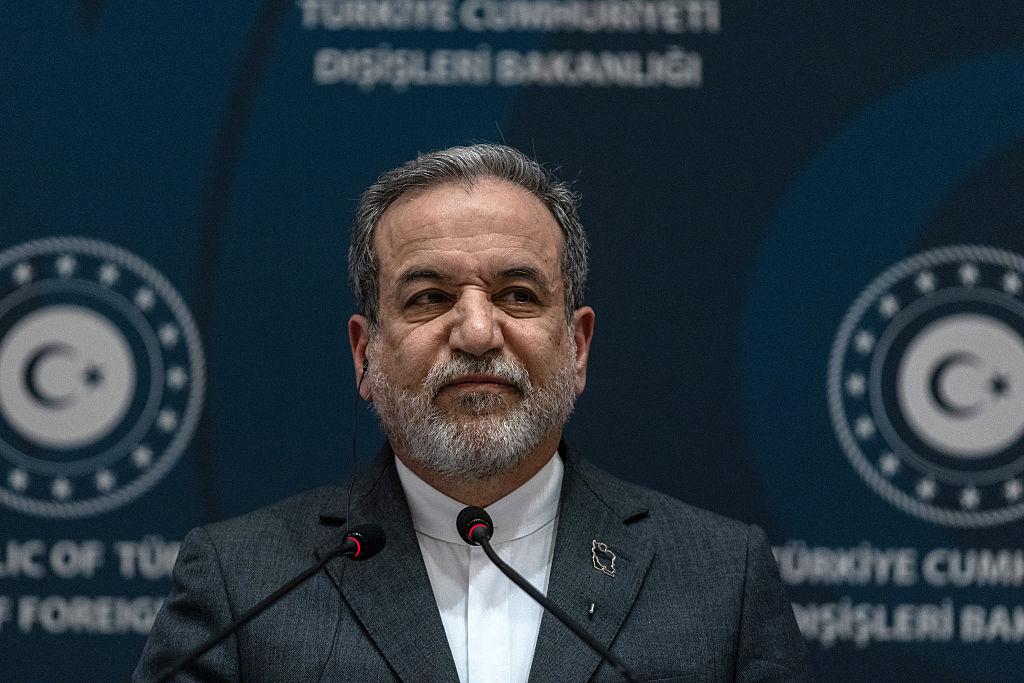
Brussels — March 10, 2026 — Parliament News — The debate surrounding Iran US Israeli war failure intensified this week after Iranian Foreign Minister Abbas Araghchi claimed that the recent confrontation involving Iran, Israel, and the United States did not achieve the strategic goals Washington and Tel Aviv expected. His remarks quickly sparked international attention, drawing reactions from policymakers, military analysts, and diplomats across several continents.
Speaking during a diplomatic forum, Araghchi argued that the conflict demonstrated the limitations of military pressure and political isolation. According to Iranian officials, the confrontation showed that Tehran was able to maintain its strategic capabilities despite regional tensions and continued economic pressure.
His statement quickly became a focal point in international discussions about whether the conflict changed the balance of power in the Middle East.
Araghchi frames the conflict as a strategic setback
Araghchi emphasized that Iran’s ability to withstand military and political pressure proved that attempts to weaken Tehran through confrontation had not succeeded. Iranian officials argue that the outcome illustrates the broader narrative of Iran US Israeli war failure, suggesting that the strategy used by Washington and Tel Aviv did not achieve long term political objectives.
Western officials, however, have offered a more cautious interpretation. Many analysts believe the conflict cannot yet be defined as a success or failure for any side, noting that geopolitical confrontations often produce mixed results.
Security experts say the situation remains fluid, and the true impact of the confrontation will likely emerge over time.
Military and diplomatic tensions continue
The confrontation involved several military developments across the region, including missile exchanges, increased naval patrols, and heightened intelligence activity. Although the immediate escalation subsided, tensions remain high.
Analysts say the debate around Iran US Israeli war failure reflects how governments often shape political narratives after conflicts. Each side tends to highlight events that support its strategic messaging.
Diplomatic observers believe the rhetoric could influence upcoming negotiations regarding regional security and nuclear diplomacy.
Historical comparison with past Middle East conflicts
Political historians note that disputes over the outcome of conflicts are common in the Middle East. In several previous confrontations, including regional proxy wars and limited military operations, governments framed the results as victories even when the strategic picture remained uncertain.
The current debate over Iran US Israeli war failure mirrors those earlier patterns. Leaders often emphasize resilience and survival rather than decisive battlefield outcomes. These narratives can shape public perception and influence diplomatic negotiations long after the fighting ends.
By placing the current tensions within this historical context, analysts suggest that the conflict may ultimately be remembered more for its political messaging than for its military results.
Experts warn conclusions may be premature
Security specialists caution against drawing firm conclusions about the strategic outcome of the confrontation.
One European geopolitical analyst summarized the uncertainty surrounding the debate.
“Conflicts in the Middle East rarely end with clear winners or losers. What usually follows is a prolonged competition for influence where every side claims success.”
The quote reflects the complexity of evaluating modern geopolitical conflicts and explains why the Iran US Israeli war failure narrative continues to generate discussion among experts.
Global implications for regional stability
Key takeaways from the growing debate
The controversy surrounding Iran US Israeli war failure highlights the complex nature of modern geopolitical conflicts. Iranian leaders view the outcome as evidence that military pressure failed to change Tehran’s strategic position.
Meanwhile, Western analysts argue that the long term consequences remain uncertain.
What is clear is that the confrontation has intensified diplomatic competition and shaped global discussions about security in the Middle East. As tensions evolve, the narrative surrounding the conflict will likely remain a central topic in international politics.