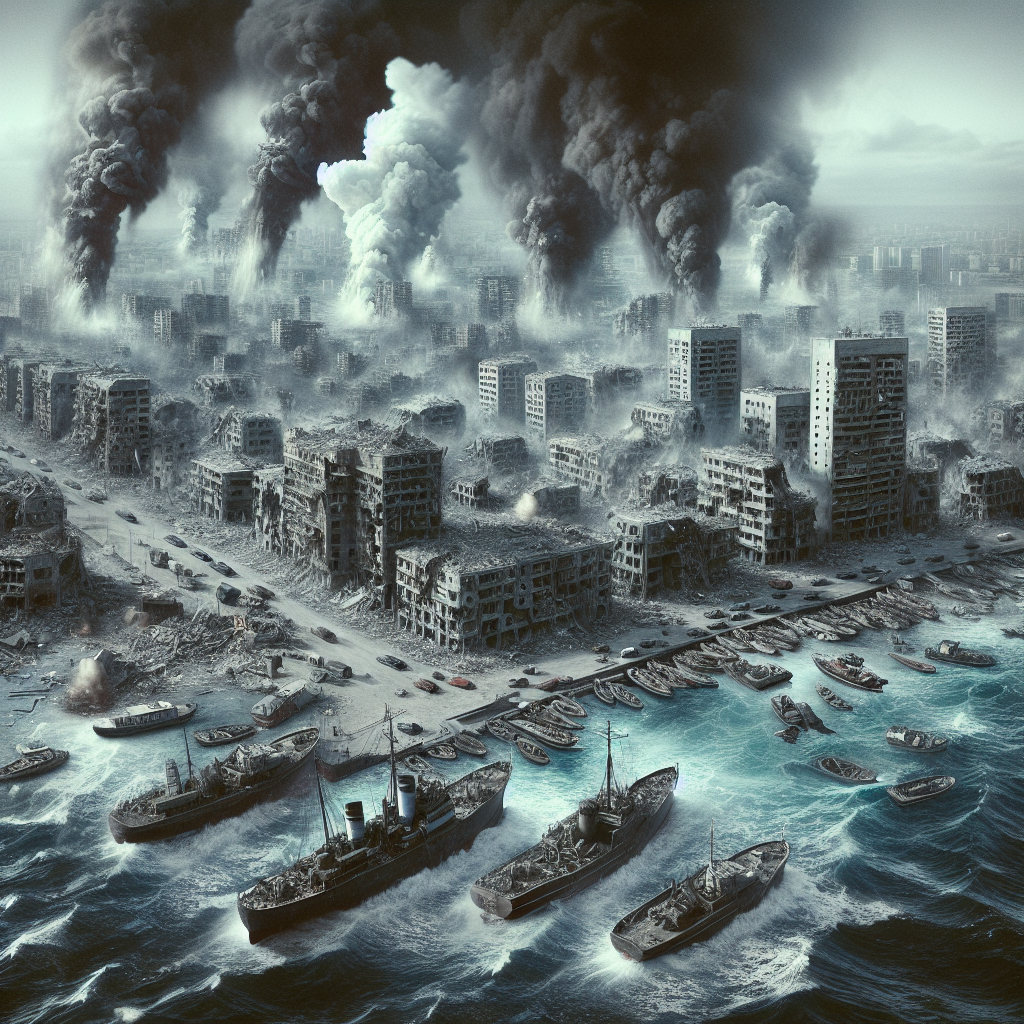
Headline: Israel Escalates Airstrikes in Beirut Amid Rising Tensions
In a significant development escalating the ongoing conflict in the region, Israeli forces have expanded their airstrike operations to central Beirut, Lebanon, as of October 15, 2023. This intensification of military action comes as Iran reportedly retaliates by targeting commercial oil ships in the Red Sea, reflecting the heightened tensions stemming from recent skirmishes along the Israel-Lebanon border. The strikes aim to disrupt what Israel describes as Hezbollah’s military infrastructure, responding to attacks directed at Israeli positions in northern Israel.
The latest airstrikes in Beirut have caused considerable damage to several sites believed to be linked to Lebanon’s militant group Hezbollah, a close ally of Iran. Witnesses report a series of explosions and consequent fires in the city, raising fears of a broader conflict that could draw in multiple regional players. The Israeli Defense Forces (IDF) confirmed the strikes were necessary to protect national security and prevent further infiltration attempts from southern Lebanon.
Iran’s response to Israel’s military actions has involved targeting commercial oil ships, seen as a strategic move to assert Tehran’s influence. These ships, primarily operating in the Red Sea, belong to various international companies and are integral to global energy supply chains, marking a significant escalation in Iran’s military strategy. The Iranian government has stated that these actions are a retaliation for the increasing Israeli aggression in the region.
The repercussions of these developments have been felt beyond the immediate geographical confines of Beirut and the Red Sea. The international community is closely monitoring the situation, with major powers expressing concerns over potential ripple effects on global oil markets and security in the Middle East. Following the airstrikes, U.S. Secretary of State Antony Blinken indicated Washington’s support for Israel, emphasizing the nation’s right to defend itself against perceived threats from Hezbollah and its Iranian backers.
Experts warn that the conflict could spiral into a more extensive regional war if the situation isn’t defused soon. Analysts speculate that Iran’s ability to leverage its proxies, such as Hezbollah, and its strategic positioning in Syria and Iraq could lead to a complex web of retaliatory actions involving not just Israel and Iran but potentially other regional actors, including Saudi Arabia and the Gulf States.
Historically, Lebanon has been a battleground for proxy conflicts, often influenced by the broader rivalry between Iran and Israel. Hezbollah’s role has evolved over the years, particularly since its formation in the 1980s, positioning itself as a significant military and political force within Lebanon. This history could provide insight into the current conflict’s trajectory and possible outcomes.
Meanwhile, the Lebanese population finds itself caught in the middle of this escalating conflict. Residents in central Beirut have reported feeling an air of dread and uncertainty as Israeli strikes target key locations that could involve civilian infrastructure. The Lebanese government has urged for calm and called for international intervention to prevent further escalation. However, with domestic political divisions and an already fragile economy, Lebanon’s government faces challenges in asserting its authority and maintaining peace.
The strikes and subsequent Iranian retaliation highlight a critical juncture in the Middle East, where existing tensions are being exacerbated by external factors, including energy prices and global geopolitical shifts. The price of crude oil surged as markets reacted to the heightened risks associated with disrupted shipping routes and potential shortages. The situation underscores the delicate balance of power in a region that heavily influences global energy supplies.
As military operations continue, the United Nations and several humanitarian organizations are sounding alarms regarding the potential for a humanitarian crisis. Existing infrastructural challenges in Lebanon, which has been grappling with an economic collapse, pose significant risks for civilian populations. Immediate calls for ceasefires and negotiations are being made, but concrete actions remain elusive.
In conclusion, the expansion of Israeli strikes into central Beirut, coupled with Iran’s focus on commercial maritime targets, marks a dangerous escalation in a conflict that has far-reaching implications. The international community is urged to engage in meaningful dialogue to avert further violence. Without significant diplomatic efforts, the specter of a broader conflict looms, with the potential to reshape not just the immediate region but also the dynamics of global security and economic stability.
The current situation serves as a reminder of the complexities that underlie Middle Eastern politics and the need for nuanced approaches to navigate these turbulent waters. As both Israel and Iran ramp up military operations, the world watches closely, apprehensive of a path that could lead to wider war, instability, and humanitarian crises. The unfolding events will undoubtedly challenge policymakers and military strategists to rethink their approaches to ensure tranquility in a volatile region.