Nanyuki, Kenya, June 9 (Parliament Politics Magazine) – Kenya Ebola facility protest demonstrations intensified after police fired tear gas to disperse crowds opposing a proposed U.S.-backed Ebola quarantine center in central Kenya. The facility, planned near Laikipia Air Base, has become the focus of growing public concern, with residents questioning both the project’s purpose and the potential health risks associated with housing individuals exposed to Ebola.
The confrontation marked a significant escalation in a controversy that has sparked public demonstrations, legal challenges, and national debate over transparency, public safety, and government decision-making.
Protesters Clash With Police Over Quarantine Facility Plans
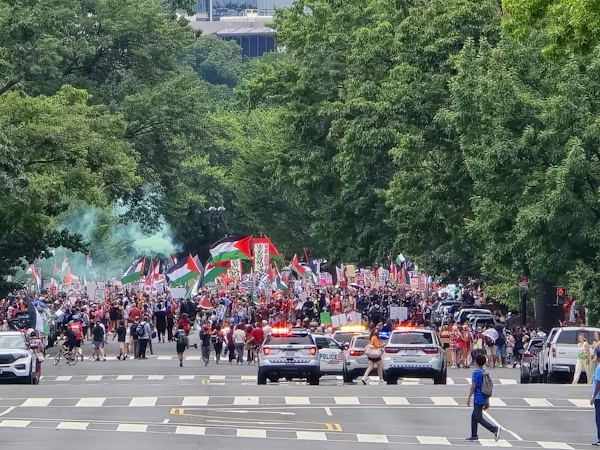
Hundreds of demonstrators gathered near the proposed site to voice opposition to the quarantine facility, which is intended to accommodate Americans who may have been exposed to Ebola during outbreaks elsewhere in Africa. Protesters carried signs, chanted slogans, and demanded that authorities permanently halt the project.
As tensions increased, police moved in and deployed tear gas to clear sections of the crowd. Witnesses reported brief confrontations as demonstrators attempted to maintain their protest near access roads leading to the military installation.
One local organizer told reporters:
“People have a right to know exactly what is being built in their community. Residents are concerned about their safety and want answers before any project moves forward.”
Authorities have not reported any major injuries, but the incident has further intensified public attention surrounding the project.
Concerns Over Transparency and Public Safety
The proposed quarantine center has generated concern among local residents who argue they were not adequately consulted before plans were announced. Community leaders have questioned why the facility would be located in Kenya and whether sufficient information has been provided regarding operational procedures and safety measures.
Government officials and health authorities maintain that the facility would follow strict international health protocols and would not pose a risk to surrounding communities.
Supporters of the project argue that enhanced disease preparedness is essential as health agencies continue monitoring Ebola outbreaks in parts of East and Central Africa. Critics, however, remain skeptical and continue demanding greater transparency regarding agreements connected to the project.
The dispute has become one of the most closely watched public-health controversies in Kenya this year.
Kenya Ebola Facility Protest Draws National Attention
The Kenya Ebola facility protest has expanded beyond local concerns and evolved into a broader national conversation about government accountability and public trust.
Political leaders, civil society organizations, and community groups have joined the discussion, with many calling for additional public consultations before construction proceeds.
The issue has also attracted international attention because it highlights the challenges governments face when introducing health-related infrastructure projects that directly affect local communities.
Some residents fear the facility could negatively impact tourism, property values, and public perception of the region. Others argue that hosting such a center could strengthen Kenya’s emergency preparedness capabilities and medical infrastructure.
The debate reflects the difficult balance between public-health planning and community acceptance.
Experts Stress the Importance of Community Engagement
Health policy experts say public confidence is often just as important as technical safety measures when governments introduce projects involving infectious disease preparedness.
“Trust is a critical component of any public-health initiative,”
said regional health analyst Peter Mwangi.
“Communities want to understand how decisions are made and how risks will be managed.”
Another public-health specialist added:
“Even when safety standards are robust, transparency and communication remain essential. Without public engagement, opposition can grow rapidly.”
Experts note that concerns surrounding Ebola often generate strong emotional responses because of the disease’s high fatality rate and global reputation.
As a result, authorities face significant challenges in explaining the purpose and safeguards associated with such facilities.
Legal and Political Questions Remain Unresolved
The controversy has already reached Kenya’s legal system, where petitions challenging aspects of the project have drawn attention from lawmakers and advocacy groups.
Future court decisions could play an important role in determining whether the facility proceeds as planned. Meanwhile, protest organizers have vowed to continue demonstrations until their concerns are fully addressed.
Government officials continue defending the initiative, arguing that preparedness measures are necessary to respond effectively to potential health emergencies.
Observers expect the issue to remain a major political and public-health topic in the weeks ahead.
Public Opposition Keeps the Ebola Facility Controversy in the Spotlight
The dispute surrounding the proposed quarantine center has become about more than public health. It has evolved into a broader discussion about transparency, consultation, and trust between communities and government institutions.
While officials argue that the project would strengthen preparedness efforts, many residents remain unconvinced. The use of tear gas against demonstrators has only increased public scrutiny and media attention.
As legal proceedings continue and authorities consider next steps, the future of the facility remains uncertain. What is clear, however, is that the controversy has become one of Kenya’s most closely watched public debates of 2026.
Why Authorities and Residents Remain Far Apart on the Proposal
The Kenya Ebola facility protest highlights the complex challenges governments face when balancing public-health preparedness with community concerns. Supporters view the facility as a preventive measure designed to enhance emergency response capabilities, while opponents see it as a project that lacks sufficient public consultation.
The coming weeks are expected to bring additional court reviews, political discussions, and public demonstrations. For residents of Nanyuki and observers around the world, the outcome could influence how future public-health projects are introduced and managed across the region.