

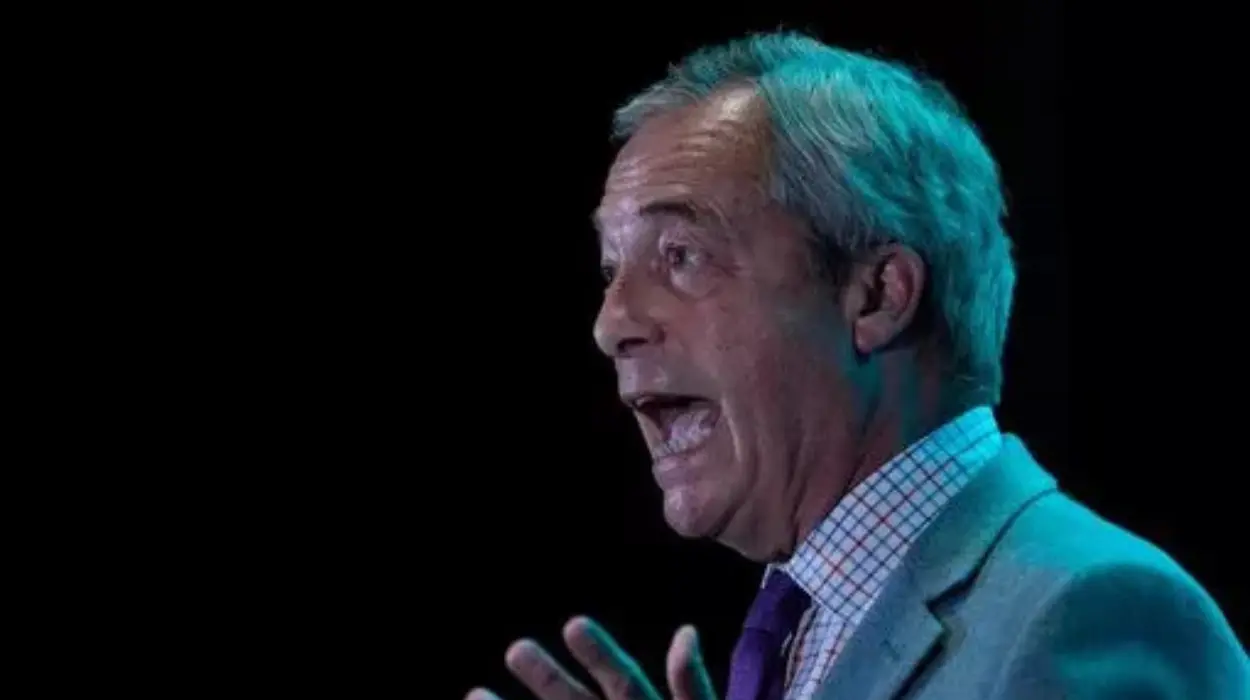
UK (Parliament Politics Magazine) – Labour chair Anna Turley criticises Reform UK leader Nigel Farage for refusing to investigate potential pro-Russian links within his party.
As reported by The Guardian, Nigel Farage declines to probe links between Reform UK and Russia after a former party leader in Wales was jailed for 10 years for accepting pro-Kremlin bribes.
In response to Mr Farage’s refusal to investigate Russia ties in Reform, the Labour Party said they consider his response “not good enough.”
What did Anna Turley say about Nigel Farage and Reform UK?
Labour Party chairman, Anna Turley, said,
“Nigel Farage assured the public his former right-hand man was decent and honest before he was found to have taken pro-Russian bribes. Now he says he’s as sure as he can be that there’s no pro-Kremlin links in Reform UK.”
She added,
“He was wrong before, and the public can have no confidence in his judgement now. Farage must urgently take responsibility for ensuring his Party isn’t becoming a vehicle for Putin’s Russia and stop refusing to investigate pro-Russia links in Reform UK.”
How did Nigel Farage respond to investigating Reform UK’s Russia links?
When asked why he was not investigating whether other party members were implicated, Nigel Farage responded,
“I haven’t got a police force, I haven’t got access… I can’t access your phone message, I can’t access your emails … Unless I can do that, I can’t investigate. You’ve got to have somebody with investigatory powers.”
Pressed on whether he had spoken to party members about the matter, the Reform UK leader said,
“Well, I’ve asked everybody: have you ever taken money you shouldn’t have taken from anybody … and no one said yes.”
Asked if his approach was sufficient, he deflected, pointing to what Labour and the Tories were doing in their own parties.
The Prime Minister Sir Keir Starmer also pressed Reform leader for probe, saying,
“I think it begs a very important question, because this is a long prison sentence for pro-Russian bribes, and I think that that demands that Nigel Farage investigate how that happened within his party, and, equally importantly, what other links there are between his party and Russia.”
The Labour leader added,
“He should set up an inquiry, an investigation into his own party. How did that happen on his watch, in his party, and what other links are there between his party and Russia?”
In response to the Prime Minister’s call for an inquiry, Mr Farage hit back, saying,
“The Prime Minister needs to urgently investigate links between the Labour Party and the Chinese Communist Party.”
Mr Farage continued,
“Spies have been discovered donating to Labour MPs and there has been the mysterious collapse of a recent spy trial. Perhaps he needs to look closer to home.”
Why is Nigel Farage facing pressure over Reform UK-Russia links?
Nigel Farage faces growing pressure as ex-Reform UK leader Nathan Gill admits taking payments to support Russia. The conviction comes amid allegations of racist behaviour by Mr Farage in his school years, which he denies.
Police allege Gill was paid at least £30,000, possibly more, by Oleg Voloshyn, a former Ukrainian MP and alleged Russian agent. The offences occurred during his 2018–19 MEP term, elected under Mr Farage’s Ukip group, before later joining the Brexit Party.
Voloshyn remains under investigation and wanted for high treason in Ukraine. The scandal deepened after it emerged that Gill arranged pro-Russia statements by other Brexit and former Ukip MEPs without their knowledge.
Gill’s statements in the European Parliament and on the pro-Russian channel 112 Ukraine were intended to promote the Kremlin’s stance on Ukraine ahead of Russia’s full-scale invasion in 2022.
According to a Crown Prosecution Service note, four other MEPs who served alongside Gill, Steven Woolfe, William Dartmouth, Jonathan Arnott, and Jonathan Bullock, made interventions after being offered bribes by Voloshyn.
David Coburn, a former Ukip member, appeared in WhatsApp exchanges between Voloshyn and Gill, but investigators found that he and the others did not receive any payments.
According to the judge, Gill had recruited MEPs to give interviews to 112 Ukraine, receiving €5,000 (£4,400) for arrangements.
The judge said,
“I must make it clear that the case has not been presented on the basis that those individuals knew how you were acting, namely that you had been promised altogether €5,000 for it.”
The Metropolitan Police counter-terrorism chief, Dominic Murphy, said the messages initially used coded terms like “xmas presents” and “gifts.” He added that Gill’s collaboration with Voloshyn soon became a regular practice.
Following Gill’s sentencing, Voloshyn said he was “astonished” by the ruling, calling it “totally unfair” and insisting that neither he nor Gill had conspired against UK law or security.
What is the UK’s stance on the Russia-Ukraine conflict?
The UK’s stance on the Russia-Ukraine conflict is one of strong support for Ukraine, involving military, economic, and diplomatic measures against Russia.
Under Sir Keir Starmer’s leadership, the country provides a range of support, economic, humanitarian, and military, to Ukraine, defending its sovereignty and right to self-defense.
The UK government condemns Russia’s actions as an “unprovoked and premeditated war.” It has imposed sanctions on Russia and Belarus.