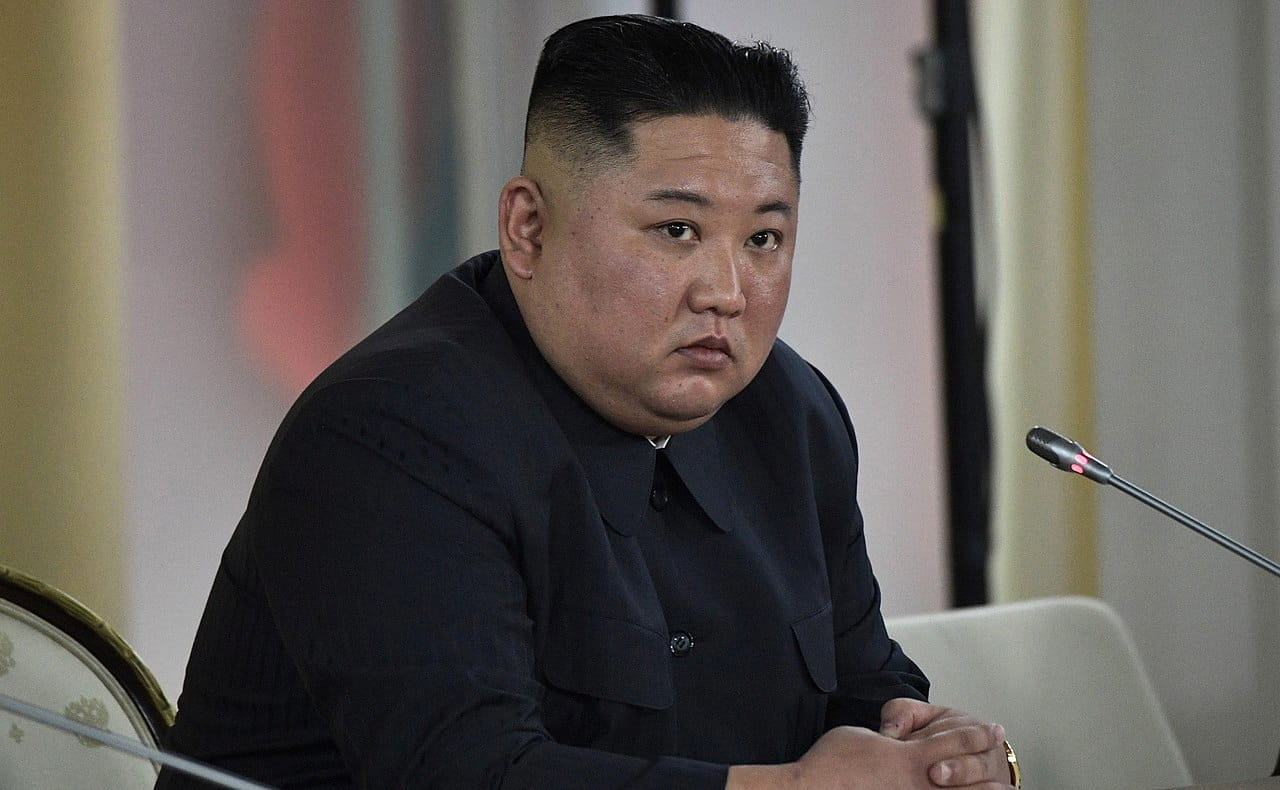
PYONGYANG, June 23 (Parliament Politics Magazine) – North Korean leader Kim Jong Un declared that exercising the country’s position as a nuclear state serves as the only method to address the unpredictable and complex global security environment, according to reports from the KCNA state news agency on Tuesday.
This declaration followed a three-day Central Committee meeting of the ruling Workers’ Party, which concluded on Monday. Kim utilized the platform to criticize the United States, blaming Washington for the rising bloodshed across Europe and the Middle East. He characterized the actions of hegemonic forces as driven by gangster-like greed, which he claimed has led to increasingly violent global confrontations.
Regarding the situation on the Korean Peninsula, Kim accused the United States and South Korea of intensifying dangers by consistently upgrading their combined nuclear posture. He asserted that the sole intent of these military advancements is to target North Korea. Consequently, he argued that strengthening the nation’s nuclear forces is the most correct way to cope with international political volatility.
During the committee proceedings, Kim provided specific directives regarding the expansion of North Korea’s defense infrastructure. Beyond the emphasis on atomic capabilities, he ordered a significant buildup of conventional weapons. A notable component of this directive involves the accelerated construction of a 10,000-ton strategic guided missile cruiser, a project intended to bolster the country’s naval presence.
The leadership also focused on internal industrial priorities, specifically targeting the modernization of the coal industry. Kim described the redevelopment of mining communities and the optimization of coal extraction as a strategic necessity. Coal remains the primary energy resource for the nation, and officials are currently focused on alleviating chronic energy shortages through these infrastructure investments.
Analysts suggest these comments confirm that Pyongyang has effectively moved away from previous paths toward denuclearization. Yang Moo-jin, a professor at the University of North Korean Studies in Seoul, noted that the rhetoric signals a desire to engage in international negotiations only on an equal footing.
“North Korea is once again reaffirming that denuclearisation talks are off the table,” Yang said.
This stance implies that any future discussions would likely center on arms reduction rather than the total dismantling of their arsenal. By positioning itself as a nuclear-armed state, Pyongyang seeks to justify its existence as a legitimate actor while pursuing potential sanctions relief. Experts believe this strategy fundamentally differs from earlier proposals that relied on phased denuclearization.
The party meeting also addressed the U.S.-South Korea Nuclear Consultative Group, an entity established to deter potential nuclear threats from the North. Pyongyang has frequently cited this group, along with South Korea’s ambitions to develop nuclear-powered submarines, as justification for its own military buildup.
North Korea has remained defiant against international sanctions imposed by the United Nations and the United States between 2006 and 2017. Despite these measures, which aimed to curb the development of ballistic missiles and atomic weapons, the state has continued to solidify its military posture. Regional neighbors remain concerned as the country reaffirms its rejection of international calls for disarmament.
The government continues to prioritize the modernization of its strategic deterrents as a central pillar of its long-term policy. With these latest announcements, the administration has signaled that it intends to maintain its nuclear capabilities as a permanent fixture of its national identity and security architecture.