

Mogadishu (Parliament Politics Magazine) – Somalia urged Israel to withdraw Somaliland recognition, describing it as a violation of sovereignty, while Somaliland praised the diplomatic move.
As reported by Faisal Ali of Al Jazeera, Somalia has denounced Israel’s recognition of Somaliland, calling the decision an act of
“aggression that will not be tolerated”
and urging a reversal.
What did Somalia say about Israel’s recognition of Somaliland?
During an interview, Somalia’s foreign affairs minister Ali Omar said the government would use all diplomatic channels to contest what it described as “state aggression” and Israeli interference in its internal affairs.
His comments come after Israel became the first country to formally recognise Somaliland as independent, drawing criticism from African and Arab nations and raising concerns about a potential Israeli plan to displace Palestinians.
Somaliland declared independence from Somalia in 1991 after a violent civil war, but it has yet to gain recognition from any United Nations member state. The territory has its own currency, flag, and parliament, while eastern regions remain disputed.
Mr Omar said,
“This will never be acceptable or tolerable to our government and people who are united in defending our territorial integrity. Our government strongly advises the State of Israel to rescind its divisive actions and abide by international law.”
According to him, the region’s strategic significance is attracting foreign interference and international interest.
He stated,
“The importance of this region isn’t new. It is still important for international trade today.”
Mr Omar claimed that Israel’s move to recognise Somaliland is part of a plan to advance efforts to displace Palestinians from Gaza.
He added,
“One of the motivating factors is the displacement of Palestinians from Gaza. It has been widely known – Israel’s goal on that issue.”
Mr Omar rejected all ties with Israel, saying the country’s stance on Israeli policies remains unchanged.
Palestine’s foreign ministry supported Somalia, adding that Israel had previously identified Somaliland as a potential destination for the forced displacement of Palestinians from Gaza, calling it a “red line.”
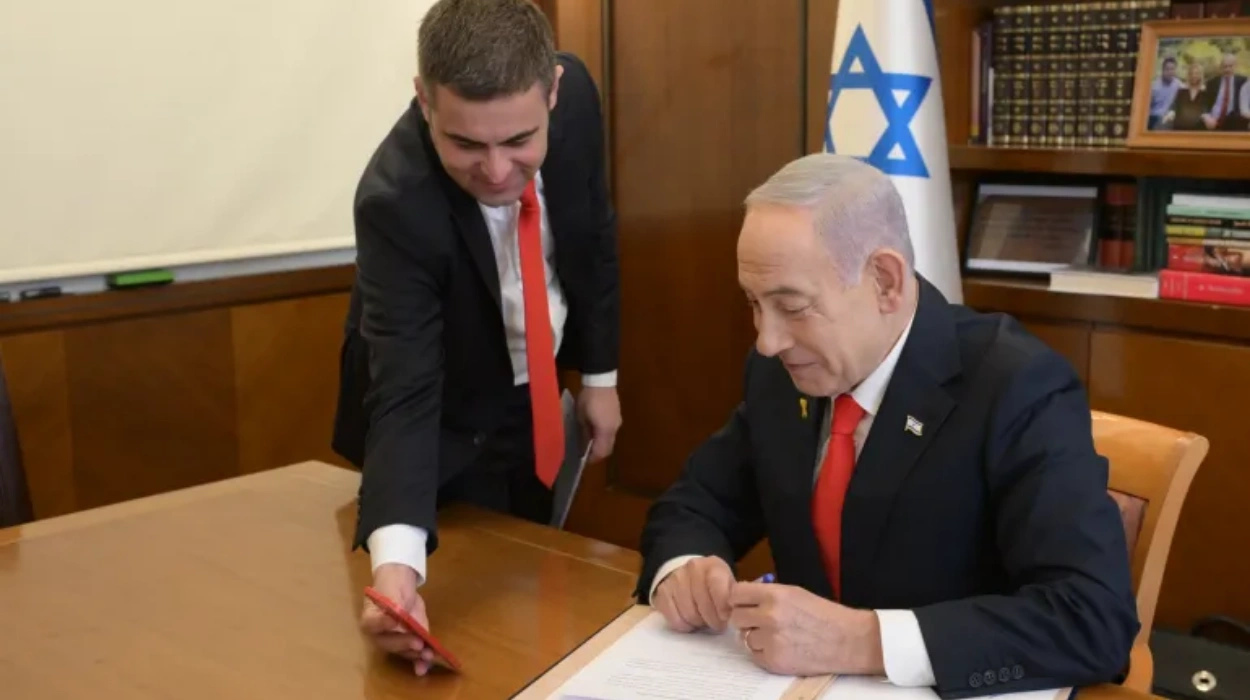
Following Israel’s recognition of Somaliland by Prime Minister Benjamin Netanyahu, Somalia’s prime minister criticised the move as a deliberate attack on national sovereignty, stating that Somaliland remains an integral and “inseparable” part of Somalia.
How did the US, African, and Arab nations react to Israel’s Somaliland recognition?
US President Donald Trump signalled distance from Benjamin Netanyahu, saying he would not pursue the same course as Israel.
Somalia’s Public Works Minister Ayub Ismail Yusuf welcomed Trump’s views, posting on social media,
“Thank you for your support, Mr. President.”
President Trump’s remarks marked a shift from August, when he said his administration was engaging with Somalia on the issue, amid recent criticism of Somalis in the US and Somalia.
During a recent UN Security Council meeting, the US criticised Somalia’s security record, noting that billions of dollars in aid had produced limited results and warning it may end funding for a costly peacekeeping mission.
Mahamoud Ali Youssouf, chairperson of the African Union, dismissed any proposal to recognise Somaliland as a sovereign state, warning it would set a dangerous precedent and citing a 1964 AU principle upholding inherited borders at independence.
Arab League Secretary-General Ahmed Aboul Gheit slammed Israel’s decision as a provocative breach of international law and an attack on the sovereignty of an Arab and African state.
In Hargeisa, residents descended on Friday, 26 December, to mark the end of 30 years of isolation, while the Israeli flag was raised on the city’s national museum.
Historically, Somalia has had strained ties with Israel, largely due to the country’s historic ties with Somalia’s regional rival, Ethiopia.
After persecution under Siad Barre in 1991, Somaliland declared independence from Somalia, though it has never been recognized by the Somali government.
Israeli Deputy Foreign Minister Sharren Haskel said Israel held discussions with Somalia’s government about shared worries over Houthi activity in the region.
How did Israel and Somaliland plan to strengthen ties through a historic partnership?
Somaliland’s Foreign Minister Gideon Saar revealed that Israel and Somaliland have signed a deal to open embassies and exchange ambassadors.
He said,
“We will work together to promote the relations between our countries and nations, regional stability and economic prosperity.”
Commenting on the historic move, Benjamin Netanyahu stated,
“We intend to work together with you on economic fields, on agriculture, in the fields of social development.”
He added,
“Thanks Foreign Minister Gideon Sa’ar, Mossad Director David Barnea and the Mossad for their contribution in advancing recognition between the two countries, and wishes the people of Somaliland success, prosperity and freedom.”
What is the population of Somaliland?
Somaliland’s population is around 6.2 million people. A recent figure from the BBC puts it at 5.7 million, indicating a growing population. The capital and largest city, Hargeisa, is home to nearly 1.2 million residents.
The Muslim country is located in the Horn of Africa, on the southern coast of the Gulf of Aden. It’s claimed territory borders three countries:
- To the northwest: Djibouti
- To the south and west: Ethiopia
- To the east: Somalia
