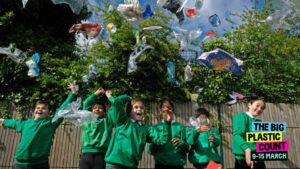
Thousands of people across the UK are doing something very simple this week: counting every piece of plastic packaging they throw away for seven days.
It may sound like a small act, but it is part of something much bigger. The Big Plastic Count is the UK’s largest people-powered investigation into household plastic waste. By asking people to record the plastic that passes through their homes over the course of a week, it helps reveal the true scale of the plastics crisis and the systems that are driving it.
Far too often, plastic pollution is framed as a problem of individual behaviour. We are told to recycle more carefully or make better choices when we shop. But initiatives like The Big Plastic Count show that the reality is more complicated. When thousands of households track their plastic waste, the same patterns appear again and again. Much of the plastic entering our homes comes from packaging that we never asked for and cannot easily avoid.
Food and drink packaging is consistently one of the biggest contributors. Plastic is effectively forced upon us at the supermarket, even when shoppers would prefer a simpler alternative. Unnecessary plastic packaging, particularly on everyday items such as fruit and vegetables, remains widespread despite years of public concern.
This matters not only because of the amount of waste produced, but because of what happens to that waste once it leaves our homes.
Previous Big Plastic Counts have shown that much of the plastic packaging we throw away is not actually recycled. Results from 2024 revealed that 58% is burned in incinerators instead. Burning plastic contributes to the climate crisis and pollutes the air we breathe. Research has found that these facilities are far more likely to be located in communities already facing economic disadvantage. Too often, the people who have the least say over the system end up living with its consequences.
That makes the plastics crisis not just an environmental challenge, but also a question of fairness. The impacts of plastic production, pollution and disposal are not shared equally.
At the same time, global plastic production continues to grow. Much of the plastic we use today is derived from fossil fuels, linking the plastics crisis directly with the climate crisis. Without meaningful action to reduce unnecessary plastic and rethink the way packaging is produced, these pressures will only increase.
That is why initiatives like The Big Plastic Count matter. They give people across the country the opportunity to document what they see in their own homes and communities, and to turn those everyday observations into evidence for change.
I’ll be taking part myself this week, and recently had the pleasure of meeting students at Bell Baxter High School in Cupar who are doing fantastic work to make their school more environmentally friendly. They are currently campaigning for a ‘Top Up Tap’ so students can refill reusable water bottles instead of buying single-use plastic ones each day.
The school’s Global Goals group has also led impressive efforts to reduce waste, committing Bell Baxter to eliminating polystyrene and single-use plastic utensils, straws and plates. Since 2018, the cafeteria has used china plates, paper straws and metal cutlery instead.
Young people clearly understand that the choices we make today will shape the world they inherit, and it is incredibly encouraging to see them engaging so thoughtfully and proactively with these challenges.
I have been encouraging my constituents across North East Fife to get involved this week. From the Lomond Hills in the Howe of Fife to the fishing villages of the East Neuk, from Cupar to Leven, we are fortunate to live in an area of extraordinary natural beauty. Protecting that environment is something many people here care deeply about.
The Big Plastic Count is also becoming an important annual moment for building momentum around this issue. Each year, thousands of people across the UK take part, creating a growing body of evidence about how much plastic waste households are dealing with and where it is coming from. That collective effort helps shine a light on the scale of the problem and strengthens the case for policy solutions to reduce unnecessary plastic packaging.
The message from previous Counts has been clear. People are frustrated by the amount of plastic packaging they are expected to deal with every day, and they want to see progress in reducing it.
This week’s Count will provide new evidence about the scale of plastic waste in our homes. My hope is that this evidence strengthens the case for practical steps to reduce unnecessary plastic packaging and build a system that works better for both people and the planet.
Because tackling the plastics crisis cannot rely on individuals alone. It will require leadership, cooperation and the determination to create a fairer and more sustainable future.