
On New Year’s Day, the Secretary of State for Health and Social Care set out a very welcome renewed commitment to bring a really strong focus on children’s health and healthcare.
This is therefore a very timely moment to make the case for change on children’s play in the NHS, which is so important in mitigating trauma in paediatric care.
Last week, I had the privilege of hosting the Westminster Hall debate on Therapeutic Play and Children’s Healthcare. It has come as the NHS is in the midst of shifting its values and missions, and so there could not be a better time to discuss how to incorporate such an important service for children.
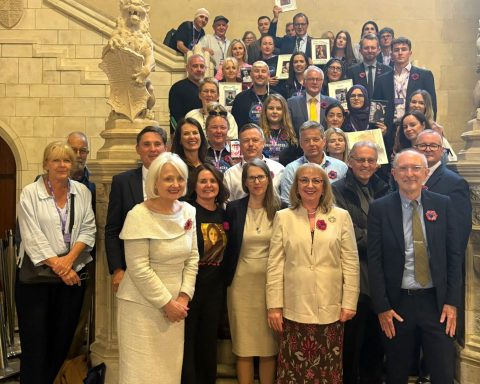
I am thrilled that my constituent Sarah Owen and her now nine-year-old son Hari were able to attend the debate, and watch as I told their story. Their presence was an essential reminder to us all that this is not an intangible issue, but is fundamentally about the lived realities of families whose children face frightening and often prolonged encounters within the health system. Sarah and Hari’s experiences have already had an influence on NHS policy, through Sarah’s work with the play in healthcare charity Starlight, which co-produced the NHS Play Well Toolkit that was published last year.
Lord Darzi’s independent investigation rightly described the NHS as in a “critical condition” and set out real concerns about its “capacity and capability to deliver high quality care for children”. It is unacceptable that, in Lord Darzi’s words, “too many (children) are being let down”.
This is why I fully support the 10-Year Health Plan and the big shifts towards prevention, community-centred multidisciplinary care, and better operational management. More focus on prevention must mean an increasing priority on children’s health including a better response to children’s own experiences of their care.
To do this, we must support therapeutic play but equally integrate more playful approaches as a routine part of paediatric care. This requires delivery from both health play professionals, and wider multi-disciplinary teams. Success would make a big difference to healthcare outcomes for children, and evidence shows that it can save the NHS time and money too. Happier, calmer children mean shorter appointments, fewer cancellations and likelihood of needing a general anaesthetic for routine procedures, such as scans.
Labour’s promise to create “the healthiest generation of children ever” gives us both the mandate and the momentum to act. Two of the three shifts laid out in the 10-Year Plan – from sickness to prevention, and from hospital to community – relate directly to the improvement of children’s health services.
In no uncertain terms, we need more trained health play specialists in hospitals. But the shift from hospitals to community presents a further opportunity to make healthcare, not just local, but truly accessible and child-friendly.
Community health play specialists should be working alongside health visitors and children’s nurses within the multi-disciplinary paediatric teams called for by government guidance. This would enable the new vision of a neighbourhood health service to genuinely transform children’s first and most lasting encounters with the NHS. Health play teams’ skill in outreach work with disadvantaged families can also make a big contribution to the important challenge of reducing health inequalities.
Even though our debate was only allocated 30 minutes, more than a dozen colleagues from across the House participated, and their show of support is a testament to the growing momentum behind this cause. My colleague Alistair Strathern MP rightly spoke about the privilege of “joining fantastic play therapists such as Christina at my local hospital and seeing the transformative impact that therapeutic play, done well, can have on outcomes for young people”. Dr Simon Opher MP noted that “As a GP, I always had a big box of toys in my room. To examine a child, I had to play with the child… Therapeutic play must be part of GP training in every way.”
In turn, Minister Ashley Dalton MP set out her complete openness and sympathy with our campaign, and I deeply welcome the news that she will be meeting with Starlight soon to discuss the next steps.
The Play Well Toolkit is important progress in recognising this too long-neglected part of children’s healthcare. But documents alone are not enough. I support Starlight’s call for a strategic programme of work to ensure these guidelines are properly adopted and implemented by the NHS. So that in the future, children like Hari do not have to endure the avoidable trauma of an alienating healthcare system, at a time when they and their families, frankly, already have more than enough on their plates.
To deliver the healthiest generation of children ever, we must harness the power of therapeutic play

6 mins read


Latest from UK Parliament

Pensioners who have worked hard throughout their lives deserve dignity and security in retirement. They have
I recently had the privilege of opening a Westminster Hall debate responding to a petition calling

Last week I led a Westminster Hall debate on community hospitals, in response to widespread concern

Across Cheshire, one issue has united residents, farmers, landowners and rural communities: the proposed Peak Cluster

The issue of the condition of roads across Mansfield is raised with me frequently. Since becoming