

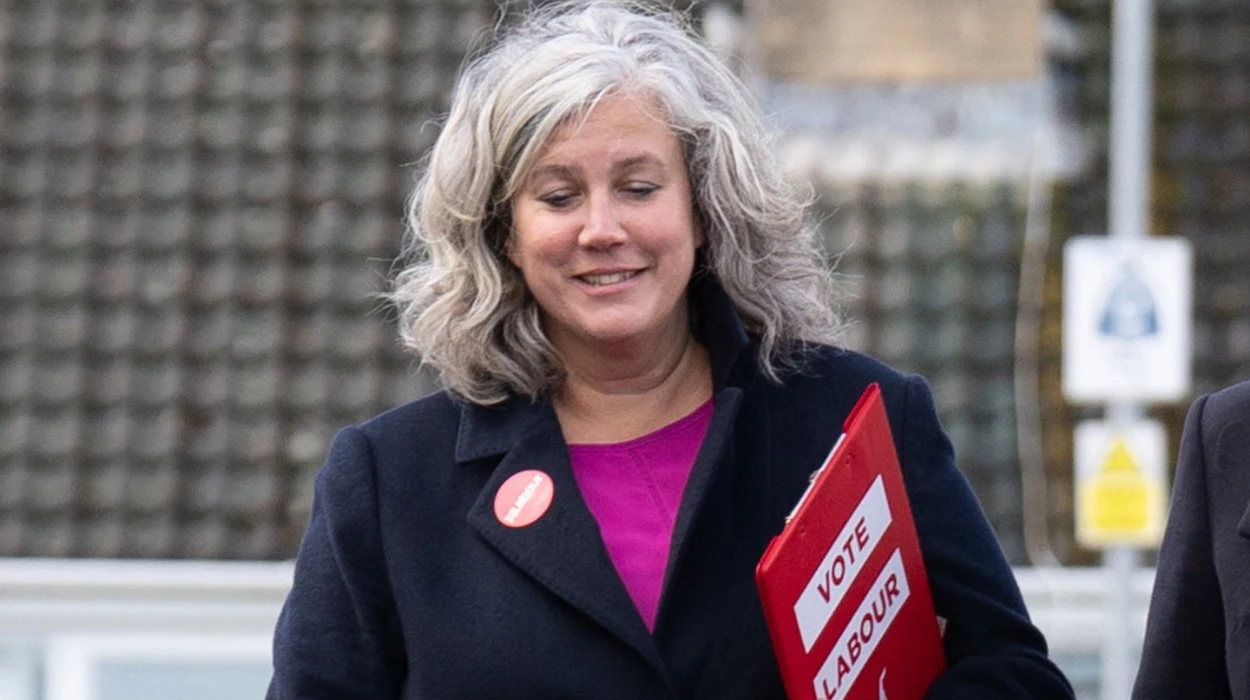
UK (Parliament Politics Magazine) – Transport Secretary Heidi Alexander declines to confirm if the two-child benefit cap will be scrapped, highlighting Labour’s plan to reduce child poverty.
As reported by Sky News, Heidi Alexander refused to say whether Chancellor Alex Reeves will scrap the two-child benefit cap on Wednesday, insisting that Labour remains committed to tackling child poverty.
What did Heidi Alexander say about the two-child benefit cap and welfare plans?
During an interview, Heidi Alexander said she would not speculate on budget measures when asked about scrapping the two-child benefit cap.
The transport secretary stated,
“Nobody wants to see kids going without. And we know that three-quarters of children who are living in poverty at the moment are in working households. Growing up in poverty has consequences that last a lifetime.”
She said,
“This government is about giving opportunity to all. It shouldn’t matter what the size of your parents bank balances in terms of your chances in life.”
When asked about the government’s plans for a second attempt at cutting welfare, the Cabinet minister responded,
“We’ve always said that actually it’s so much better for people to be in work and to be given the dignity of work and have the opportunities that work gives them.”
She added,
“[Work and Pensions Secretary] Pat [McFadden] is working very, very hard on how we get to that system, which can make sure that everyone has opportunity in life.”
What did Heidi Alexander say about the rail fare freeze and the Budget plans?
Heidi Alexander described the first rail fare freeze in three decades as a move to help families and “make life a little easier” for travellers.
The move comes after upcoming Rachel Reeves’ budget announcement, in which she outlined a freeze on specific journeys affecting millions.
The transport secretary said,
“The chancellor, I, are acutely aware of how important affordability is to the travelling public. And so that’s why when it comes to the rail network, we are stepping in to ensure that hardworking commuters, hardworking families, can keep more of their hard-earned cash.”
Ms Alexander continued,
“If you look at what has happened to rail fares over the last decade and a half, they have increased by 60% between 2010 and 2024, under the Conservatives, we don’t believe that is right. We think it’s right to make life a little bit easier for people that are still dealing with cost of living pressures.”
Pressed on whether the budget will include a freeze on fuel duty to help the majority of road users, she said she would not comment ahead of Wednesday’s announcement.
How did the Lib Dems and Tories respond to the Government’s rail fare freeze?
Responding to the government’s first rail fare freeze in 30 years, the Liberal Democrats responded after Heidi Alexander told Sky News the move was aimed at helping those facing ongoing cost-of-living strains.
According to the party, the announcement signals that the government has “finally listened” to their demands.
The Lib Dems transport spokesperson, Olly Glover, said,
“It is too little, too late for millions of commuters who have faced years of eye-watering price hikes that have hammered them during a cost-of-living crisis.”
She added, “This pause simply papers over the deep cracks in our failing rail network. We need a real long-term plan to deliver a reliable, affordable railway, not just a temporary political fix days before a tough budget.”
Shadow transport secretary, Richard Holden, said,
“After pushing up inflation and losing control of public spending, it is welcome that Labour have finally, under sustained Conservative pressure, frozen rail fares.”
He added,
“In government, the Conservatives kept fares on the right track with below-inflation rises and consistently called for no further hikes to protect hard-working commuters. Only the Conservatives have a plan to control public spending, get a grip on inflation and grow the economy.”
What did the Resolution Foundation predict if the child cap stays?
The Resolution Foundation warned in March that introducing a three-child limit or tapered system could leave 120,000 to 350,000 more children in poverty if the cap were removed. If the chancellor maintained a restricted system, it could save between £900 million and £2.3 billion, with around 59% of households affected by the two-child limit having at least one working member.
At the Labour conference, Prime Minister Keir Starmer hinted that the government plans further action on child poverty, highlighting the extension of free school meals to universal credit recipients.
The prime minister added,
“We have walked that road before, and we will walk that road again, because a Britain where no child is hungry, when no child is held back by poverty, that’s a Britain built for all.”
The Liberal Democrat work and pensions spokesperson, Steve Darling, stated,
“Any serious child poverty strategy must start with scrapping this unfair policy.”
Shadow Chancellor Mel Stride, said the Tories would oppose the change, saying,
“Scrapping the two-child benefit isn’t just irresponsible. It’s unfair.”
He added,
“Rachel Reeves must come clean. Where’s the money coming from? Will it be more and more debt, or even higher taxes? The UK is in the grip of Labour’s cost-of-living crisis and the public deserve the truth.”
A government spokesperson said,
“We are investing £500m in children’s development through the rollout of best start family hubs, extending free school meals and ensuring the poorest don’t go hungry in the holidays through a new £1bn crisis support package.”
What is the two-child benefit cap policy?
The two-child benefit cap is a UK welfare policy that restricts financial support for larger, low-income families. This was introduced by the Conservative Chancellor George Osborne in 2015 and came into effect on 6 April 2017.
The goal was to make sure families on benefits face similar financial choices about having children as families who earn all their money from work.
The policy affects families claiming Universal Credit or Child Tax Credits . As of 2024/2025, it impacts an estimated 1.6 million children in around 470,000 families.