
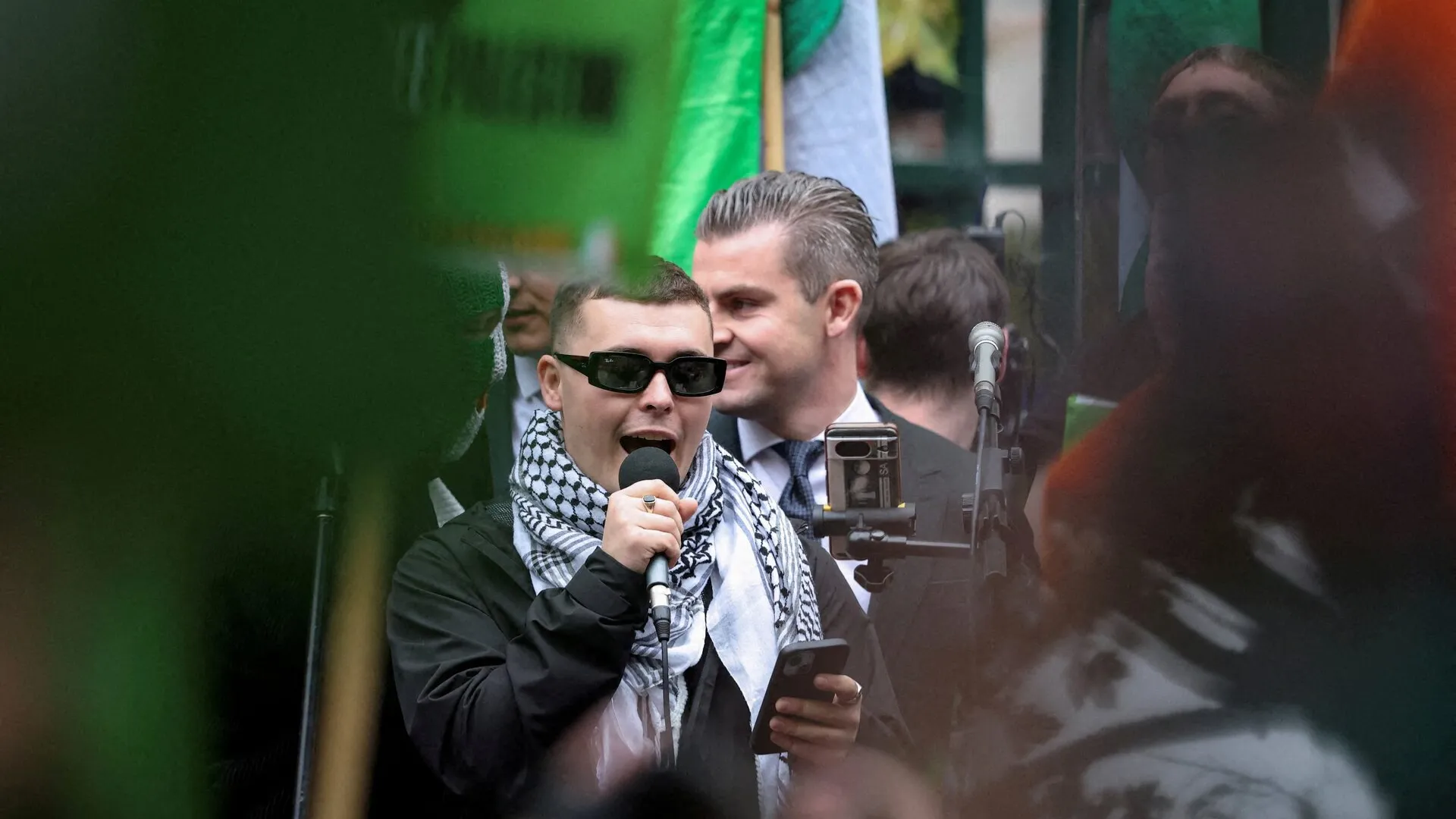
London (Parliament Politics Magazine) January 14, 2026 – The Crown Prosecution Service (CPS) has launched an appeal to reinstate a terrorism charge against Belfast rapper Liam Ogilby, known as Mo Chara of the hip-hop duo Kneecap. A Belfast court dismissed the charge last month citing abuse of process, prompting prosecutors to challenge the ruling at the High Court. The case centres on allegations stemming from a 2023 speech advocating for the Irish unification.
The CPS appeared at the High Court in Belfast on Tuesday to seek permission to reinstate a section 11 charge under the Terrorism Act 2000 against Liam Ogilby, following its dismissal by Judge Philip Babington at Belfast Crown Court on December 16, 2025. Ogilby, 32, from Divis Street in west Belfast, faces claims of using threatening words likely to stir hatred during a Republican Band parade speech on August 12, 2023. Prosecutors argue the initial dismissal constitutes a legal error, with the hearing expected to set dates for full arguments.
As reported by Rebecca Black of The Belfast Telegraph, CPS counsel David McMillen KC told Mr Justice Humphreys the appeal hinges on whether the court overstepped in deeming state actions an abuse of process. The case draws attention due to Kneecap’s provocative profile and prior legal clashes.
Background to the Original Terrorism Allegation
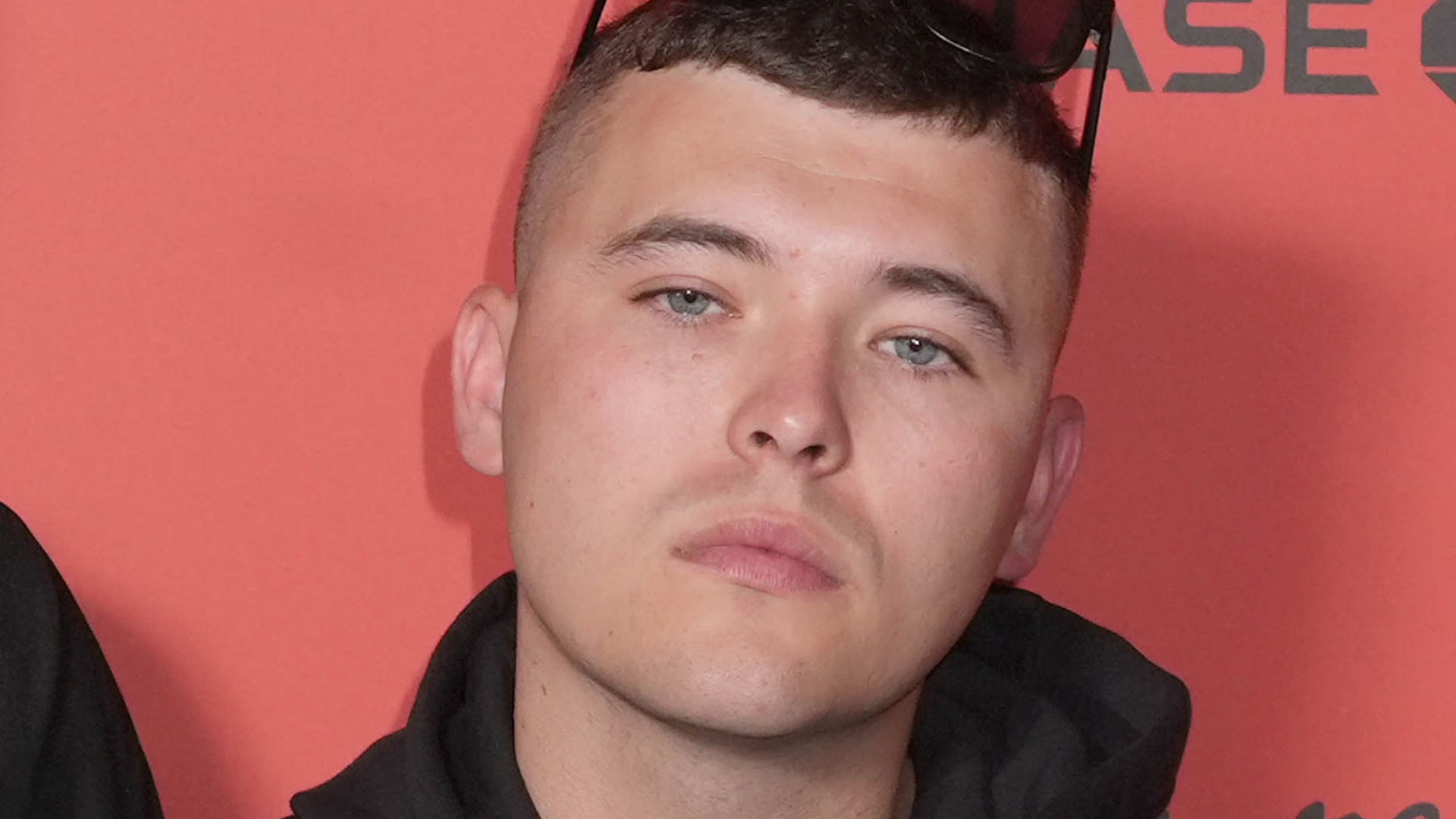 (Credit: Ian West/PA)
Police arrested Ogilby after footage emerged of him addressing crowds at the Lower Falls Road during the Hannahstown Republican Band parade. The speech included phrases interpreted as calls for “ending partition” and references to “armed struggle,” delivered amid heightened tensions post-Northern Ireland Protocol disputes. Ogilby denied the charge, pleading not guilty at an earlier hearing.
Belfast Crown Court heard prosecution evidence that the words met the Terrorism Act threshold for stirring sectarian hatred. Defence barrister Frank O’Donoghue KC argued successful prior prosecutions under similar legislation, securing dismissal on grounds the PSNI delayed charging and mishandled disclosure. Judge Babington ruled the state’s conduct prejudiced Ogilby’s Article 6 fair trial rights under the European Convention on Human Rights.
The PSNI confirmed no public disorder arose from the event, with 500 attendees dispersing peacefully.
Kneecap’s Profile and Prior Legal Encounters
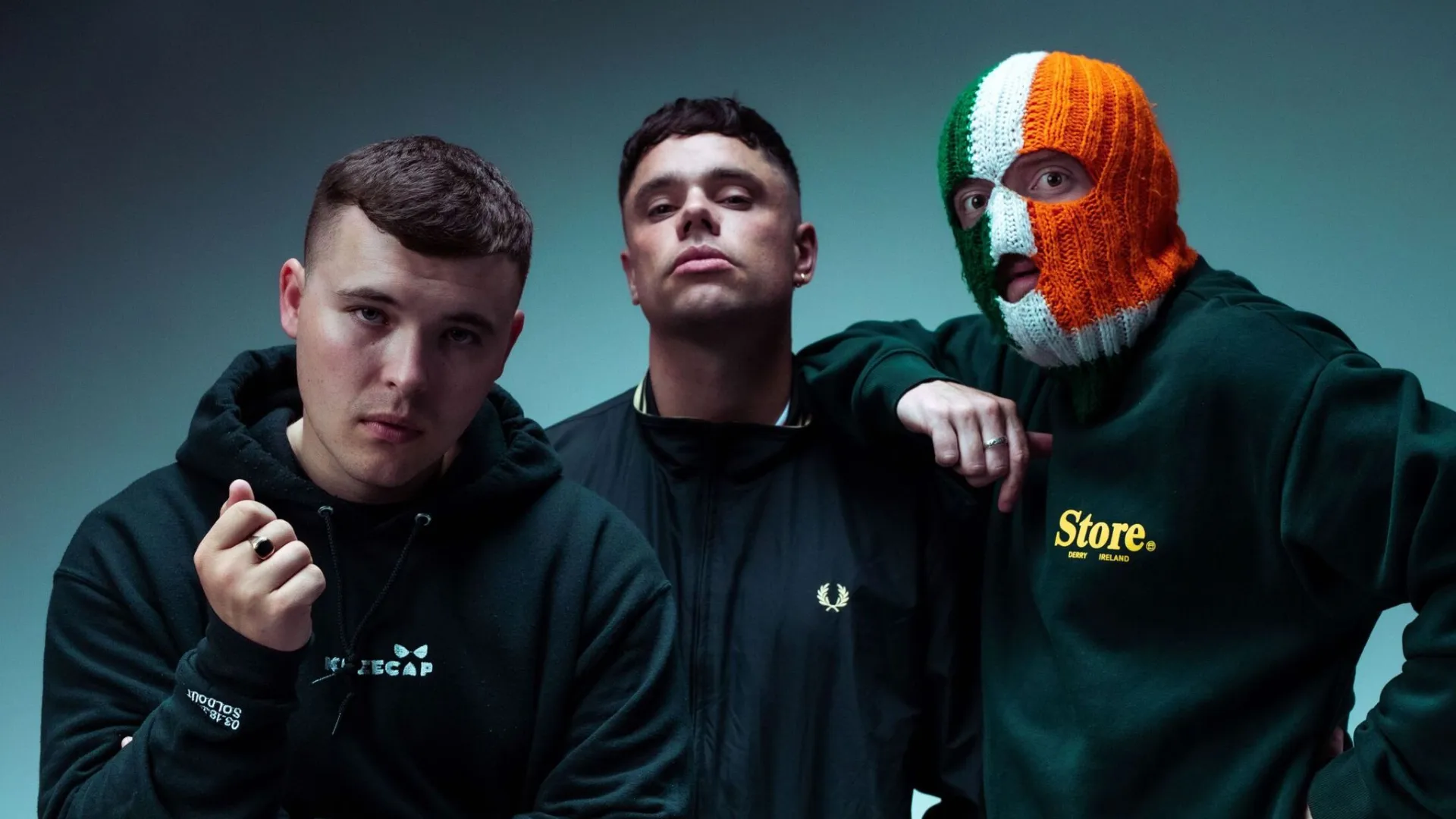
Kneecap, comprising Ogilby, JJ Óg Ó Domhnaill, and Móglaí Bap, gained notoriety for Gaelic-language rap critiquing British rule and the peace process. Their 2024 Taobh le Taobh tour sold out venues amid controversy over lyrics supporting Irish Republican Army actions. The group faced charges in 2024 for allegedly assaulting a Scottish journalist, later dropped.
Ogilby performed at Glastonbury Festival in June 2025, dedicating sets to “political prisoners.” As reported by Owen Kingsford of BBC News NI, Kneecap’s film biopic premiered at Sundance 2024, earning acclaim but criticism from unionist politicians. The trio maintains their work constitutes artistic expression protected under free speech laws.
Court Dismissal Details from December Hearing
During the December 16 hearing, Judge Babington reviewed PSNI evidence logs showing a 14-month gap between the speech and arrest on October 10, 2024. Defence highlighted missing body-worn footage and delayed witness statements, claiming deliberate obstruction. CPS conceded procedural lapses but maintained evidential sufficiency.
Babington deemed the cumulative delays “exceptional,” halting proceedings under common law abuse principles. He emphasised no reflection on Ogilby’s guilt, stating: “This ruling addresses process, not merits.” Ogilby walked free from court, with Kneecap issuing a statement thanking supporters.
Supporters criticised the government’s pursuit of the appeal.
Donna McLean @Donna__McLean said in X post, “The UK government is appealing the September 2025 decision by its own chief magistrate to dismiss a terrorism charge against Kneecap’s Liam Óg Ó hAnnaidh. Woolwich Crown Court was told that the charge was “unlawful” and “null.” What a ridiculous waste of taxpayers’ money.”
The UK government is appealing the September 2025 decision by *its own chief magistrate* to dismiss a terrorism charge against Kneecap’s Liam Óg Ó hAnnaidh. Woolwich Crown Court was told that the charge was “unlawful” and “null.”
What a ridiculous waste of taxpayers’ money. https://t.co/n0ecZtk7F4— Donna McLean (@Donna__McLean) January 14, 2026
CPS Grounds for High Court Appeal
 (Credit: Kneecap Press)
Prosecutors filed the appeal under section 10 of the Criminal Appeal (Northern Ireland) Act 1980, seeking a certificate of fitness for appeal. McMillen KC argued the Crown Court misapplied abuse thresholds set in R v Maxwell, a 2010 House of Lords case on disclosure duties. The CPS contends delays stemmed from evidential complexity, not malice.
High Court judge Mr Justice Humphreys reserved judgment on permission, scheduling a substantive hearing for late February. Legal observers note success rates for such appeals hover at 25 per cent in terrorism-related stays.
As detailed by Allison Morris of The Irish News, the CPS must demonstrate the dismissal posed a “legal error of substance” to overturn.
Historical Context of Terrorism Act Applications
The Terrorism Act 2000, section 11, targets words or behaviour stirring racial or religious hatred with intent. Enacted post-Good Friday Agreement, it has featured in 47 prosecutions since 2006, per PSNI data, with 60 per cent conviction rates. Comparable cases include a 2022 Derry loyalist fined for anti-Catholic chants.
Northern Ireland courts dismissed 12 per cent of terror charges on abuse grounds between 2015-2025, often citing disclosure failures. The Public Prosecution Service (PPS) reviewed 300 annual filings, prioritising public safety.
Kneecap’s Ongoing Activities Amid Legal Battle
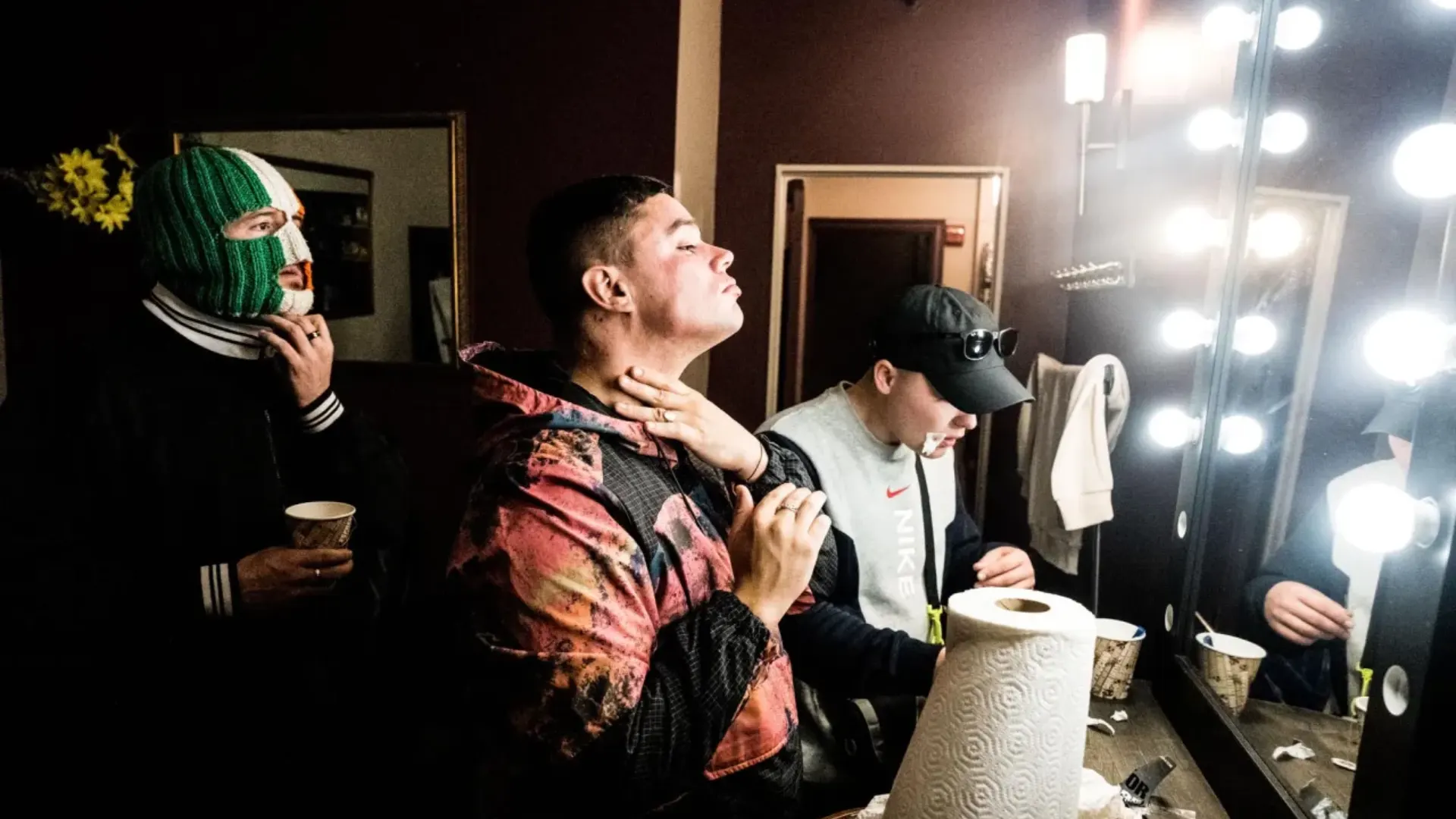
The group released their sophomore EP Glas in November 2025, topping Irish charts despite backlash. Óg Ó Domhnaill told RTÉ in December the case exemplifies “state overreach.” Upcoming dates include a March 2026 Brixton Academy show and Coachella festival slot.
Ogilby resumed performances post-dismissal, headlining a Belfast New Year’s Eve gig attended by 2,000 fans. No further charges emerged from that event.
Public gatherings marked the appeal proceedings.
LawNewsIndex.com @TheLawMap said in X post,
“Suppressing criticism of #Israel’s genocide: Supporters of rap trio Kneecap have gathered at the Royal Courts of Justice in London ahead of an appeal against the decision to throw out a terrorism charge brought against one of the group’s members last year https://www.bbc.co.uk/news/articles/crrn7x8dgwwo”
Suppressing criticism of #Israel‘s genocide: Supporters of rap trio Kneecap have gathered at the Royal Courts of Justice in London ahead of an appeal against the decision to throw out a terrorism charge brought against one of the group’s members last year https://t.co/DbNeMAuU0W
— LawNewsIndex.com (@TheLawMap) January 14, 2026
Political Reactions to the Legal Developments
Sinn Féin MP Paul Maskey described the original charge as “political policing.” DUP justice spokesman Gary Middleton welcomed the appeal, stating: “Rule of law must prevail over agitprop.” Alliance Party leader Naomi Long urged judicial independence.
Stormont Justice Committee chair Linda Dillon scheduled a January briefing on Terrorism Act usage, citing 15 per cent rise in referrals.
Procedural Next Steps in High Court Process
If permission granted, full arguments unfold over two days, with Ogilby able to respond via counsel. Reinstatement would restart Crown Court proceedings, potentially delaying trial until autumn. Acquittal remains possible if CPS fails.
PSNI Chief Constable Jon Boutcher confirmed ongoing reviews of parade policing, allocating 1,200 officers annually for such events.
Impact on Northern Ireland’s Parades Landscape
Republican bands marched 150 times in 2025, per Parades Commission logs, with two incidents of unrest. The Hannahstown parade followed approved routes, attracting international media after Kneecap’s involvement.
Cabinet Office data shows £4.5 million spent on public order policing for parades last year.
Broader Implications for Artistic Expression Cases
UK courts balanced free speech against hate laws in 28 rulings since 2020, upholding 70 per cent of charges. European Court of Human Convention influences, per Attorney General’s 2025 report, emphasise proportionality.
Kneecap cited Handyside v UK (1976) precedent protecting provocative art.
Witness and Evidence Handling Scrutiny
Disclosure rules mandate PSNI retention of all relevant material. The case exposed 200 hours of unlogged footage, per court exhibits. Independent reviewer Jonathan Hall KC noted similar issues in 10 per cent of NI terror files.
Kneecap’s Notable Rap Lyrics and Performances
Kneecap’s catalogue features tracks like “C.E.A.R.T.A.” from their 2019 mixtape, addressing republican themes in Irish Gaelic. “H.O.O.D” critiques policing practices, sampling historical footage.
Their 2024 single “Fine Art” gained traction at Glastonbury, blending satire on partition with trap beats. The EP Glas includes “Sick in the Head,” performed at Sundance screenings, incorporating references to Belfast’s divided history.
