
UK (Parliament Politics Magazine) – The UK Women’s Institute will exclude trans women from membership from April 2026 after a Supreme Court ruling, while launching inclusive sisterhood groups.
As reported by The Guardian, the Women’s Institute will no longer admit transgender women as members from April, following a Supreme Court ruling on the legal definition of a woman.
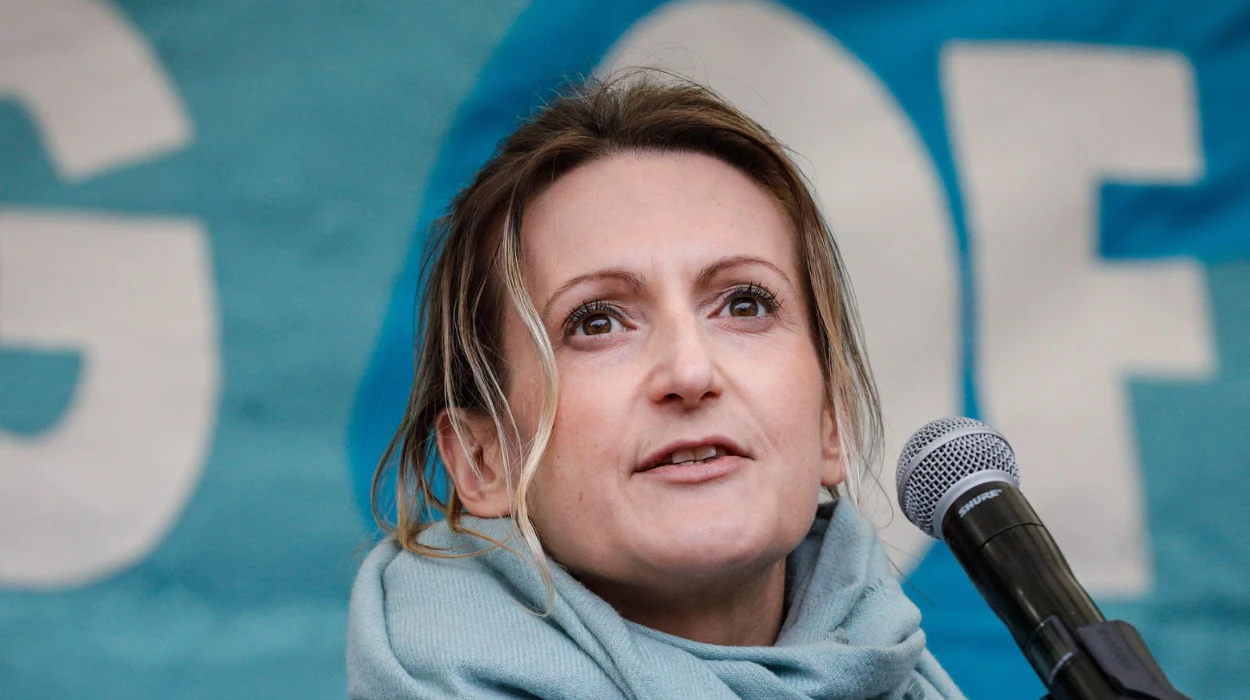
How did Melissa Green explain the WI’s decision on Trans Women?
Melissa Green, CEO of the National Federation of Women’s Institutes, said the move to exclude trans women from membership was made with ‘utmost regret and sadness’ and was unavoidable.
She stated,
“Incredibly sadly, we will have to restrict our membership on the basis of biological sex from April next year. But the message we really want to get across is that it remains our firm belief that transgender women are women, and that doesn’t change.”
Ms Green explained that the organisation aims to keep trans women “part of the family” and will launch new “sisterhood groups” from April to welcome all and explore womanhood in the 21st century.
When asked about potential legal challenges, she said the WI had received fewer than 100 messages on the matter, many from the same sources or external parties, but confirmed references to legal action.
Ms Green stated that she had stopped using social media to avoid being drawn into toxic debates.
“I’ve tried to keep myself as clear from that as possible, because I think that draws you into this toxicity of this debate, and it is our role to draw ourselves back out of it and work through this in a more reasonable, respectful way,”
she added.
The organisation’s chief acknowledged that while some might welcome the decision, it was likely to also trigger “anger, sadness, and disappointment.”
Ms Green said,
“My hope is that the message that the transgender community gets from this is not one of betrayal, but is one of our desire to continue to maintain those friendships and that support. This has been a very difficult year for everybody, particularly for the transgender community, but I hope that when that anger subsides the transgender community will know that we stand with them.”
According to her, transgender members known to the WI leadership had already been informed of the decision ahead of the public announcement.
She stated,
“They’ve been so respectful and so understanding of the decision, but profoundly sad. I spoke to one 80-year-old woman who has been in our organisation for decades, who said it was one of the greatest experiences of her life, and the only place in her 80 years where she’s been treated as a woman with respect.”
The WI chief said the new sisterhood groups are voluntary but could serve as potential flash points.
Ms Green continued,
“It is absolutely our responsibility to make sure the sisterhood groups are safe spaces [and] that they don’t exacerbate division. One of the really important things for us is to try and help ourselves as an organisation, but society more generally, to find a way to work through some of these discussions, to have differing views, to disagree better.”
She said the decision was taken by the WI’s 138-person council and board after detailed legal consultation, and that the months since the Supreme Court ruling had been very difficult.
Ms Green added,
“As an organisation, over 110 years, we’ve demonstrated that in the face of change and difficulty our members rise to the challenge. They take these difficult issues and they find a way through them. We’re a group of strong women and I know we can find our way through this as well.”
How will the Women’s Institute inform members about the 2026 transgender policy?
On Wednesday, the WI will notify members from 5,000 local branches of its decision via an official statement, which states,
“It is with the utmost regret and sadness that we must announce that from April 2026 we can no longer offer formal membership to transgender women. As an organisation that has proudly welcomed transgender women into our membership for more than 40 years, this is not something we would do unless we felt that we had no other choice.”
The WI said in 2023 that it would continue to honour transgender members, following attempts by an internal group to overturn the inclusion policy officially adopted in 2015.
The announcement follows the UK Supreme Court ruling that under the Equality Act, “woman” and “sex” apply only to biological females, with the government reviewing EHRC guidance on implementation.
In an 88-page ruling, Lord Hodge, alongside Lords Reed and Lloyd-Jones and Ladies Rose and Simler, said the terms “man” and “woman” in the Equality Act align with biological traits.
How did the EHRC respond to the UK Supreme Court gender ruling?
Baroness Kishwer Falkner, chair of the Equality and Human Rights Commission (EHRC), said,
“We are pleased that this judgment addresses several of the difficulties we highlighted in our submission to the court, including the challenges faced by those seeking to maintain single-sex spaces and the rights of same-sex attracted persons to form associations.”
How did Kemi Badenoch react to the Supreme Court ruling on gender?
Conservative leader Kemi Badenoch used the court ruling to attack PM Sir Keir Starmer, saying his claims that “women can have penises” have ended.
She added,
“Saying ‘trans women are women’ was never true in fact, and now isn’t true in law either. This is a victory for all of the women who faced personal abuse or lost their jobs for stating the obvious. Women are women and men are men: you cannot change your biological sex.”
What is the UK’s Equality Act?
The Equality Act 2010 is a single, comprehensive law in the UK that protects individuals from unfair treatment and discrimination.
It legally protects people from discrimination based on nine specific “protected characteristics”: age, disability, gender reassignment, marriage and civil partnership, pregnancy and maternity, race, religion or belief, sex, and sexual orientation.
The legislation covers many areas of public life, including the workplace, education, housing, and when accessing goods and services like shops, restaurants, hospitals, and transportation.
The Act makes it unlawful to treat someone worse (or “less favourably”) because of a protected characteristic. This includes direct discrimination, indirect discrimination, harassment, and victimisation.
