
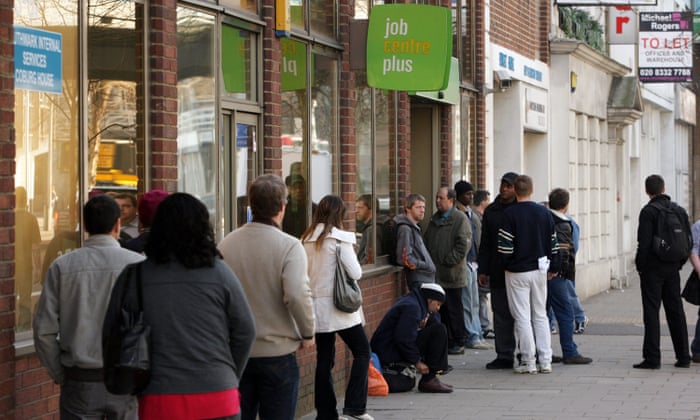
The most recent UK unemployment rate estimates indicate that the unemployment rate in the UK will be about 4.2 percent until 2025. It is projected that the number of unemployed individuals would reduce by the year 2024, compared to the present situation of about 4.5 million in January 2017, to 3.8 million by the year 2024. It is estimated that in the following years, unemployment will decrease a little bit to 5.5%. Moreover, it is projected that in 2025, the number of working positions will rise to 4.4 million.
This year, the services sector is expected to rebound, with households spending their lockdown savings on essential goods and services. However, the OECD cautions that the coronavirus pandemic impacted less-well-off households the most. The forecast for UK unemployment is a significant rise of 0.6% from 4.8% in the first quarter of 2021 to 6.1% in the fourth quarter. This forecast will cause some concern, as the country faces an unprecedented recession.
UK unemployment rate history
The unemployment rate in the UK has oscillated over the years, with the UK registering record low levels of approximately 3.4 in the early seventies, and highs of approximately 11.9 in the eighties. And the unemployment rate has returned to close to peak levels of mid-2021 at 4.7 percent. After hitting recent lows in 2022 and the early portions of 2023, recent growth has been seen. The ratio of job openings to unemployed persons is below the long-term average, indicating that the UK labor market is still very tight. However, in 2025, hiring demand and job postings have been easing as firms deal with rising expenses and economic instability.
With more than 34 million employed, employment levels are still high, but economic inactivity is also high at about 21%, with a sizable section of the working-age population not actively looking for work because of things like illness, caregiving, education, and other personal circumstances. With GDP growth projections of only 1.6% to 1.6% for 2024–2025, the economy has been growing slowly lately due to inflation, global uncertainty, and growing company expenses. In certain industries, these factors have led to a decline in labor demand and slower pay growth.
The government’s budget and policies, which include initiatives to help workers, parents, independent contractors, and individuals with disabilities find and maintain employment, have attempted to address some of the factors that contribute to unemployment and inactivity.
Analysis of unemployment in the UK
The following are the main analysis techniques used to predict the unemployment rate, particularly in the context of the UK:
Time series models
These forecast unemployment rates by analyzing past data trends and extending them into the future. Typical models consist of:
- Trends and seasonality can be captured with ARIMA (Autoregressive Integrated Moving Average), which includes seasonal ARIMA.
- Models of Holt-Winters exponential smoothing are useful for data that exhibits seasonal variation and trends.
- Non-linear trends can be fitted using quadratic regression models.
1. Econometric models
These apply statistical techniques, frequently regression analysis, to determine correlations between unemployment and other economic variables. They may provide such indicators of autonomy as the indicators of the labor market, GDP, and inflation. Machine learning algorithms (Random Forest, Gradient Boosting, and Neural Networks) have emerged in recent years as an increasing number of practitioners seek accuracy in labor market predictions. They can work on large and complex datasets and identify nonlinear interplay that may not be identified by traditional models.
2. Qualitative methods
Qualitative methods include scenario planning (creating several forecast scenarios based on various assumptions), the Delphi procedure (expert consensus), and industry experts’ judgmental forecasting.
Implications for the economy and labor market
The following are some effects of the growing unemployment rate in the UK on the labor market and economy in 2025:
1. Economic growth pressure
The decline in demand in the economy is reflected in the rise in unemployment from record lows to about 4.7%. Since fewer employed people translate into lower consumer spending and less total economic activity, slower GDP growth of 1–1.6% is anticipated.
2. Labor market slack
Increased labor market slack is indicated by rising unemployment, especially among individuals who have been unemployed for six to twelve months or more. Although this slack may indicate reduced pressure on wage inflation, it may also reduce economic dynamism and productivity.
Job Market Polarization: Different demographics are impacted by the increase in unemployment in different ways, with young people and some disadvantaged groups experiencing greater unemployment and instability. Welfare dependency and socioeconomic inequalities are exacerbated as a result.
3. Sectoral weaknesses
Due to structural changes like automation, offshore, and the pandemic’s aftermath, a number of industries, including retail, hotel, technology, and finance, have seen layoffs and hiring halts.
4. Multiple job holding
Even though they are considered employed, a growing percentage of employed people are doing two jobs, which indicates underemployment and financial instability.
Past and present situation of unemployment in the UK
The projections are taken as per the most up-to-date information, whereby it is predicted that the UK economy will be growing by an estimated 6.5 per cent hitting the UK economy in the year 2021, and as compared to the March projections, this represents an upward revision of 2.4 percentage points. In effect, this implies that the rate of unemployment will only increase by half a percentage point during this winter, which is a small figure. In 2021-22 government forecasts a budget deficit with a fall of PS51 billion relative to the PS51 billion predicted in March, despite the increase in unemployment.
Employed persons are those who are in employment. This is different from the number of unemployed people. The employment rate measures the proportion of the population who are 16 and older in paid work. In addition to full-time employees, it also includes self-employed people and those in the early stages of retirement. Therefore, the rate of unemployment in the UK is projected to decrease over the next five years. There will be a rise in the number of unemployed in the next decade, but the decline will be gradual.
COVID-19 situation of employment in the UK
Despite this, the UK economy will begin the year on its back foot. Rising rates of coronavirus infections will limit activity in early 2021. Tighter restrictions are also expected to weigh on the economy. In the meantime, the COVID-19 vaccine is expected to provide an economic recovery for the UK. While the UK economy will be in the midst of a transition period, the government will introduce stricter new controls to fight the infection.
The number of unemployed people will increase in the next five years. The unemployment rate, including the unemployed, will increase to 5.2 percent within a period of two years. By 2025, the rate will be elevated compared to 2020, though the rate will continue to decline during the next five years. Throughout the decade, this percentage of the number of unemployed people will decrease to 5.1 percent as the decade comes to an end. These figures of DWP mark the first official projections of the UK unemployment rate in 2021-2025.
Inflation will be kept at a low point until 2025 as per the keen interest of the Bank. According to the OECD, the economy will grow at 5.1 in November and 5.5 in October, which is the fastest in the late 1980s. By 2025, the GDP of the country will grow at a rate of 4.3%. This is a considerable improvement. It is still important to note that the UK economy will remain weak for several years.
The OECD raised its global growth forecast. A reduction in the rate of unemployment in the US will spur US exports, which will boost the UK economy. The UK’s exports of services will increase in the coming years, reducing unemployment rates in the United Kingdom. Although it has been slow to recover, this decline is because the country’s economy is still experiencing a downturn.
Those in the labour market should be prepared for a recession in the UK. The unemployment rate is expected to remain high throughout the UK. The government is also expected to introduce more legislation to ease the situation. It is essential to note that the country’s unemployment rate is likely to remain below its pre-war level for many years. It is estimated that the economy will grow by a further 2% in the next few years.
The highest unemployment rate in the UK
In April 1984, the highest unemployment rate was registered in the UK of 11.9 percent since credible statistics collection began in 1971. This was in a hard economic period where the economy was undergoing recession and major changes in the economy. During more recent times, it has been seen that the UK unemployment rate soared to a high of 8.5% in November 2011 when the financial crisis struck in 2008, and the government saw tremendous growth in unemployment due to redundancies in the government sector. In December 1973, the unemployment rate reached an all high of 3.4%. As a percentage now, the unemployment rate is the highest it has been since the middle of 2021, but still well below these historical highs: 4.7% in the middle of 2025.
Current rate of the UK unemployment
The unemployment rate for the UK stands at 4.7% as of the three months to June 2025. This is the highest rate since July 2021, and it remains unchanged compared to the previous period. The rise in unemployment is expressed through increased numbers of people who have lost their jobs and worked in various periods, i.e., between six to twelve months, and over 12 months. In the meantime, the employment levels have crossed the 50-mark to reach their highest mark since September 2024, owing to an increase in full-time employment. The rate of economic inactivity stays constant at 21%.
UK youth unemployment rate
By May 2025, unemployment in the UK youth age bracket (16-24 years of age) stands at an approximate 14.2 percent compared to a low of about 9.2 percent in July 2022. Although not at the highest level (22.5 percent of youth unemployed in November of 2011), this is relatively high, nearly as high as after the COVID-19 pandemic in 2020. The probable greater barrier in the fact that there are close to a million young people aged 16-24 not in education or work, long long-term illness is a major factor behind it. The share of young people who are inactive in the economic sense due to illness has been rising prominently in the last decade.
Access to high-quality local surrounding workplaces, skills mismatch, mental health, and education-labor mismatch are the main barriers to teenage work. The long-term economic and social consequences of such a high rate of young unemployment are low earning capacity and increased inequality. Regional disparities are evident in the youth unemployment levels; as at the end of 2024, the highest rate in London stood at approx 19.3%, and the overall UK level was at about 14.8%.