But the 28-year-old humanitarian consultant from Montana decided to stay. After Lebanon closed its borders on March 19 to stem the spread of the global pandemic, she began furnishing her rooftop terrace. Her time in Beirut, she realized, would be indefinite. "I made that decision for a combination of personal reasons and calculations about the virus that we're all making," says Fuglei. "I think that I am probably safer here." It's a decision that several US citizens in Beirut who CNN spoke to have echoed, citing skyrocketing cases in the US. When the US government last week said it would fly its citizens and permanent residents to the US on a chartered flight for $2,500 per person, some Americans took to Twitter to publicly decline the offer."And no, Mom, I'm not going," Beirut-based freelance journalist Abby Sewell wrote in a tweet about the US embassy announcement. Responding to her tweet, a Lebanese journalist said: "For once I'm like no America is not safer than here." Sewell's mother, Meg Sewell, replied: "Actually, for the moment I might have to agree." Sewell tells CNN she never considered taking the US embassy's offer. "From everything I'm reading, the situation is worse in the US, in terms of the number of cases, prevention measures or lack thereof, and how overburdened the health system is," she says. "Also, since I've been living overseas for years, I don't have health insurance in the US now, so if I did go back and then got sick, I would be looking at paying thousands of dollars out of pocket." 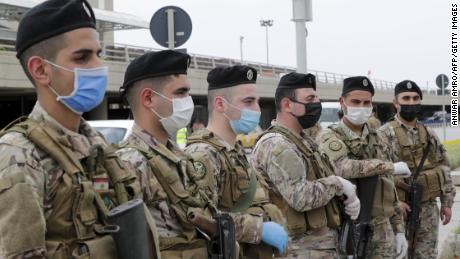 On the morning of April 5, the US embassy flew 95 US citizens out of Lebanon, according to a US State Department official. It is estimated that thousands of Americans live in Lebanon — many of whom also hold Lebanese citizenship. "The Department of State has no greater priority than the safety and security of US citizens overseas," the official told CNN. "We are rising to meet the historic challenge posed by the Covid-19 pandemic, every day, all over the world."When asked about Americans suggesting that Beirut is, for once, safer than the US, the official declined to comment.
A rapid outbreak back home
Daryn Howland, 27, is hunkered down in her Beirut apartment, diving into her work as a consultant. "My plan is to stay here for the indefinite future," says the Boston native. "The fact that things are so bad in the US means it's one of the first times where it's safer to be in Lebanon than in the US," Howland also echoes. "Despite the (Lebanese political and economic) situation … I think my odds are better here." "All of my American friends here have decided to stay," she adds. When the first novel coronavirus case was reported in Lebanon on February 21, the country was already awash with crises.Nationwide protests erupted against the country's political elite last October, toppling the government of former Prime Minister Saad Hariri and deepening a political crisis. Already under increasing pressure, the country's currency tanked. Last month, Beirut announced its first ever debt default. Under widespread pressure from activists and media, the freshly-minted government of Prime Minister Hassan Diab vowed not to take any chances with the virus, despite the toll any measures might take on the already troubled economy. 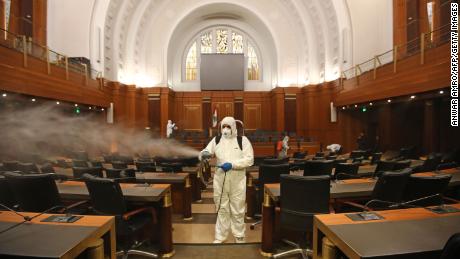 Eight days after that first case, on February 29, the country closed its schools and universities. On March 6, it shuttered restaurants and cafes, ahead of several western European countries, such as Italy, in enforcing such a measure. The government then announced a lockdown on March 15. In recent weeks, the spread of the coronavirus in Lebanon has slowed, according to the World Health Organization's Lebanon office. Medical professionals have offered cautious praise for the country's relatively early steps to enforce the lockdown. "We're not at a stage where we have to decide who gets a ventilator and who doesn't. That is because we are staying at home and the borders are closed," tweeted Dr. Firass Abiad, head of the government's Rafik Hariri University Hospital, which has been dealing with the majority of coronavirus cases in Beirut. His tweet linked to a New York Times opinion piece about ventilator shortages in the US. As of April 9, there are more than 430,000 Covid-19 cases and 14,000 deaths in the US, with 576 cases and 19 fatalities in Lebanon, according to Johns Hopkins University figures. Just under 12,000 tests for coronavirus have been carried out so far in Lebanon. That equates to around 0.1% of the population (by contrast, roughly 0.3% of the population in Britain, and 1.1% of the population of Germany have been tested). As a result, the ministry of public health believes it is underestimating the scale of its outbreak. It has urged more people to get tested.Lebanon's ministry of public health has vowed to boost the number of screenings to as many as 2,000 a day. It says anyone with mild to severe symptoms is entitled to be tested.
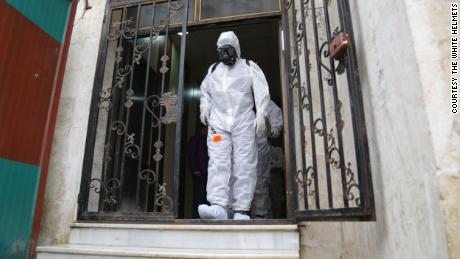 In a recent video address, Director General of the Public Health Ministry Walid Ammar blamed the social stigma around COVID-19 for low levels of screening in the country: "If a citizen feels that your reaction will be bad, then they won't go and get tested," said Ammar. "You all should be afraid of people who won't get tested because they're afraid of you. These are the people who will infect you."More people are showing up for tests, but the medical sector — which was dealt a heavy blow by the country's financial crisis — lacks the resources to conduct mass screenings, medical professionals say. Medics say that the country's proactive lockdown measures have helped the health sector avoid the pandemonium seen in many other countries ravaged by the virus."The more we test, the better, but we have to realize that our resources are limited and need to use it strategically," tweeted Hassan Zaraket, a virologist and assistant professor at the American University of Beirut. "If we had been missing many cases we would have explosion at ER & ICU."Read More – Source