

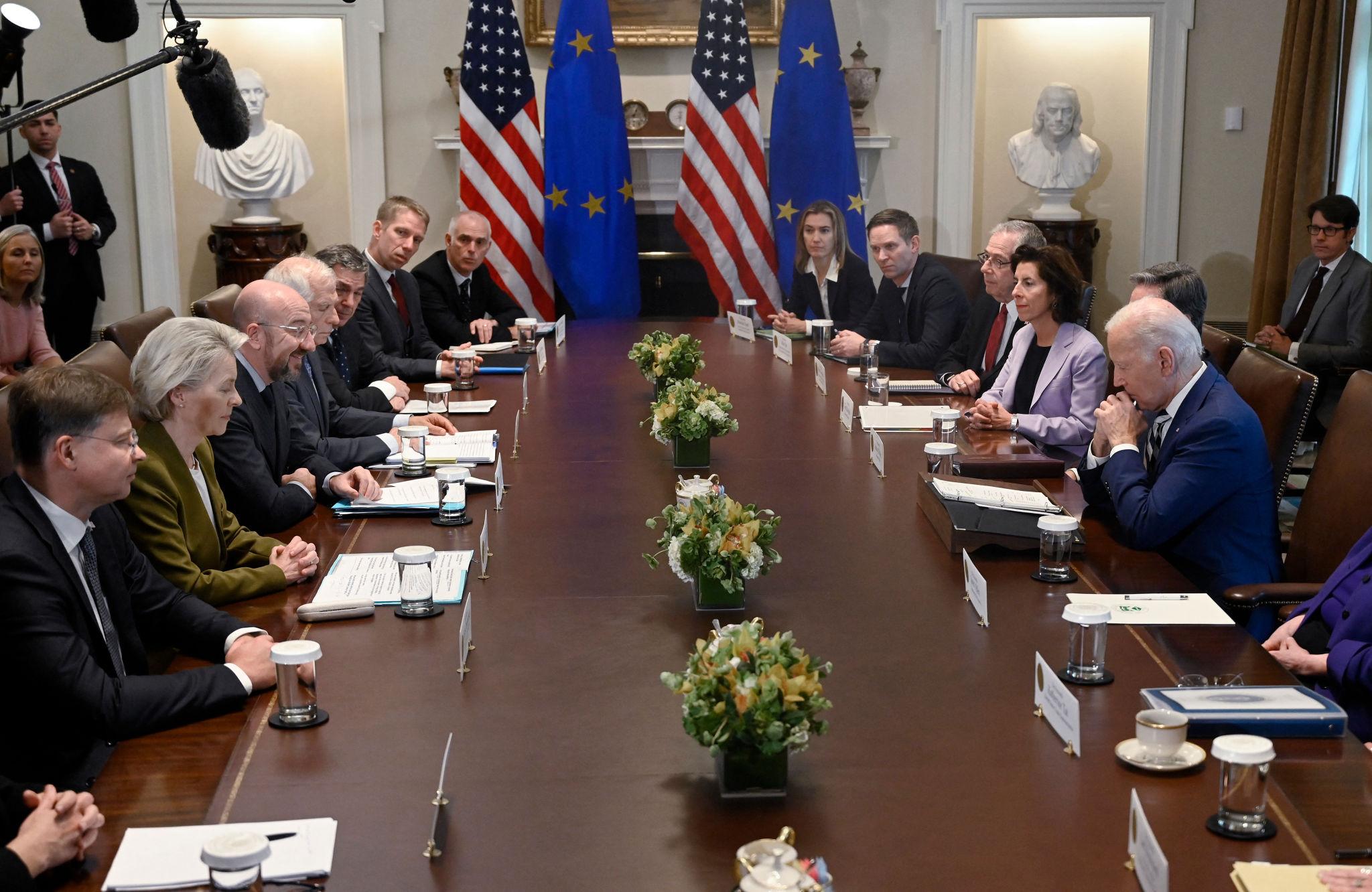
US Europe trade tensions are intensifying in 2026 as new tariff threats target Germany’s auto industry.
Economists warn the move could cost nearly $18 billion in output and disrupt global supply chains.
Markets are now watching closely as policy decisions could reshape international trade dynamics.
Brussels, Belgium, May 2, 2026 (Parliament Politics Magazine) US Europe trade tensions are escalating sharply in 2026 as new tariff proposals tied to Donald Trump threaten to disrupt one of the most critical economic relationships in the world. European officials and economists warn that Germany could lose nearly $18 billion in economic output if automotive tariffs are enforced, raising concerns about broader economic instability across the European Union.
The issue highlights the growing intersection between political strategy and global commerce. With supply chains deeply interconnected and industries reliant on international cooperation, even a single policy shift has the potential to create widespread ripple effects across multiple economies.
Transatlantic Trade Relations Face Renewed Strain
US Europe trade tensions have entered a new phase as policymakers on both sides of the Atlantic adopt increasingly assertive economic positions. The United States has signaled a willingness to impose tariffs on imported vehicles, a move aimed at protecting domestic manufacturing.
European leaders argue that such measures could undermine decades of economic cooperation and damage a relationship built on mutual trade benefits. The European Union has consistently supported open markets and free trade, making the proposed tariffs a direct challenge to its economic model.
A senior EU official stated,
“The transatlantic partnership has always been a cornerstone of global stability. Escalation benefits no one and risks long-term consequences.”
US Europe Trade Tensions 2026
Location: Brussels, Belgium / Berlin, Germany
Date: May 2, 2026
Focus Topic: US Europe trade tensions
Key Policy: Proposed U.S. auto tariff increase
Estimated Economic Impact: Up to $18 billion loss for Germany
Primary Sector Affected: Automotive industry
Core Risk: Decline in exports to the United States
Secondary Impact: Supply chain disruption across Europe
Market Reaction: Increased volatility in industrial and auto stocks
Geopolitical Risk: Potential EU retaliatory tariffs
Germany’s Automotive Sector at the Center of the Dispute
Germany has become the focal point of US Europe trade tensions due to its dominant role in the global automotive industry. The country exports millions of vehicles annually, with a significant share destined for the United States.
Economic projections suggest that tariffs could significantly reduce demand for German vehicles, leading to:
- Declines in export volumes
- Reduced factory production
- Pressure on supplier networks
- Potential job losses across manufacturing regions
Experts estimate that the economic impact could approach $18 billion annually, making it one of the most significant trade-related risks facing Europe.
An industry expert noted,
“Germany’s auto sector is deeply integrated into global markets. Any disruption will be felt far beyond its borders.”

Supply Chain Vulnerabilities Exposed
Modern automotive manufacturing relies on highly complex supply chains that span multiple countries. Components often cross borders several times before final assembly, making the system particularly sensitive to trade barriers.
US Europe trade tensions could disrupt these networks by increasing costs and creating logistical challenges. Companies may face delays in production and higher expenses as they attempt to navigate new regulatory requirements.
Potential consequences include:
- Rising production costs
- Delays in vehicle assembly
- Reduced efficiency in logistics
- Increased pressure on global trade networks
These disruptions could force companies to reconsider their manufacturing strategies, potentially accelerating the shift toward localized production.
Policy Direction Reflects Broader Economic Strategy
The proposed tariffs reflect a broader shift in economic policy. Donald Trump has emphasized domestic manufacturing and trade balance as central priorities, signaling a move away from traditional free-trade approaches.
Supporters argue that tariffs can help protect local industries and create jobs within the United States. However, critics warn that such measures often lead to unintended consequences, including higher consumer prices and reduced international cooperation.
One economist stated,
“Trade policies designed to protect domestic industries can sometimes create more challenges than they solve, especially in a globalized economy.”
Risk of Retaliation from the European Union
A major concern surrounding US Europe trade tensions is the potential for retaliatory measures. The European Union has historically responded to tariffs with counteractions targeting key industries.
Possible responses could include:
- Tariffs on U.S. exports
- Regulatory restrictions on American companies
- Adjustments to trade agreements
Such actions could escalate the situation into a broader trade conflict, affecting not only the United States and Europe but also global markets.
A European trade representative commented,
“We are prepared to defend our interests if necessary, but our preference remains dialogue and cooperation.”
Financial Markets React to Uncertainty
The uncertainty created by US Europe trade tensions is already influencing financial markets. Investors tend to react cautiously to trade disputes, particularly those involving major economies.
Key impacts include:
- Volatility in automotive and industrial stocks
- Currency fluctuations between the euro and U.S. dollar
- Reduced investor confidence
- Delays in corporate investment decisions
Market analysts emphasize that clarity on trade policy will be critical in determining future economic stability.
Historical Perspective on Trade Disputes
US Europe trade tensions are not unprecedented. Over the years, disputes have emerged over various sectors, including agriculture, steel, and technology. These conflicts often reflect deeper differences in economic priorities and regulatory approaches.
However, the current situation is unique due to the scale of global integration. The automotive industry, in particular, has become a focal point for trade disputes due to its economic significance and complex supply chains.
A senior economist noted,
“While trade disputes have occurred before, the interconnected nature of today’s economy makes the potential impact far greater.”
History of US Europe Trade Tensions
The history of US Europe trade tensions dates back decades, with periodic disputes shaping the evolution of global trade policies. From disagreements over agricultural subsidies to conflicts involving industrial tariffs, these tensions have often tested the resilience of transatlantic relations.
In recent years, the focus has shifted toward high-value industries such as automotive manufacturing. The stakes are higher than ever, as these sectors play a crucial role in economic growth and employment.
Understanding this history provides important context for current developments, highlighting both the challenges and opportunities in resolving trade disputes.
Strategic Adjustments by Industry Leaders
Automakers are already taking steps to mitigate the risks associated with US Europe trade tensions. These strategies include:
- Expanding production facilities in the United States
- Diversifying supply chains across multiple regions
- Investing in automation to reduce costs
- Exploring new markets outside traditional trade routes
Such measures could reshape the automotive industry, reducing reliance on cross-border trade and increasing resilience to policy changes.
Broader Economic Implications for Europe
Beyond Germany, the effects of US Europe trade tensions could extend across the European economy. The automotive sector supports a wide range of industries, from manufacturing to logistics.
Potential impacts include:
- Slower economic growth across the EU
- Reduced export revenues
- Increased unemployment in industrial regions
- Declining business confidence
European policymakers are therefore under pressure to respond effectively while maintaining economic stability.
Global Trade Faces a Critical Turning Point
The escalation of US Europe trade tensions comes at a time when the global economy is already facing multiple challenges. Inflation, geopolitical instability, and shifting energy markets have created an environment of uncertainty.
Trade disputes add another layer of complexity, potentially slowing global economic growth and increasing volatility.
A global analyst observed,
“The outcome of these tensions will have far-reaching implications, influencing not just regional economies but the entire global trade system.”
Expert Outlook and Future Scenarios
Economic experts suggest that the future of US Europe trade tensions will depend on the willingness of both sides to negotiate. While some analysts believe a compromise is likely, others warn of prolonged uncertainty.
“Businesses need predictability to make long-term decisions,”
said one analyst.
“Without clarity, investment and growth could be significantly affected.”
What US Europe Trade Tensions Mean for 2026
US Europe trade tensions are intensifying in 2026, with proposed tariffs threatening to cost Germany billions and disrupt global supply chains. As both sides weigh their options, the outcome will shape the future of international trade, economic stability, and industrial strategy worldwide.