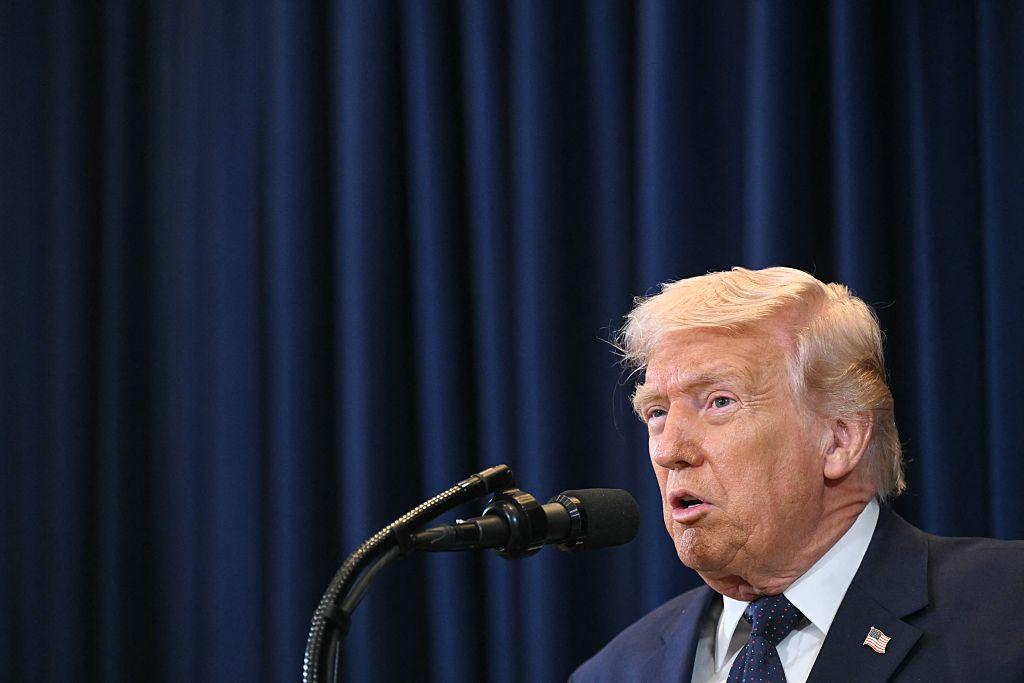
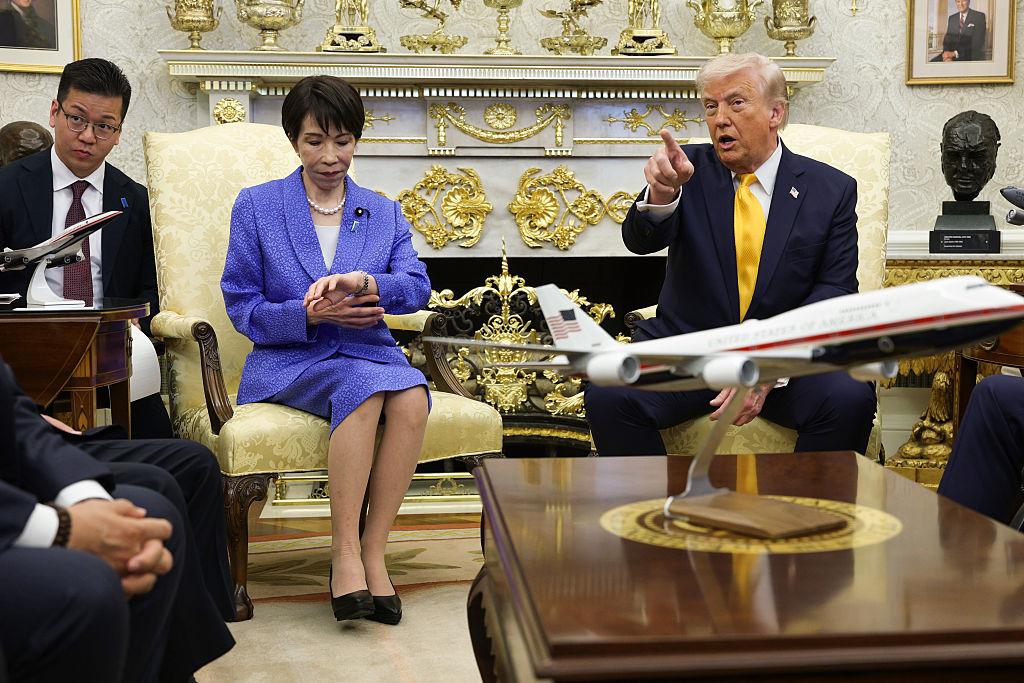
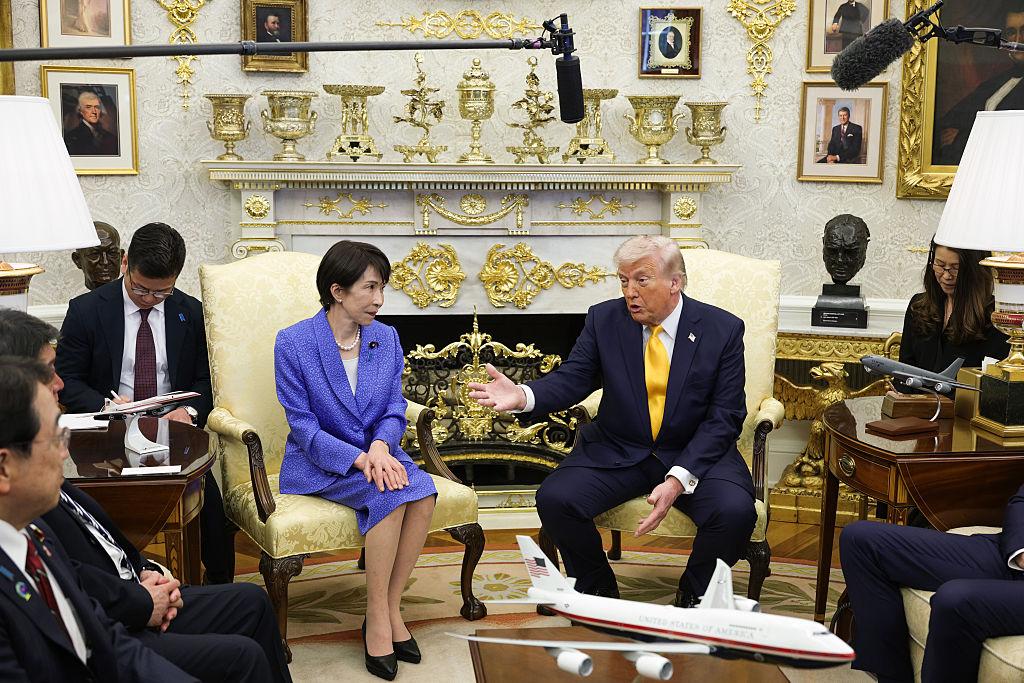
Washington, United States — March 19, 2026 — Parliament Politics Magazine — US Japan relations came under unexpected strain on Thursday after President Donald Trump made a controversial historical reference during a high-level Oval Office meeting with Japanese Prime Minister Sanae Takaichi, as tensions from the ongoing Iran conflict continue to escalate.
The meeting, originally focused on security cooperation and the global energy crisis, quickly shifted in tone after Trump defended the lack of prior notice to allies regarding recent U.S.-Israel airstrikes on Iran.
A Moment That Shifted US Japan Relations
The turning point in US Japan relations came when a reporter questioned why Japan was not informed ahead of the February 28 military operation targeting Iranian positions.
Trump emphasized the importance of maintaining secrecy in military strategy, stating that surprise plays a crucial role in successful operations. However, his explanation included a remark that immediately drew attention across diplomatic circles.
Trump said,
referencing the 1941 Pearl Harbor attack. “Why didn’t you tell us about that?”
The comment, delivered during a sensitive diplomatic exchange, quickly transformed the atmosphere of the meeting.
Prime Minister’s Reaction Signals Tension
Observers noted that the reaction from Prime Minister Sanae Takaichi reflected the growing sensitivity surrounding US Japan relations.
Her expression reportedly shifted as she appeared visibly tense, maintaining composure while redirecting the discussion toward economic concerns and global stability.
“The global economy is expected to take a huge hit,”
she said, focusing on the broader implications of the conflict rather than addressing the historical reference directly.
Iran Conflict Driving Strategic Urgency
At the core of the discussion impacting US Japan relations is the rapidly escalating conflict involving Iran, which has already begun reshaping global security priorities.
The meeting included critical discussions on:
- Protection of the Strait of Hormuz
- Regional military escalation
- Oil supply disruptions
- International cooperation in stabilizing the region
Trump reiterated that the United States would continue its strategic operations but confirmed there are no plans to deploy ground troops.
Energy Crisis Adds Pressure to US Japan Relations
Beyond the diplomatic exchange, US Japan relations are being tested by the growing global energy crisis triggered by instability in the Middle East.
Oil prices have surged significantly, creating ripple effects across global markets. Japan, heavily reliant on energy imports, faces immediate economic risks as supply routes become increasingly uncertain.
Experts warn that continued disruption could result in:
- Rising inflation worldwide
- Industrial slowdowns in key economies
- Increased volatility in global financial markets
The Strait of Hormuz remains a critical chokepoint, making its security a top priority for both nations.
Allies Face New Expectations
The evolving nature of the conflict is placing additional pressure on US Japan relations, as Washington calls on allies to take a more active role.
Trump praised Japan’s cooperation but expressed frustration with other nations, signaling a shift in expectations regarding global security contributions.
“We need everyone to step up to the plate,”
he said.
This message underscores a broader strategy aimed at distributing responsibility among allied nations during times of crisis.
Historical Sensitivity Raises Concerns
The reference to Pearl Harbor introduces a complex layer to US Japan relations, given the historical significance of the event.
For decades, both countries have carefully navigated this sensitive chapter while building a strong alliance based on shared interests and mutual respect.
The US Japan relations dynamic has evolved into one of the most stable partnerships globally, making any reference to past conflicts particularly impactful.
Diplomatic experts warn that such remarks could:
- Reignite historical sensitivities
- Complicate ongoing negotiations
- Affect public perception in both countries
Despite the controversy, both leaders continued discussions without immediate escalation.
Strategic Messaging or Diplomatic Risk?
The impact on US Japan relations has sparked debate among analysts regarding whether the remark was strategic or unintended.
Some believe Trump’s statement was meant to emphasize the importance of operational secrecy. Others argue that it reflects a communication style that prioritizes blunt messaging over diplomatic caution.
one analyst noted.
“It sends a strong message, but it also creates uncertainty among allies.”
Quote Driving Global Attention
“Who knows better about surprise than Japan?”
— President Donald Trump
This statement has quickly become a defining moment in discussions surrounding US Japan relations, highlighting the delicate balance between strategy and diplomacy.
Global Implications for US Japan Relations
Looking ahead, the future of US Japan relations may depend on how both nations navigate the aftermath of this exchange while addressing the broader challenges posed by the Iran conflict.