

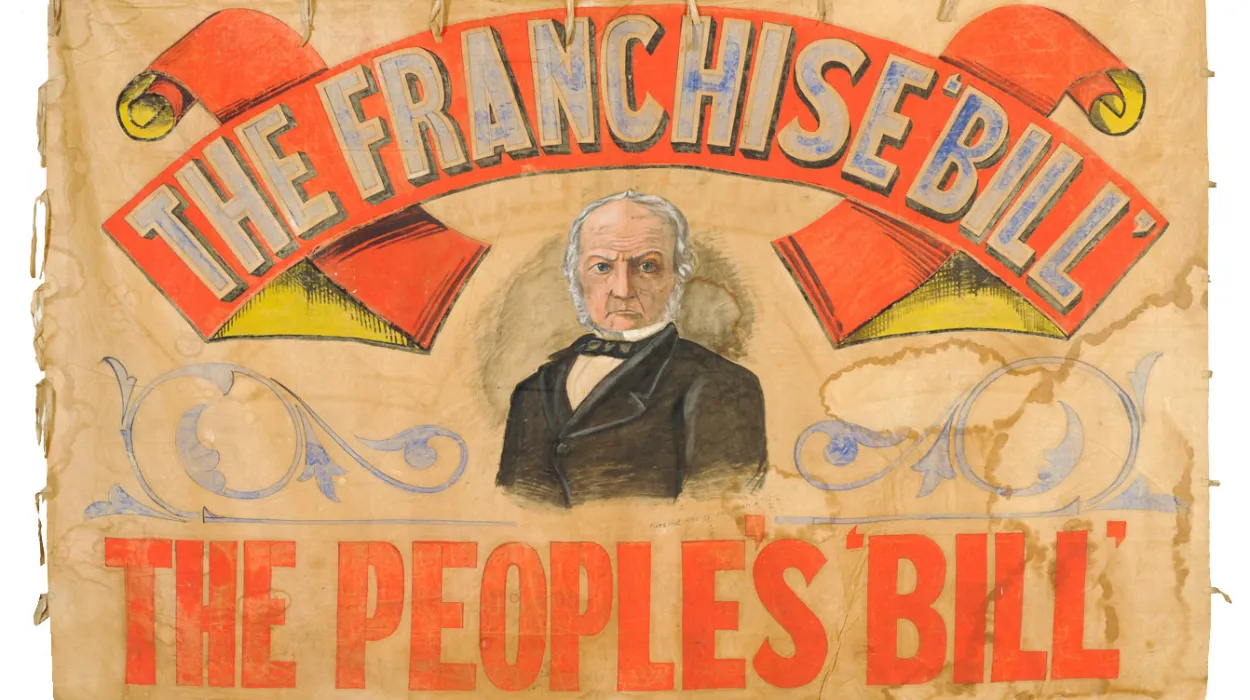
Imagine a country where the majority of men were not able to vote. Where Parliament made choices, but their opinions were not heard. Where laws were made without them. This was Britain for most of the 1800s. Many thought change was coming. The 1884 Reform Act was a significant time in British history. It was a law that greatly increased the ability for men to vote.
What Was the 1884 Reform Act?
The 1884 Reform Act is known as the Third Reform Act. Its full title is the Representation of the People Act 1884. In short, it was a law that allowed many more men, especially in the countryside, to vote.
The main thing that the 1884 Reform Act did was show a standard voting rule for every part of the country. It stated that if you were a man that owned or rented a house, you could vote. It did not matter if you were in a large city like London or a small village in Scotland; the rule was the same for everyone.
Why Was the 1884 Reform Act Passed?
The government didn’t just one day choose to be nice. There was a law to pass, but it was more complicated than that for several reasons.
1. The Pressure for Fairness
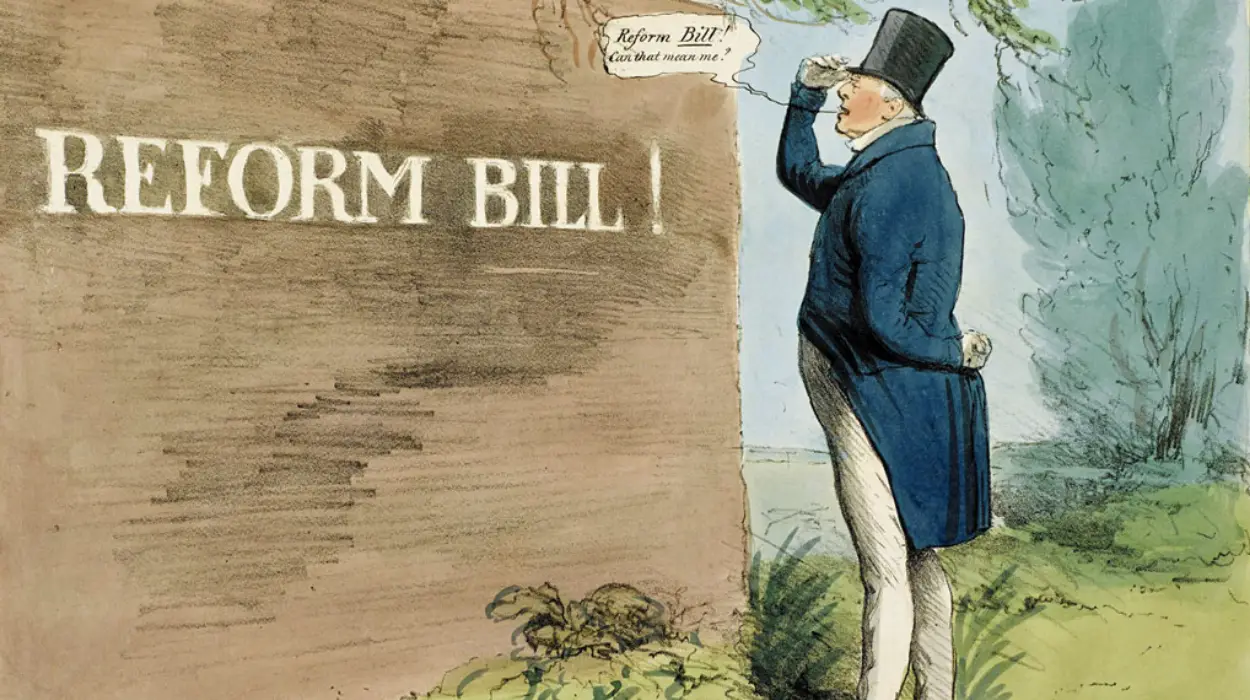
The main reason was fairness. An earlier law, the 1867 Reform Act, gave the vote to many workers that were men living in towns, but many men in the countryside (particularly farmers and farmworkers) were still excluded from the vote. This generated huge unfairness.
In other words, a factory worker in Birmingham was eligible to vote, but a farmer in Yorkshire was not. This didn’t sit well with people. Politicians who were advocating for change felt that as long as a man was actually a “householder” (he had his home), then he should be allowed to vote, wherever he lived. The 1884 Reform Act was the response to things being out of level and leveling the rules in the whole of the UK.
2. The Fear of Revolution
The ruling class had enormous fears of revolution throughout the 1800s, especially because they had first-hand accounts of violent revolutions happening in Europe. They were also aware of the Chartist movement in Britain during the 1830s and during the 1840s, with many people wanting political rights with threats of force. By the time of the 1884 Reform Act, people were much better organized. Trade unions were forming and growing stronger.
By denying millions of men the vote, there was a real chance of substantial social unrest. Passing the 1884 Reform Act was a way of giving people what they wanted properly in a circumstance before they demanded it violently.
3. Political Games
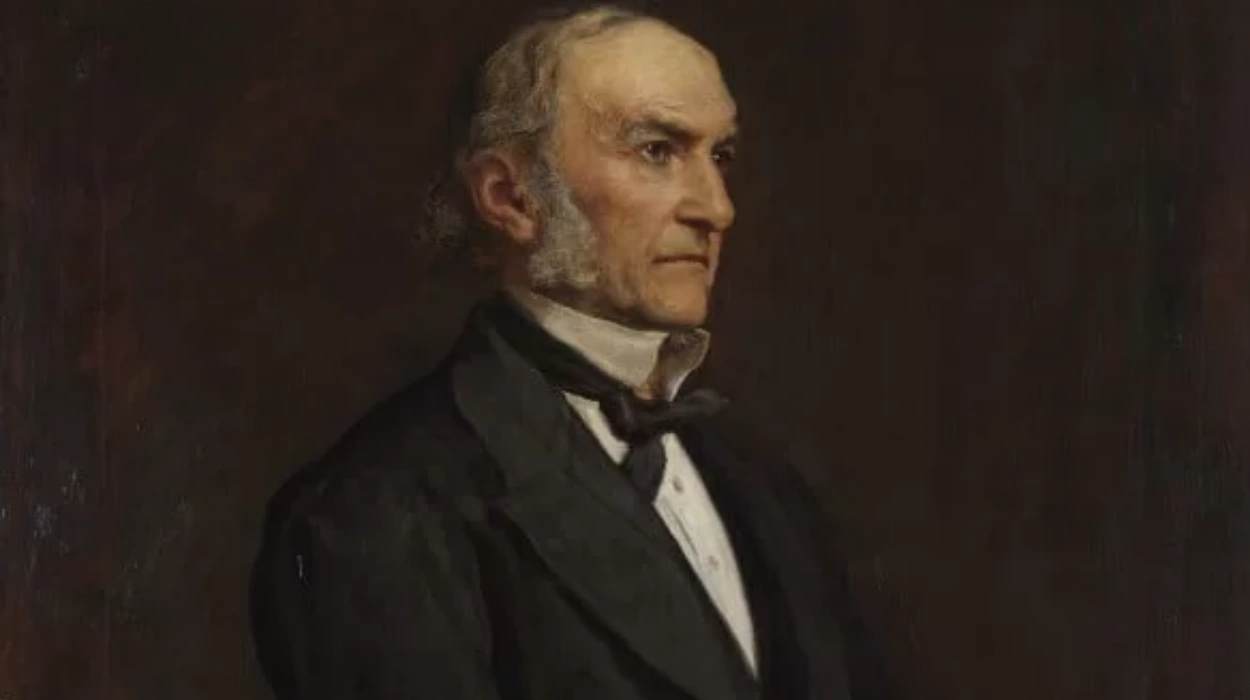
It was also a question of political strategy. The challenger Prime Minister was William Gladstone, leader of the Liberal Party. Gladstone was a believer in reform. He was also aware that the new wavemen in the countryside could turn his Liberal Party against the rival Conservative Party.
The Conservatives were aware of Lord Salisbury, and not wanting this law to pass was both regrettable and dangerous. At the same time, opposing the law would force them to be enemies of the people and make them a target for popular outrage. So, the two parties compromised. The Conservative Party agreed to support the 1884 Reform Act if Gladstone would support some new measure regarding how areas were represented in Parliament. This became the Redistribution of Seats Act 1885. It was all pretty standard political horse-trading.
What Was Different in Britain After the 1884 Reform Act?
The passing of the law was just the beginning; what was very significant was the quality and depth of the changes of effect it had in the long run. Britain was a different country in 1884.
A Much Bigger Electorate
The most significant change was the number of new voters. The 1884 Reform Act added roughly six million new voters to the register. The size of the electorate in England and Wales has almost doubled.
Before the act, around 3 million men were eligible to vote. The act brought that number to about 5.5 million. Finally, for the first time in British history, a majority of adult men had the right to vote. This was a huge leap towards democracy, and there was certainly still a long way to go (to start with, women were still completely excluded).
The Rise of the Common Man
With many new voters, politicians could no longer act as if they were only speaking to rich and powerful individuals. They needed to campaign for the first time and in a completely different way, addressing the concerns of ordinary working people and farmers.
Began the formation of modern political campaigning. Political parties had to create organized systems to reach these potential voters. This included writing more leaflets and holding more public meetings, as well as making promises that appealed to the common man, putting much more emphasis on issues like land reform, workers’ rights, and education, among many others.
The Power of the Counties
Prior to 1884, the political power was located in the cities because that is where the majority of voters were located. Then came the 1884 Reform Act, which brought the countryside into the political narrative.
Politicians that needed votes suddenly had to care about rural issues. This act provided a political voice for agricultural workers, farmers, and tradespeople in small villages, which changed the political landscape. The act started changing laws and government policy so that the needs of the entire country were considered, not just the major industrial towns.
A Step Closer to Democracy
No, the 1884 Reform Act did not create a democracy. But it was a step in the right direction. The 1884 Reform Act proved you could peacefully change the voting system through Parliament.
It built upon the reforms from 1832 and 1867 and opened the door to more reforms. It created momentum for democracy that would lead to all adult men getting the vote in 1918 and, most importantly, the first women getting the vote in 1918.
Who Still Couldn’t Vote?
The act still had significant limitations. Basically, nobody seemed satisfied with its success.
- All Women: No women could vote. In the years to come, the campaign for women’s suffrage (the right of women to vote) would become louder and more demonstrative.
- Many men: Those who were too poor to have a fixed address or who lived with their parents or as a servant in someone else’s property—were still excluded. The vote was still dependent on property.
- The Young: 21 was the voting age.
The Quiet Revolution
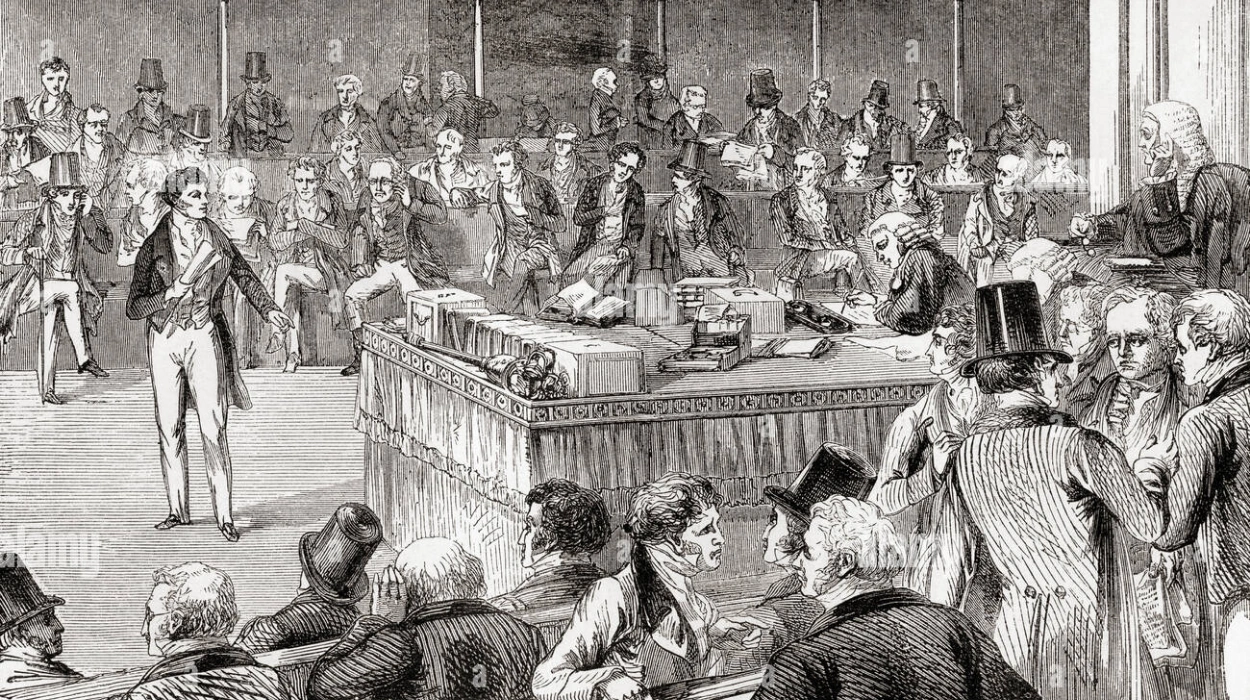
The 1884 Reform Act was not a loud or violent revolution. It was a quiet act that was passed in the Houses of Parliament. But the effects were revolutionary.
It was passed for a powerful mixture of reasons: a wish for fairness, a fear of unrest, and plain political games. It had profound implications. Furthermore, it stilled the angry cries for a revolution by enabling a more peaceful pathway to change. Moreover, it moved the country from a nation governed by the few privileged in society into a nation that was starting to step into the light of democracy.
The 1884 Reform Act would not finish the job; however, it laid the vital foundation for the democratic Britain that we consider to be habitual today. It served as a relentless reminder of what a nation can look like as it develops and embraces its people through law, one act at a time.
