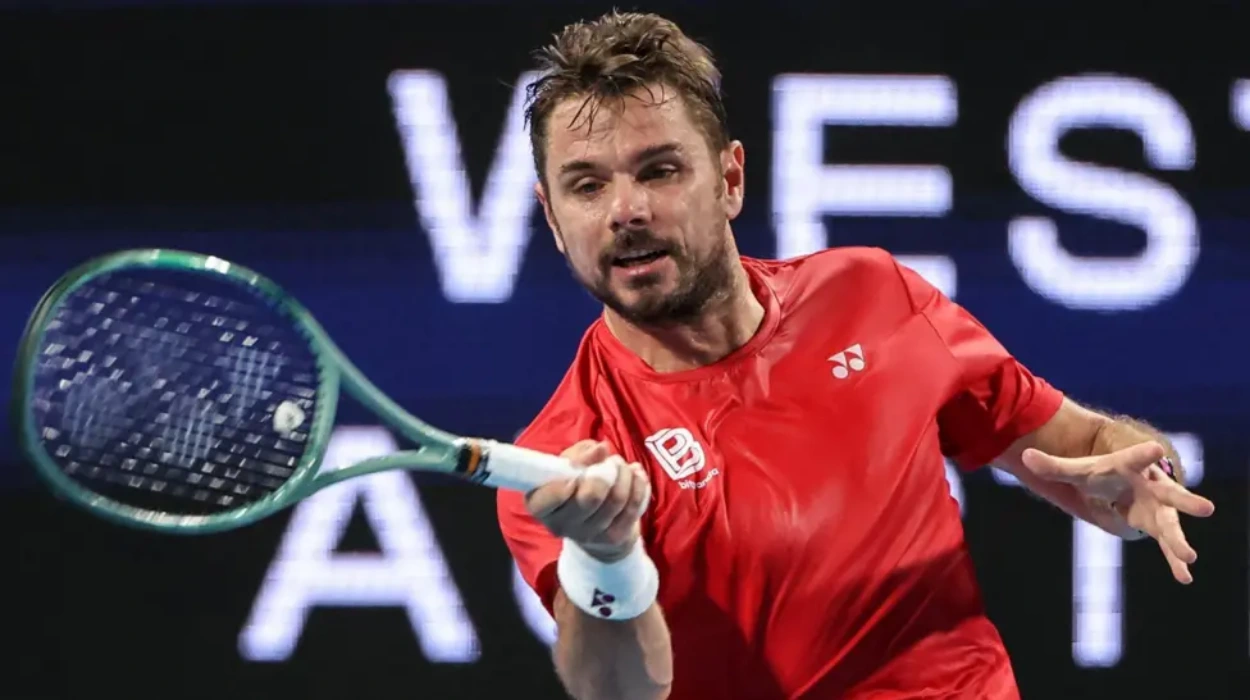
Melbourne (Global Tennis Chronicle) January 19, 2026 – Stan Wawrinka defeated Laslo Djere in four sets on Day 1 of the Australian Open. The 40-year-old Swiss wild card, in his last ATP Tour season, became the second-oldest man to win a match at Melbourne Park. He wore a shirt honouring his famous 2015 French Open shorts and spoke of enjoying the crowd’s love.
Stan Wawrinka secured a hard-fought victory over Laslo Djere of Serbia, 5-7, 6-3, 6-4, 7-6(4), on Monday evening at Melbourne Park. The match marked the start of the 2026 Australian Open, with Wawrinka entering as a wild card in what he has announced as his final season on the ATP Tour. At 40 years and 296 days old, Wawrinka surpassed all but Ivo Karlović, who won a match at 40 years and 326 days in 2020, as reported by James Hansen of The Athletic.
The encounter lasted two hours and 47 minutes, showcasing Wawrinka’s enduring fitness and tactical acumen. Wawrinka, the 2014 Australian Open champion, displayed his signature explosive power and point construction throughout. Despite converting only a portion of his break point opportunities, his efficient movement kept him competitive in the longer rallies. The Swiss player dropped the opening set but rallied to take the next two before prevailing in a tight fourth-set tiebreak.
Wawrinka’s On-Court Interview Reveals Final Season Motivation

In his post-match on-court interview, Wawrinka addressed the Melbourne crowd directly. He stated,
“I’m so happy I won. I have a chance to play one more here. Like you said it’s my last time. I’m trying to enjoy. I’m also trying to win and compete.”
Wawrinka credited the fans, saying he returned to the tournament because of “the love you give me,” according to James Hansen of The Athletic.
Tennis observers noted the significance of the win shortly after the match concluded. Roland-Garros said in X post,
“Not. Done. Yet 😤 Stan Wawrinka’s last Australian Open campaign is still alive as he gets past Djere in four sets 👊 #AO26.”
Not. Done. Yet 😤
Stan Wawrinka’s last Australian Open campaign is still alive as he gets past Djere in four sets 👊#AO26 pic.twitter.com/4OlB6cQeAL
— Roland-Garros (@rolandgarros) January 19, 2026
The victory sets up a second-round clash for Wawrinka against the winner of the match between No. 17 seed Jiří Lehečka and qualifier Arthur Géa. Wawrinka approached the 2026 event ranked outside the top 200 but received a wild card based on his past achievements, including three Grand Slam titles. This wild card entry underscores the tournament’s tradition of honouring veteran players who have shaped the sport.
Shirt Design Pays Homage to Iconic 2015 French Open Attire
Wawrinka’s Yonex kit featured a distinctive blue-and-white shirt with patterned stripes below the collar. This design pays tribute to the red, white, and grey plaid shorts he wore during his 2015 French Open triumph over Novak Djokovic. Those shorts, along with the match shirt, now hang framed in the home of his former coach, Magnus Norman.
Magnus Norman recounted in a video interview from Stockholm last May, “He gave them to me, with the match shirt and everything. He framed them for me. I love them, of course,” as detailed by James Hansen of The Athletic. The nod to that historic run underscores Wawrinka’s career highlights, including his backhand prowess that derailed Djokovic’s bid for a career Grand Slam at Roland Garros a decade ago. The shirt’s design element connected directly to that memory, visible to fans during the match.
Career Context Highlights Wawrinka’s Farewell Australian Open Campaign
Social media accounts covering tennis highlighted Wawrinka’s enduring passion following the result. The Tennis Letter said in X post,
“Wawrinka d. Djere 5-7 6-3 6-4 7-6 Another beautiful moment in the beautiful career of Stan Wawrinka 40 years old and playing in his final season, the 2014 champion still plays with as much passion & dedication as ever ✅1st win at Australian Open since 2021 Living legend 🇨🇭❤️.”
Wawrinka d. Djere 5-7 6-3 6-4 7-6
Another beautiful moment in the beautiful career of Stan Wawrinka
40 years old and playing in his final season, the 2014 champion still plays with as much passion & dedication as ever
✅1st win at Australian Open since 2021
Living legend 🇨🇭❤️ pic.twitter.com/kcIueoczCV
— The Tennis Letter (@TheTennisLetter) January 19, 2026
Wawrinka’s participation marks his 22nd Australian Open appearance and his first main draw win since 2020. The Swiss player underwent hip surgery in 2021, which sidelined him for extended periods, but he has staged comebacks, including reaching the third round at Wimbledon in 2024. His 2014 Australian Open title came via a straight-sets final win over Rafael Nadal, cementing his status as a one-time threat to the Big Three.
This year’s wild card entry reflects tournament organisers’ recognition of his legacy, with Wawrinka entering his 40th year on the tour. The Australian Open, running through January 31, 2026, at Melbourne Park, features a 128-player men’s draw where wild cards like Wawrinka add veteran intrigue amid rising stars. Wawrinka’s path to the 2014 title included victories over Tommy Robredo and Dmitry Tur surenkov in earlier rounds, building momentum that peaked in the final.
Detailed Match Statistics Underline Wawrinka’s Resilience Against Djere
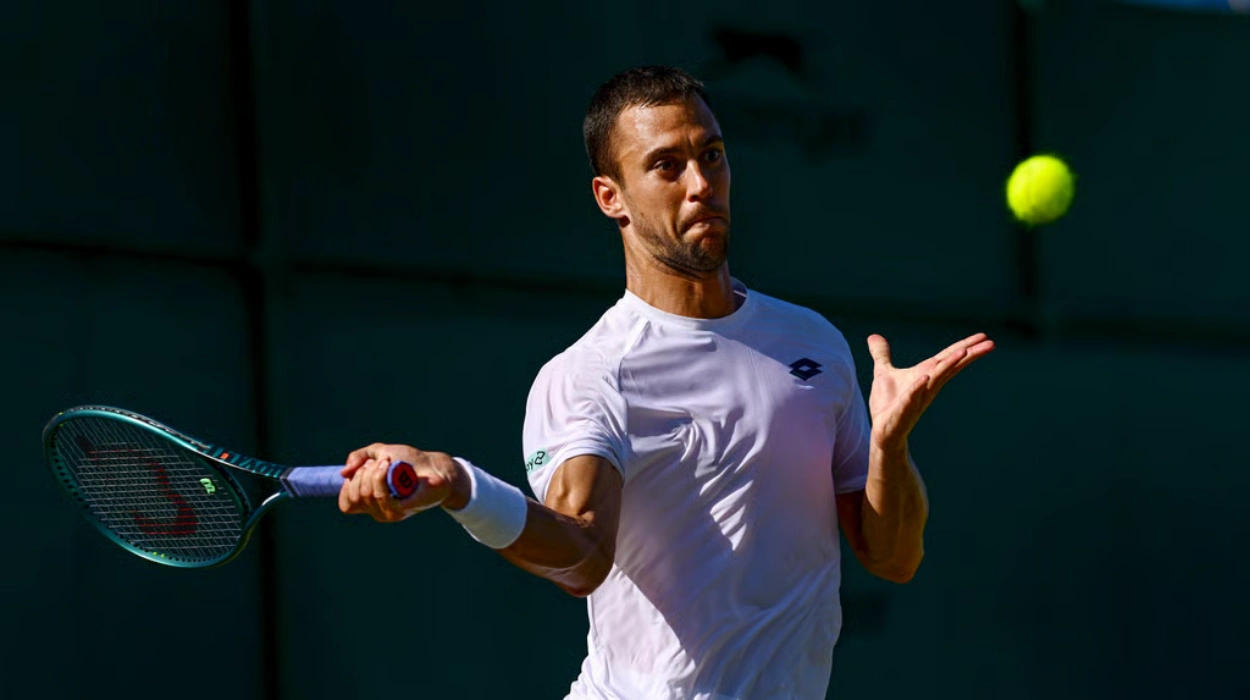
Djere, a 30-year-old Serb ranked around No. 60, posed challenges with his baseline consistency, forcing Wawrinka to save multiple break points. Wawrinka fired 12 aces to Djere’s 8 and won 78 per cent of his first-serve points, per official tournament statistics reported alongside The Athletic coverage. The tiebreak in the fourth set saw Wawrinka edge ahead 4-2 before closing 7-4, demonstrating composure under pressure.
In the first set, Djere broke serve at 5-5 after Wawrinka netted a forehand, securing the 7-5 edge. Wawrinka responded in the second set with a break at 2-2, consolidating to level the match. The third set featured a break at 4-3, where Wawrinka’s backhand down the line proved decisive. The fourth set remained on serve until the tiebreak, where Wawrinka’s aggressive serving sealed the win. Wawrinka pumped his fist and roared in celebration after match point, captured by photographer William West of AFP via Getty Images.
Djere, who reached the third round at the 2020 Australian Open, competed aggressively but could not sustain his early momentum. Wawrinka’s 45 winners to Djere’s 38 highlighted his offensive edge, while unforced errors stood at 32 for Wawrinka against 28 for Djere.
Opponent Profiles: Djere and Wawrinka’s Next Potential Foes
Laslo Djere entered the match with recent form including a quarter-final run at a Challenger event in Australia last week. The Serb’s flat groundstrokes tested Wawrinka early, but fatigue appeared in the later sets. Wawrinka’s experience in five-set marathons from his prime years aided his endurance.
Looking ahead, Jiří Lehečka, the No. 17 seed from the Czech Republic, brings a powerful serve and all-court game. Lehečka reached the quarter-finals at the 2024 US Open and holds a career-high ranking inside the top 20. Qualifier Arthur Géa, a Frenchman, earned his spot through three qualifying wins, showcasing resilience against higher-ranked opponents. Wawrinka holds a 1-0 record over Lehečka from a 2023 encounter.
Australian Open Day 1 Overview and Scheduling Notes
Day 1 of the Australian Open included other notable results, though Wawrinka’s win stood out for its age-defying narrative. The tournament, the first Grand Slam of the year, draws over 1 million fans annually to Melbourne Park. Scheduling drew some early criticism in previews for outer court assignments, but Wawrinka’s evening match on Court 6 proceeded without interruption, starting at 7pm local time.
The main show courts hosted top seeds like Carlos Alcaraz and Iga Świątek in night sessions, while outer courts featured wildcard stories like Wawrinka’s. Attendance on Day 1 exceeded 50,000, with clear weather aiding play. The event’s prize money totals AUD $100 million, with first-round losers receiving AUD $106,000.
Wawrinka’s Grand Slam Legacy and Farewell Tour Context
Wawrinka’s three Grand Slam titles – 2014 Australian Open, 2015 French Open, and 2016 US Open – place him among the elite. His 2016 US Open run defeated Juan Martín del Potro and Gaël Monfils en route to the title. Injuries limited him to 15 Grand Slam appearances since 2017, but comebacks kept him relevant.
This farewell season follows Roger Federer’s 2022 retirement, drawing similar nostalgia. Wawrinka announced his ATP Tour exit last year, planning select events. His ranking reflects limited play, but wild cards ensure main draw access at majors. Fans filled social media with support post-match, echoing his on-court sentiments.
Tournament Director’s Perspective on Wild Cards
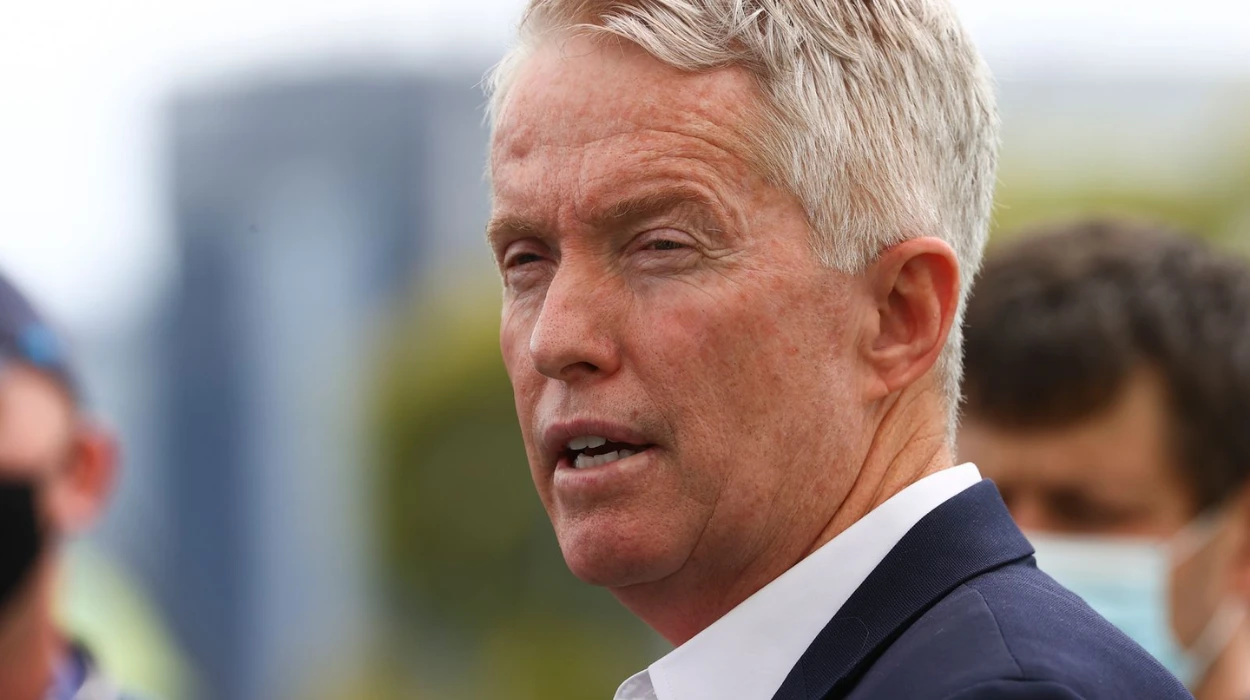
Australian Open tournament director Craig Tiley confirmed wild card selections last week, citing Wawrinka’s contributions. Tiley noted, “Stan’s victories here define our history,” in a pre-tournament press conference. The policy allocates four wild cards per draw, balancing legacy and opportunity.
Wawrinka’s next match, potentially Friday, will air on outer courts or streaming. As Wawrinka put it post-match, he plays this final Australian Open “with his heart on his sleeve — and his shorts on his shirt.” His run tests whether the veteran can extend his farewell into deeper rounds for the first time since 2019.
Australian Open Tournament Details and Structure
The Australian Open stands as the first Grand Slam of the tennis calendar year, held annually at Melbourne Park in Melbourne, Australia. Organised by Tennis Australia, the event runs from 12 to 31 January in 2026, featuring best-of-five-set matches for men and best-of-three-set matches for women across 15 courts, including the iconic Rod Laver Arena and John Cain Arena.
The tournament draws 128 players in the men’s and women’s singles main draws, selected via direct entry, seeds, qualifiers, and wild cards. Top seeds include world No. 1s and recent major champions, with defending champions from 2025 also competing. Doubles, mixed doubles, juniors, wheelchair, and legends events run concurrently, attracting over 800,000 spectators and a global television audience exceeding one billion. Total prize money reaches AUD $100 million, distributed across all categories.